2025-11-25 中国科学院(CAS)
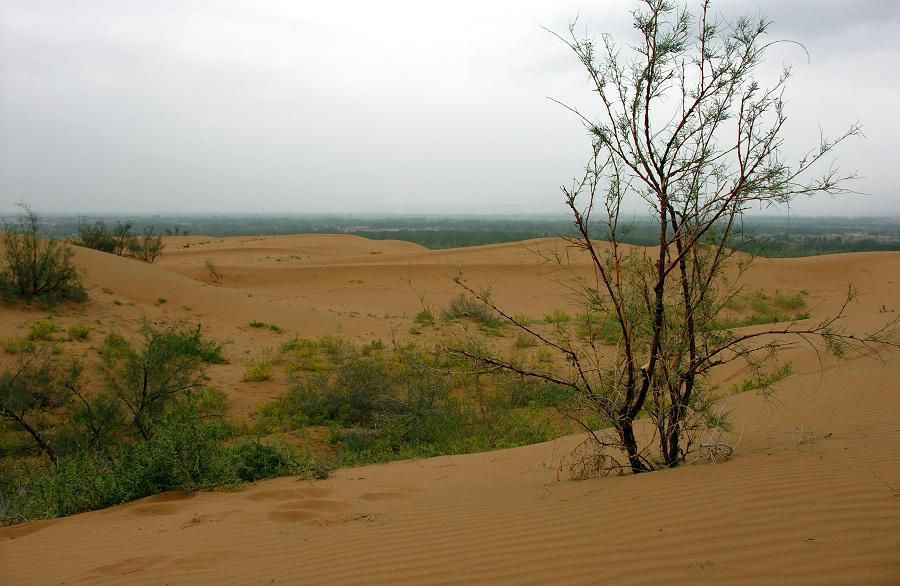
中国科学院・新疆生態地理研究所の研究チームは、タクラマカン砂漠南部に生育する砂漠植物 Alhagi sparsifolia を対象に、360日間の13CO₂パルス標識実験を実施し、乾燥地域土壌の炭素固定を支える主要経路を解明した。光合成で取り込まれた炭素は速やかに根系を経て土壌へ輸送され、植物残渣として蓄積する量はSOCの0.2~1.1%に留まった。一方、死んだ微生物の残骸(微生物ネクロマス)はSOCの12~30%を占め、特に100~200cmの深層で継続的に蓄積することが判明した。統計解析ではSOC変動の59%を微生物過程が説明し、植物由来炭素の38%を大きく上回った。これにより、超乾燥砂漠における炭素安定化の主要因は植物ではなく微生物ネクロマスであることが示され、乾燥域の炭素吸収ポテンシャル評価に重要な知見を提供した。
<関連情報>
- https://english.cas.cn/newsroom/research_news/earth/202511/t20251127_1134058.shtml
- https://nph.onlinelibrary.wiley.com/doi/10.1111/nph.70768
砂漠植物における光合成炭素の長期的な運命:土壌炭素安定化のための微生物ネクロマス駆動経路 Long-term fate of photosynthetic carbon in desert plants: microbial necromass-driven pathways for soil carbon stabilization
Mengfei Cong, Zhihao Zhang, Yang Hu, Akash Tariq, Corina Graciano, Jordi Sardans, Weiqi Wang, Yanju Gao, Xinping Dong, Guangxing Zhao, Jingming Yan, Josep Peñuelas, Fanjiang Zeng
New Phytologist Published: 23 November 2025
DOI:https://doi.org/10.1111/nph.70768
Summary
- As a core component of the terrestrial carbon (C) cycle, plant photosynthetic C assimilation regulates soil organic carbon (SOC) sequestration. However, the allocation patterns of photosynthetic C across different soil layers in desert ecosystems remain unclear.
- Through in situ field 13CO2 pulse labeling applied to Alhagi sparsifolia, a keystone desert species, we traced photosynthetic C dynamics over 360 d. This included vertical translocation from plant aboveground to belowground systems (0–30, 30–60, 60–100, and 100–200 cm depths) and subsequent partitioning into SOC, soil microbial biomass (phospholipid fatty acid), microbial necromass (amino sugars), and plant residue (lignin phenols).
- Over time postlabeling, 13C in plants gradually shifted from aboveground to belowground biomass. Although plant residue 13C accumulated gradually in the soil, its contribution to SOC was only 0.2–1.1%, lower than that of microbial necromass (12–30%). In the 0–100 cm soil layer, microbial necromass 13C and its contribution to SOC increased initially and then stabilized over time, while it continued to increase at 100–200 cm depth. Microbial necromass 13C dynamics were more strongly associated with SOC than plant residue.
- In desert ecosystems, microbes are the primary contributors to deep SOC accumulation, more than in surface layers.