
2025-12-04 弘前大学,慶應義塾大学,基礎生物学研究所,東邦大学
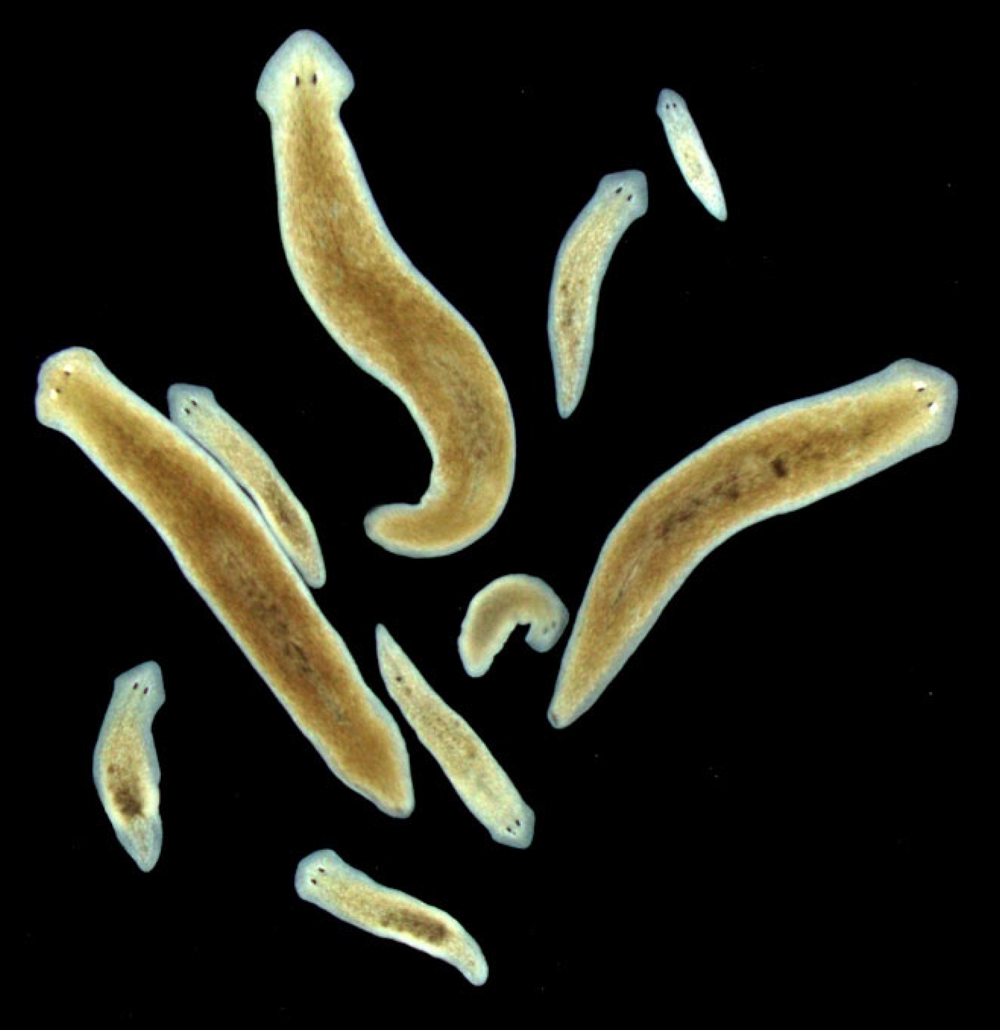 図1. リュウキュウナミウズムシの無性個体と有性個体
同じ遺伝子情報をもつクローン集団であるが、生殖器官をもたず分裂・再生を繰り返し増殖する無性状態(小型の個体)と生殖器官をもち交尾・産卵をすることのできる有性状態(大型の個体)がある。
<関連情報>
- https://www.keio.ac.jp/ja/press-releases/2025/12/4/28-171102/
- https://www.keio.ac.jp/ja/press-releases/files/2025/12/4/251204-2.pdf
- https://journals.plos.org/plosgenetics/article?id=10.1371/journal.pgen.1011944
プラナリアの生殖スイッチにおける無性生殖状態の終結に必要なイネキシンの同定 Identification of an innexin required for termination of the asexual state in planarian reproductive switching
Nobuyoshi Kumagai,Michio Kuroda,Tosei Hanai,Masaki Fujita,Takaaki Hino,Shunta Yorimoto,Sayaka Manta,Shuzo Nakagawa,Moe Yokoyama,Leon Tajima,Riku Ito,Hikaru Yamada,Kota Miura, [ … ],Kazuya Kobayashi
PLOS Genetics Published: November 18, 2025
DOI:https://doi.org/10.1371/journal.pgen.1011944
Abstract
Many metazoans switch between asexual and sexual reproduction based on environmental changes, life cycle phases, or both. This reproductive strategy enables them to benefit from the features of both reproductive modes. In general, asexual reproduction is broadly divided into parthenogenesis and vegetative reproduction. As in parthenogenesis, individuals develop ovaries and lay eggs, the most significant event in switching from parthenogenesis to sexual reproduction is the production of testes. Meanwhile, in vegetative reproduction, individuals do not need germ cells themselves. Thus, they must post-embryonically develop and maintain germ cells derived from pluripotent cells as they switch from vegetative to sexual reproduction. The complicated mechanisms for controlling the postembryonic reproductive development remain unknown. The planarian Dugesia ryukyuensis can switch from vegetative to sexual reproduction by stimulating bioactive compounds called sex-inducing substances, which are widely conserved in Platyhelminthes, including parasitic flatworms. The two reproductive modes are facilitated by the presence of adult pluripotent stem cells, which generate any type of somatic tissue in the asexual state and produce and maintain hermaphroditic reproductive organs in the sexual state. In this study, using RNA sequencing analysis in experimental sexualization by sex-inducing substances, we identified four essential genes for sexualization. A common feature following the knockdown of the four essential genes was a blockage of testicular differentiation. One of the four essential genes was a gap junction gene, Dr-siri (Dugesia ryukyuensis-sexual induction-related innexin). We suggest that the establishment of a testicular stem cell niche supported by Dr-siri protein is responsible for the breakthrough of dormancy in postembryonic reproductive development in planarian reproductive switching. Our findings suggest that the production of testes might be crucial for even switching from vegetative to sexual reproduction.
Author summary
Some animals have pluripotent stem cells that can differentiate into all types of cells that make up their adult bodies. Thus, they can regenerate after self-amputation and reproduce asexually to increase the number of individuals identical to themselves. Additionally, they can reproduce sexually by producing eggs and sperm (gametes) from pluripotent stem cells at any time. In nature, they achieve procreation through a reproductive strategy that alternates between asexual reproduction, which allows for population growth, and sexual reproduction, which leads to various offspring. In this study, we identified four genes that are essential for the transition from asexual to sexual reproduction in the hermaphroditic species planaria. Three genes are predicted to function as transcription factors. Another gene was identified as a novel innexin—a gap junction protein that forms a small channel directly connecting somatic and germ cells, playing a crucial role in cell-to-cell communication. These four genes are implicated in testis differentiation, suggesting that the production of testes might play an important role in the switch from asexual to sexual reproduction in planarians.

