2025-12-16 ペンシルベニア州立大学(Penn State)

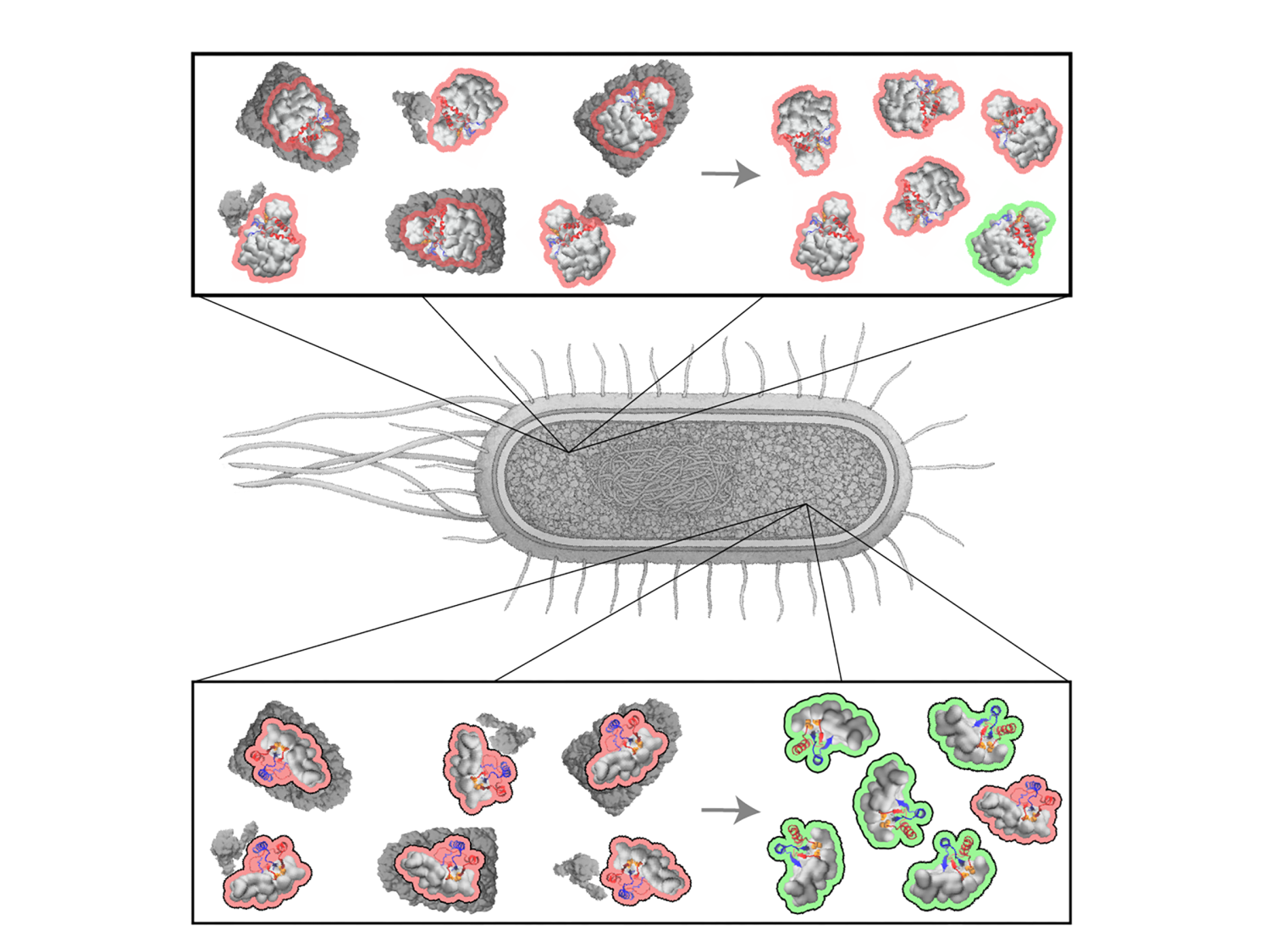
The researchers found that two proteins in the CCR4-NOT complex — CNOT1 and CNOT4 — work in opposition, with CNOT1 encouraging degradation of messenger RNA proteins while CNOT4 slows the process. Credit: Provided by Shardul Kulkarni/Penn State. All Rights Reserved.
<関連情報>
- https://www.psu.edu/news/research/story/opposing-forces-cells-could-hold-clues-treating-disease
- https://www.jbc.org/article/S0021-9258(25)02714-0/fulltext
オーキシン誘導によるヒトCCR4-NOTサブユニットの枯渇は、mRNA代謝におけるCNOT1とCNOT4の相反する機能を明らかにする Auxin-induced depletion of human CCR4-NOT subunits reveals opposing functions of CNOT1 and CNOT4 in mRNA metabolism
Shardul Kulkarni ∙ Courtney Smith ∙ Oluwasegun T. Akinniyi ∙ … ∙ Cheryl A. Keller ∙ Alexei Arnaoutov ∙ Joseph C. Reese
Journal of Biological Chemistry Published:October 27, 2025
DOI:https://doi.org/10.1016/j.jbc.2025.110862
Abstract
CCR4-NOT regulates multiple steps in gene regulation, including transcription, mRNA decay, protein ubiquitylation, and translation. Originally discovered in yeast, this complex is highly conserved across eukaryotes, although its composition and functions differ between mammals and yeast. For example, unlike yeast Not4, human CNOT4 (E3 Ubiquitin Ligase) does not form a stable complex with CCR4-NOT, and its functions are less clear compared to its yeast counterpart. To investigate the roles of CNOT1 (the central scaffold subunit) and CNOT4, we developed a rapid auxin-induced degron cell culture system that allows for the acute depletion of these proteins. We studied the effects of their absence on complex integrity, cell growth, and mRNA expression and turnover. Our transcriptome-wide analysis revealed that depleting CNOT1 altered the expression of thousands of transcripts, with the majority showing increased abundance and a general decrease in mRNA decay. Although CNOT4 does not associate with the complex through standard biochemical methods, BioID proximity labelling confirmed its association with the complex in cells. However, depleting CNOT4 did not affect the integrity of CCR4-NOT. In contrast to the effects observed with CNOT1 depletion, reducing CNOT4 levels led to only modest changes in RNA steady-state levels and unexpectedly accelerated global mRNA decay. Finally, we show that the changes in mRNA stability in CCR4-NOT-depleted cells correlated with the codon optimality of the transcripts. Our data suggest that CNOT4 exerts opposite effects on mRNA metabolism compared to CNOT1, and that CNOT4 may have functions distinct from those of complex subunits that promote mRNA degradation.