2025-12-22 ロックフェラー大学
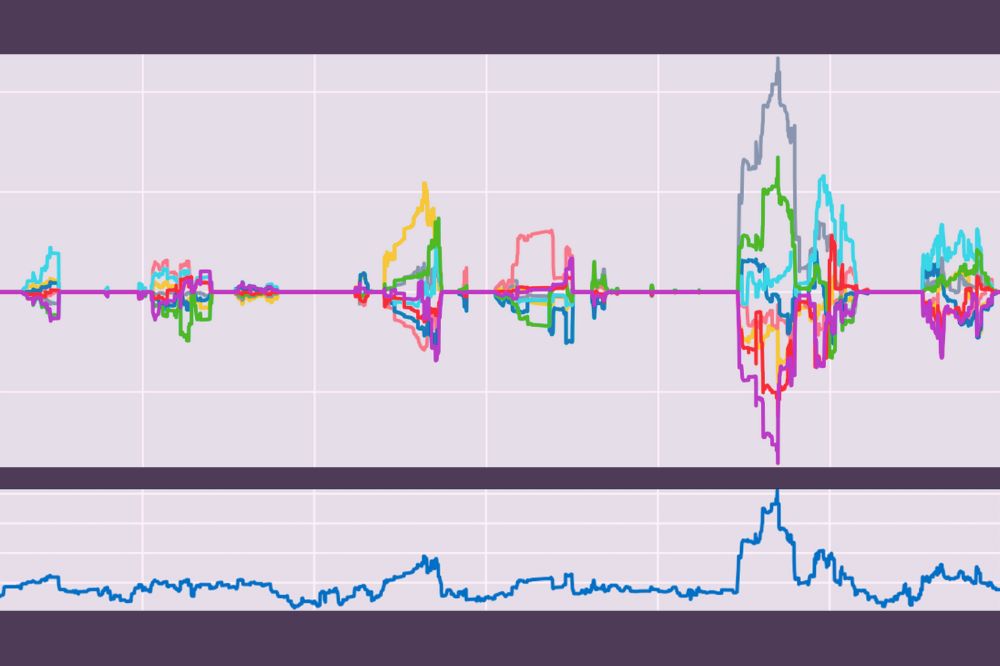
A quantitative trait locus graph showing that the Homer1 gene region is associated with behavioral divergence in attention. (Credit: Rajasethupathy lab)
<関連情報>
- https://www.rockefeller.edu/news/38822-researchers-identify-gene-that-calms-the-mind-and-improves-attention-in-mice/
- https://www.nature.com/articles/s41593-025-02155-2
遺伝子マッピングによりHomer1が注意の発達的修飾因子であることが特定された Genetic mapping identifies Homer1 as a developmental modifier of attention
Zachary Gershon,Alessandra Bonito-Oliva,Matt Kanke,Andrea Terceros,Genelle Rankin,John Fak,Yujin Harada,Andrew F. Iannone,Millennium Gebremedhin,Brian Fabella,Natalia V. De Marco García,Praveen Sethupathy & Priya Rajasethupathy
Nature Neuroscience Published:22 December 2025
DOI:https://doi.org/10.1038/s41593-025-02155-2
Abstract
The genetic factors and resulting neural circuit physiology driving variation in attention are poorly understood. Here we took an unbiased forward genetics approach to identify genes of large effect on attention. We studied 200 genetically diverse mice and, through genetic mapping, identified a small locus on chromosome 13 (95% CI 92.22–94.09 Mb) that is significantly associated with variation in pre-attentive processing. Within the locus we identified a gene, Homer1, encoding a synaptic protein, whose downregulation during development led to improvements in multiple measures of attention in adulthood. Mechanistically, reduced Homer1 levels resulted in an upscaling of GABA receptors and enhanced inhibitory tone in the prefrontal cortex, leading to improved neural signal to noise and attentional performance. We thus identify a single genetic locus of large effect on attention and propose Homer1-dependent inhibitory tone, sculpted during a developmental sensitive period, as a key regulator and potential therapeutic target for attentional performance.