2026-01-29 成育医療研究センター
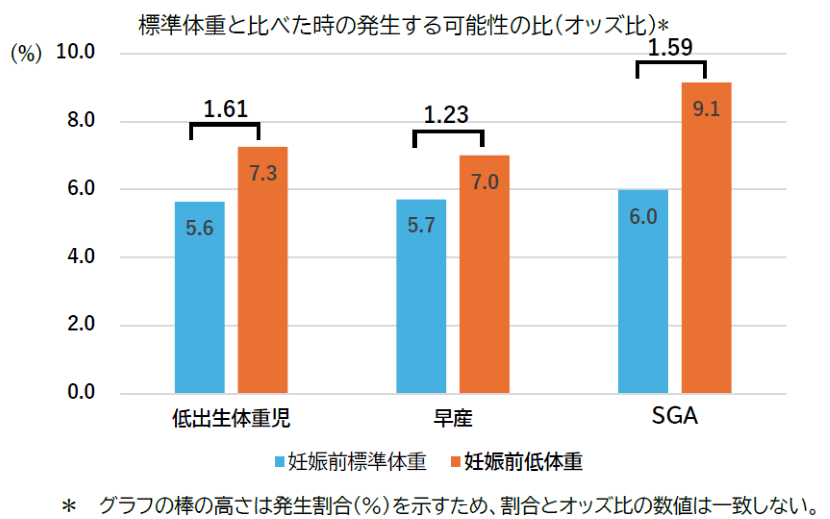
【表:妊娠前低体重と標準体重の母親による発生頻度の比較】
<関連情報>
- https://www.ncchd.go.jp/press/2026/0129.html
- https://www.ncchd.go.jp/press/2026/0129.pdf
- https://www.jstage.jst.go.jp/article/jea/advpub/0/advpub_JE20250483/_article
日本人女性における母親の低体重が乳児および母体アウトカムに与える影響:系統的レビューとメタアナリシス Impact of Maternal Underweight on Infant and Maternal Outcomes in Japanese Women: A Systematic Review and Meta-analysis
Shinobu Kobayashi, Shiori Itoi, Drishti Shrestha, Naho Morisaki
Journal of Epidemiology Published:December 20, 2025
DOI:https://doi.org/10.2188/jea.JE20250483
Abstract
Background: Pre-pregnancy underweight (BMI<18.5 kg/m2) is notably prevalent among reproductive-aged Japanese women, affecting approximately 20%, compared to less than 10% in Western countries. However, its overall impact on maternal and infant outcomes in Japanese populations has not been systematically evaluated.
Methods: We conducted a systematic review and meta-analysis following PRISMA 2020 guidelines. MEDLINE, EMBASE, CINAHL, PsycINFO, Cochrane Library, and Ichushi were searched from inception to February 2024. Cohort and case-control studies examining associations between pre-pregnancy underweight and perinatal outcomes in Japanese women with singleton pregnancies were included. Primary outcomes were low birth weight (LBW), small for gestational age (SGA), and preterm birth (PTB). Random-effects models calculated pooled odds ratios (ORs) with 95% confidence intervals (CIs).
Results: Thirty-four studies were analyzed. Pre-pregnancy underweight significantly increased risks of LBW (OR=1.61, 95% CI: 1.38-1.86), SGA (OR=1.59, 95% CI: 1.55-1.63), and PTB (OR=1.23, 95% CI: 1.19-1.26). Mean birth weight was 115.02g lower (95% CI: -128.05 to -101.99) in underweight mothers.
Conclusions: Pre-pregnancy underweight among Japanese women is significantly associated with increased risks of adverse perinatal outcomes. Notably, these elevated risks persist despite the high background prevalence of underweight, suggesting that their adverse effects are not diminished in populations where it is more common. These findings underscore the importance of increasing awareness of preconception care and emphasize the need to optimize pre-pregnancy weight.