2026-01-29 大阪大学
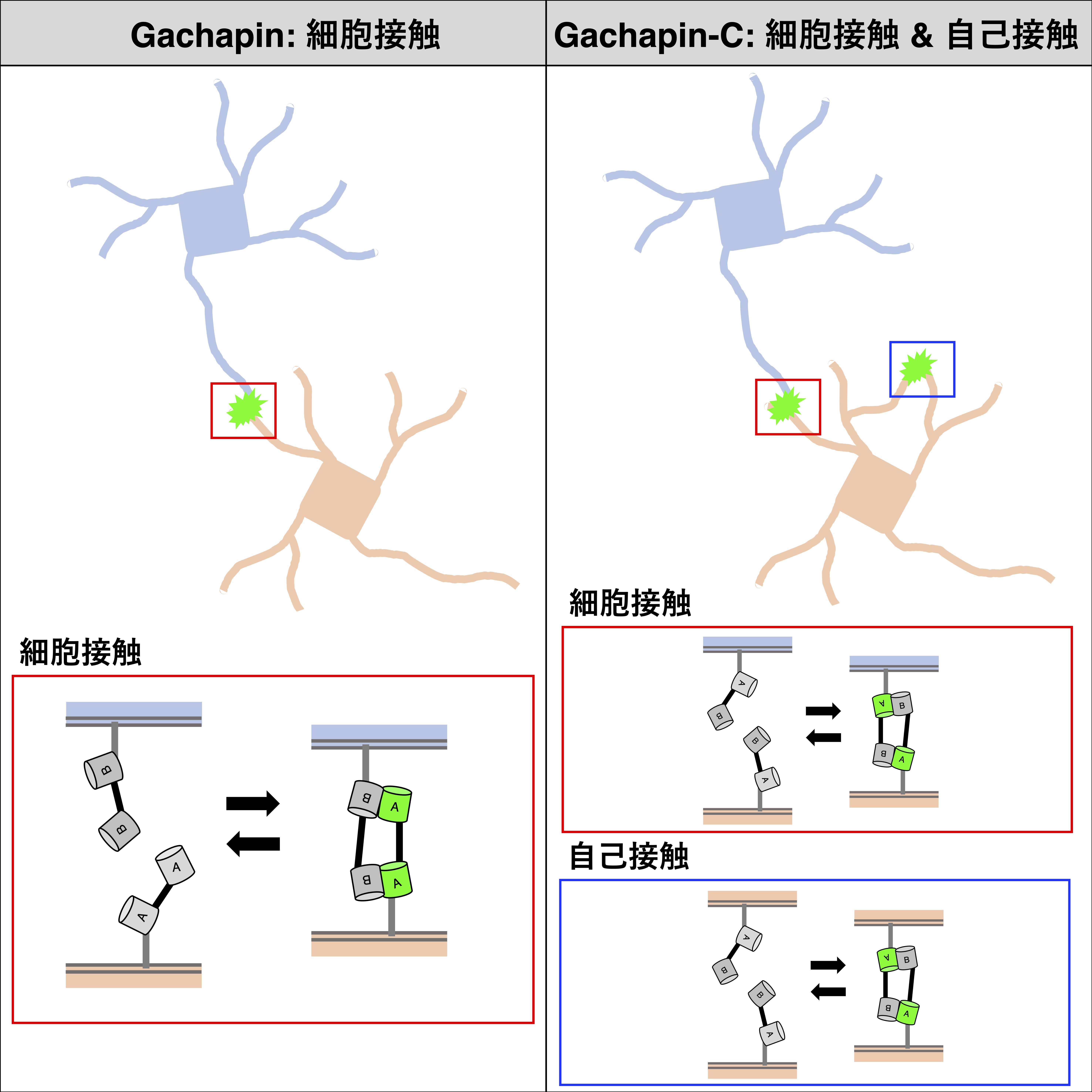
図1 GachapinとGachapin-Cによる 細胞接触と自己接触の可視化
<関連情報>
- https://www.sanken.osaka-u.ac.jp/achievement/release/20260129.html
- https://www.cell.com/cell-reports-methods/fulltext/S2667-2375(25)00328-5
細胞間および単一細胞由来のプロセス間の動的接触を可視化するための蛍光指示薬 Fluorescent indicators for visualizing dynamic contact between cells and between processes originating from a single cell
Takashi Kanadome ∙ Natsumi Hoshino, ∙ Susumu Jitsuki ∙ Hidehiko Hashimoto ∙ Takeshi Yagi ∙ Takeharu Nagai
Cell Reports Methods Published:January 23, 2026
DOI:https://doi.org/10.1016/j.crmeth.2025.101292
Motivation
Fluorescent indicators based on dimerization-dependent fluorescent proteins (ddFPs) have been developed for visualizing specific interactions of cell adhesion molecules between cells. While these allow real-time imaging in contrast to previous indicators based on irreversible split-GFP, fluorescent indicators that allow visualization of simple cell-cell contacts are currently limited. Here, we present two ddFP-based fluorescent indicators, Gachapin and Gachapin-C, for visualizing such cell-cell contacts rather than specific interactions of cell adhesion molecules.
Highlights
- Gachapin is a reversible fluorescent indicator for dynamic cell-cell contacts
- Gachapin enables multiplexed imaging of contact, actin, and signaling dynamics
- Gachapin-C is a single-component indicator for cell-cell and self-contacts
- Gachapin-C can monitor contacts between processes originating from a single cell
Summary
Cells continuously communicate through dynamic cell-cell contacts. Tools for visualizing these dynamic interactions in living cells are essential to the study of fundamental biological processes in multicellular organisms. Here, we present two fluorescent indicators, Gachapin and Gachapin-C, for visualizing dynamic cell-cell contact. Gachapin visualizes not only static but also dynamic contacts. Multiplexed imaging combining green Gachapin with spectrally distinct indicators allows simultaneous monitoring of contact dynamics, cytoskeletal assembly, and intracellular signaling during cell movement. Furthermore, the formation and disruption of contacts between neuronal processes can be visualized. Gachapin-C enables contact visualization with a single indicator component, whereas previous indicators required two components introduced into different cells. This feature allows Gachapin-C to monitor contacts between processes originating from a single cell. We expect Gachapin and Gachapin-C will serve as useful tools for providing deeper insights into cell-cell contact-mediated processes.