
2026-02-20 成育医療研究センター
<関連情報>
- https://www.ncchd.go.jp/press/2026/0220.html
- https://link.springer.com/article/10.1007/s12630-025-02975-7
間欠的硬膜外ボーラス投与による分娩鎮痛後の臍帯鎮痛薬濃度:前向き観察研究 Umbilical analgesic concentrations after labour analgesia with programmed intermittent epidural bolus: a prospective observational study
Arisa Ijuin MD,Masaki Sato MD, PhD,Nagayoshi Umehara MD, PhD,Shoichiro Amari MD, MHPE,Jumpei Saito PhD,Mayuko Abe MD,Wataru Matsunaga MD,Yoko Yamashita MD,Yasuyuki Suzuki MD, PhD & Kenichi Masui MD, PhD
Canadian Journal of Anesthesia/Journal canadien d’anesthe´sie Published:10 June 2025
DOI:https://doi.org/10.1007/s12630-025-02975-7
Abstract
Purpose
The umbilical analgesic concentrations after using programmed intermittent epidural bolus (PIEB) and patient-controlled epidural analgesia (PCEA) without continuous infusion are unknown. We aimed to characterize umbilical ropivacaine and fentanyl concentrations and examine their influence on neonatal conditions at delivery.
Methods
We prospectively studied 50 parturients with singleton pregnancies who received combined spinal–epidural analgesia using PIEB (7 mL every 45 min) and PCEA (7 mL per bolus; lockout interval: 15 min) with 0.08% ropivacaine and 2 μg·mL-1 fentanyl, with clinician-administered boluses as necessary. We evaluated the umbilical venous analgesic concentrations and neonatal characteristics.
Results
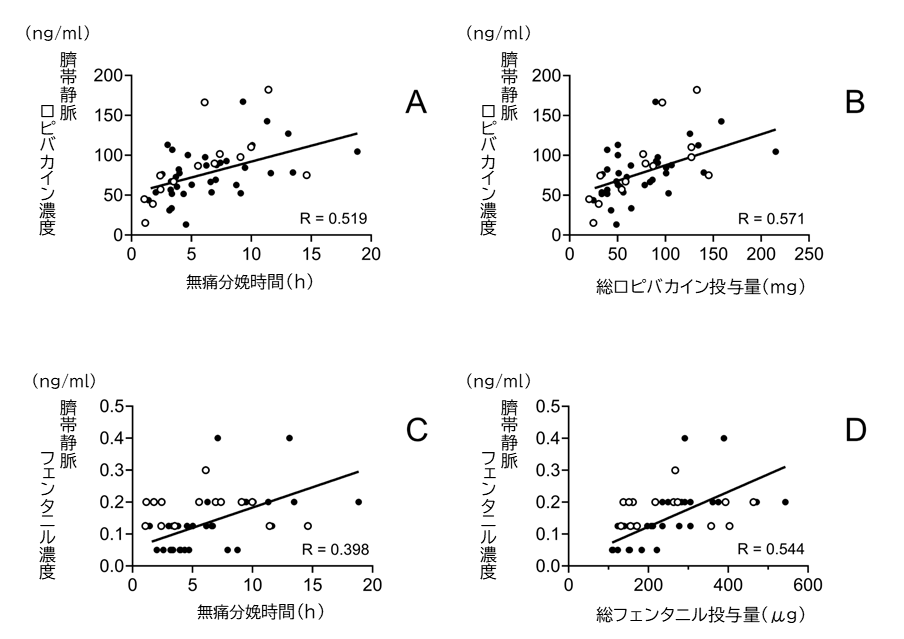
The median [interquartile range (IQR)] hourly ropivacaine and fentanyl doses were 13 [11–15] mg·hr-1 and 39 [30–50] µg·hr-1, respectively. The ropivacaine and fentanyl concentrations were 77 [56–98] ng·mL-1 and 0.125 [0.125–0.20] ng·mL-1 at delivery, respectively. The umbilical analgesic concentrations were correlated with the labour duration and total dose. In parturients given clinician-administered boluses within 1 hr before delivery, the ropivacaine and fentanyl concentrations were similar to those without (81 [54–104] vs 77 [54–96] ng·mL-1 and 0.20 [0.125–0.20] vs 0.125 [0.05–0.20] ng·mL-1, respectively). The umbilical arterial pH was > 7.2 and the Apgar score at 5 min was ≥ 8 for all neonates. No neonates exhibited systemic local anesthetic toxicity. Respiratory support was required for 14 neonates.
Conclusions
Umbilical analgesic concentrations at delivery were low after labour analgesia using a regimen of PIEB with PCEA for up to 19 hr. An intermittent bolus dosing regimen may contribute to a decrease in umbilical analgesic concentrations.

