2026-03-20 パシフィック・ノースウェスト国立研究所(PNNL)
<関連情報>
- https://www.pnnl.gov/publications/community-dynamics-drive-calcium-carbonate-production-enriched-consortium-soil
- https://link.springer.com/article/10.1007/s00248-025-02632-y
土壌微生物の濃縮コンソーシアムにおける炭酸カルシウム生成を促進するコミュニティダイナミクス Community Dynamics Drive Calcium Carbonate Production in an Enriched Consortium of Soil Microbes
Marci Garcia,Natalie C. Sadler,Izabel Stohel,Sharon Zhao,Sankarganesh Krishnamoorthy,Yuliya Farris,Nicholas J. Reichart,Christopher E. Bagwell,Neerja Zambare & Ryan McClure
Microbial Ecology Published:23 December 2025
DOI:https://doi.org/10.1007/s00248-025-02632-y
Abstract
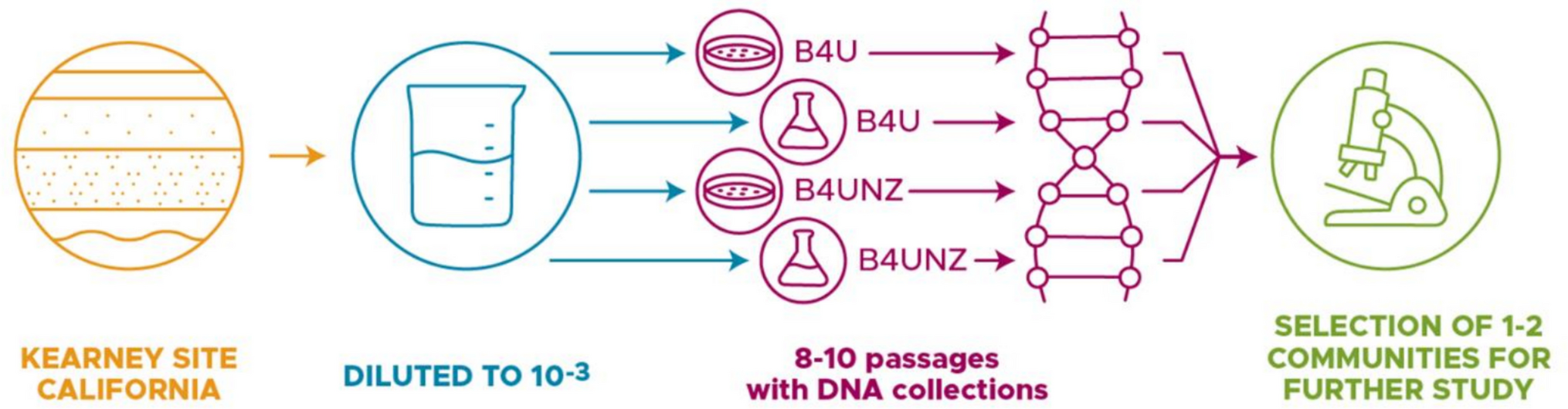
Recently, there has been a focus on using soil microbes as a means to store carbon in the soil in the form of calcium carbonate, outcomes of which include soil stabilization and biocementation. The molecular processes involved in microbially induced calcium carbonate formation are known, but there is still a significant knowledge gap regarding how community interactions, emergent processes that are distinct from the roles of individual members, may drive the formation of carbonate. To answer these questions, we describe the development and application of a consortium of soil microbes consisting of one species each of the Rhodococcus, Microbacterium, and Curtobacterium genera and two species from the Bacillus genus. We term these five species cultivated together carbon storing consortium A (CSC-A). Growth assays show that only a subset of CSC-A members produces CaCO3 with Rhodococcus producing the most CaCO3 but the complete CSC-A produces significantly higher amounts of CaCO3 compared to the sum total carbonate produced by all member species. The development of CSC-A shows that CaCO3 production may be as much a community process as it is the contribution of individual species, requiring us to move beyond single species analysis to fully understand carbonate formation by microbial communities in nature. CSC-A will allow the scientific community to ask and answer key questions about the molecular interactions surrounding inorganic carbon formation in soil, an important knowledge gap that must be filled if we wish to stabilize soils and harness microbial processes for materials production.