2026-03-25 タフツ大学
<関連情報>
- https://now.tufts.edu/2026/03/25/simple-blood-tests-may-predict-response-lymphoma-treatment
- https://www.nature.com/articles/s41598-026-44677-0
犬のびまん性大細胞型B細胞リンパ腫における長期生存を予測する末梢血単核細胞の遺伝子発現シグネチャー Peripheral blood mononuclear cell gene expression signatures predict long-term survivorship in canine DLBCL
Kirthana Rao,Zechuan Rao,Angelina Huang,Scott Heston,Max Wang,Ümmügülsüm Yildiz-Altay,Fatima Qutab,Danny A. Kwong,Heather L. Gardner,Jillian M. Richmond & Cheryl A. London
Scientific Reports Published:17 March 2026
DOI:https://doi.org/10.1038/s41598-026-44677-0
Abstract
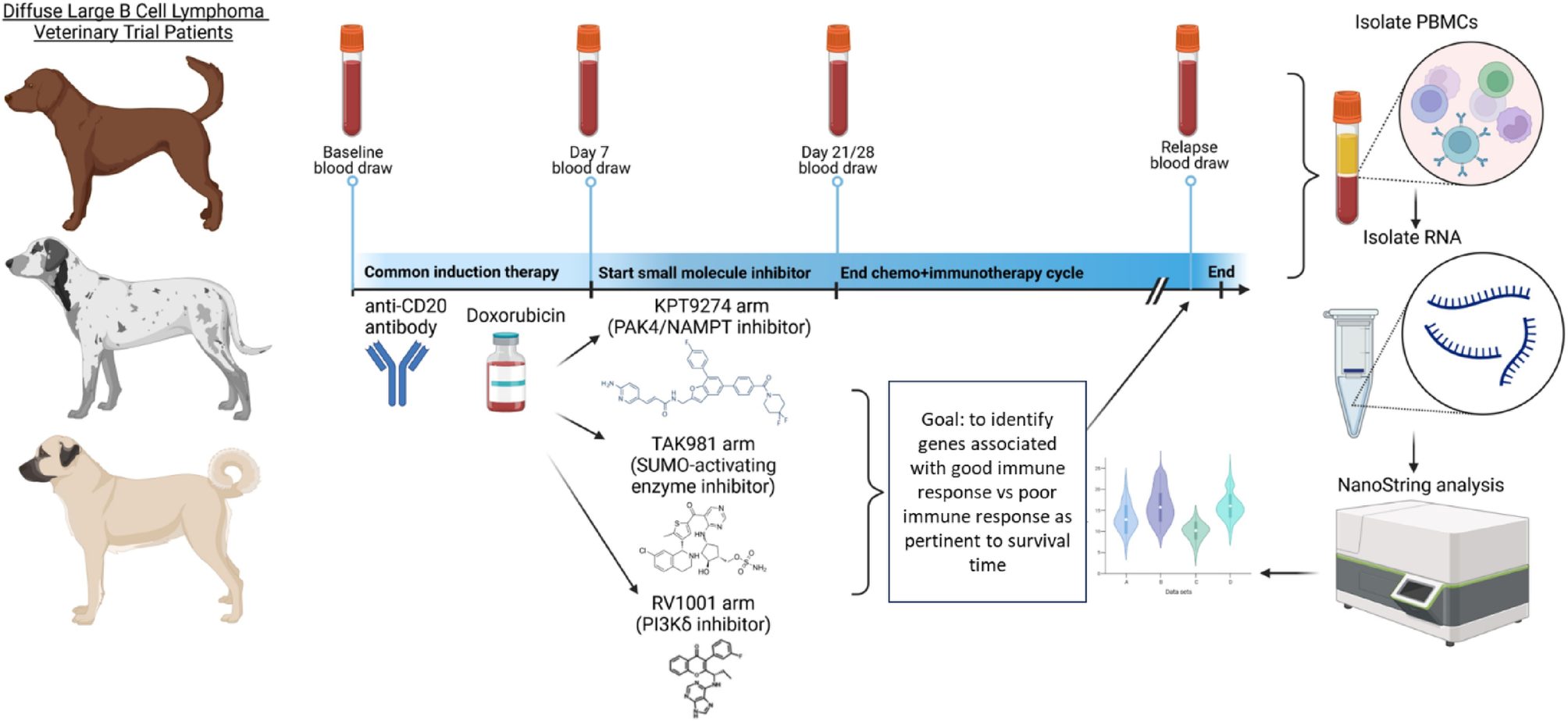
Pet dogs spontaneously develop a form of diffuse large B cell lymphoma (DLBCL) that recapitulates many of the features of double hit (MYC/BCL2) human DLBCL. We recently completed a clinical trial in dogs with DLBCL using a combination of canine anti-CD20 antibody and low dose doxorubicin followed by one of three small molecule immune-modulating agents (KPT-9274, TAK-981 or RV1001). Clinical outcomes and tumor specific biomarkers of response from these dogs have been previously reported. In this study, we used the NanoString Canine IO panel to assess dynamic changes in gene counts from peripheral blood mononuclear cells (PBMCs) collected longitudinally from these from dogs over the course of their treatment to identify immune correlates associated with early relapse versus long-term survivorship. Increases in interferon-stimulated gene (ISG) signatures and immune skewing genes [CCR9, CD209 (DC-SIGN), CMKLR and DDX58 (RIG-I)] were associated with shorter (< 400 day) survival times and early relapse. In contrast, CD1E and CCL14 were elevated post-immunotherapy in long-term (> 400 day) survivors, suggesting that these may be associated with protective immune signatures. Examining genes that were expressed in short- versus long-term survivors early on in the treatment regimen identified TBHD, NPNT and ISG20 as elevated in dogs with shorter survival times at day 7. To facilitate point-of-care PBMC gene expression testing that could be used to distinguish those dogs likely to require more intensive treatment regimens in advance of relapse, we developed qPCR assays for TBHD, NPNT and ISG20. Together these data provide proof of principle that biomarker interrogation in PBMCs can help predict early relapse and poor responders to inform clinical management of DLBCL.