2026-007-28 京都大学
<関連情報>
- https://www.kyoto-u.ac.jp/ja/research-news/2026-07-28-1
- https://www.kyoto-u.ac.jp/sites/default/files/2026-07/web-2607-Goto-4ef3e3e883f5086f7d69b9b33ea10ba4.pdf
- https://onlinelibrary.wiley.com/doi/10.1002/ags3.70251
胃癌・⾷道癌術後の復職及び仕事の状況:前向き観察研究 Return-To-Work and Working Status After Surgery for Gastric and Esophageal Cancer: A Prospective Observational Study
Kentaro Goto, Shigeo Hisamori, Kohei Ueno, Hiroyasu Abe, Ryosuke Okamura, Hisahiro Hosogi, Yoshito Yamashita, Dai Manaka, Hiroaki Hata, Tatsuto Nishigori, Sanae Nakajima, …
DOI:Annals of Gastroenterological Surgery
ABSTRACT
Aim
As survival after gastric and esophageal cancer continues to improve, sustained work participation has become an important survivorship outcome. We aimed to evaluate return-to-work (RTW) rates 18 months after curative-intent surgery for gastric and esophageal cancers and to identify clinical and socioeconomic factors associated with delayed or failed RTW.
Methods
This multicenter, longitudinal, prospective cohort study evaluated working-age Japanese patients undergoing curative-intent surgery for gastric or esophageal cancer. Working status was assessed preoperatively and at 6, 12, and 18 months postoperatively. The primary outcome was working status at 18 months. Secondary outcomes included time to first RTW, and factors associated with non-working and delayed RTW. Exploratory analyses evaluated 6-month patient-reported outcomes (QLQ-C30) and postoperative weight loss.
Results
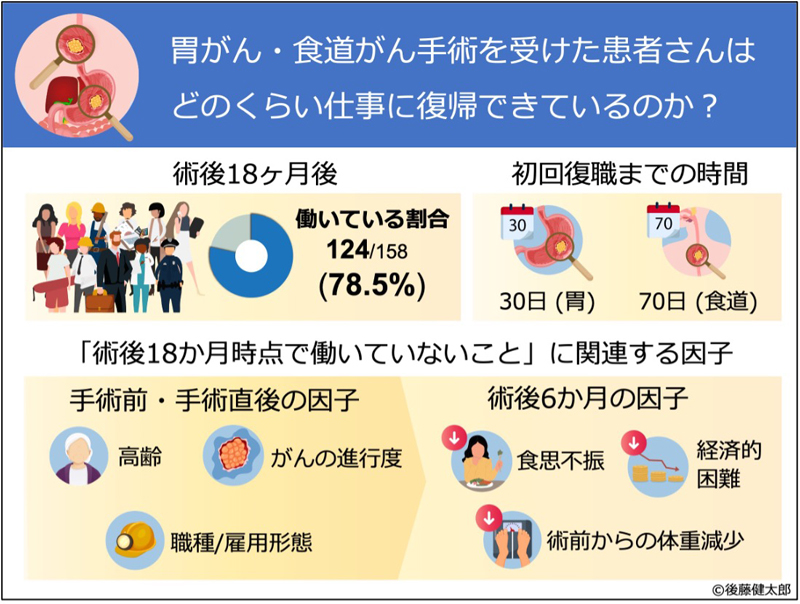
Among 158 eligible patients, 124 (78.5%) were working at 18 months. Older age (≥ 65 years) and pathological stage≥ III were associated with non-working at 18 months, whereas sedentary work and self-employment were associated with a lower risk of non-working. Postoperative appetite loss, financial difficulties (QLQ-C30), and ≥ 10% body weight loss at 6 months were associated with non-working status. Median time to first RTW was 30 and 70 days for gastric and esophageal cancers, respectively. Esophageal cancer and advanced stage were consistently associated with delayed RTW, with weaker evidence for associations with female sex and preoperative retirement.
Conclusions
Approximately 80% of patients were working at 18 months after surgery. Postoperative nutritional impairment and symptom burden were associated with long-term work participation and may help identify patients at risk of not working after surgery.