2026-04-08 長崎大学
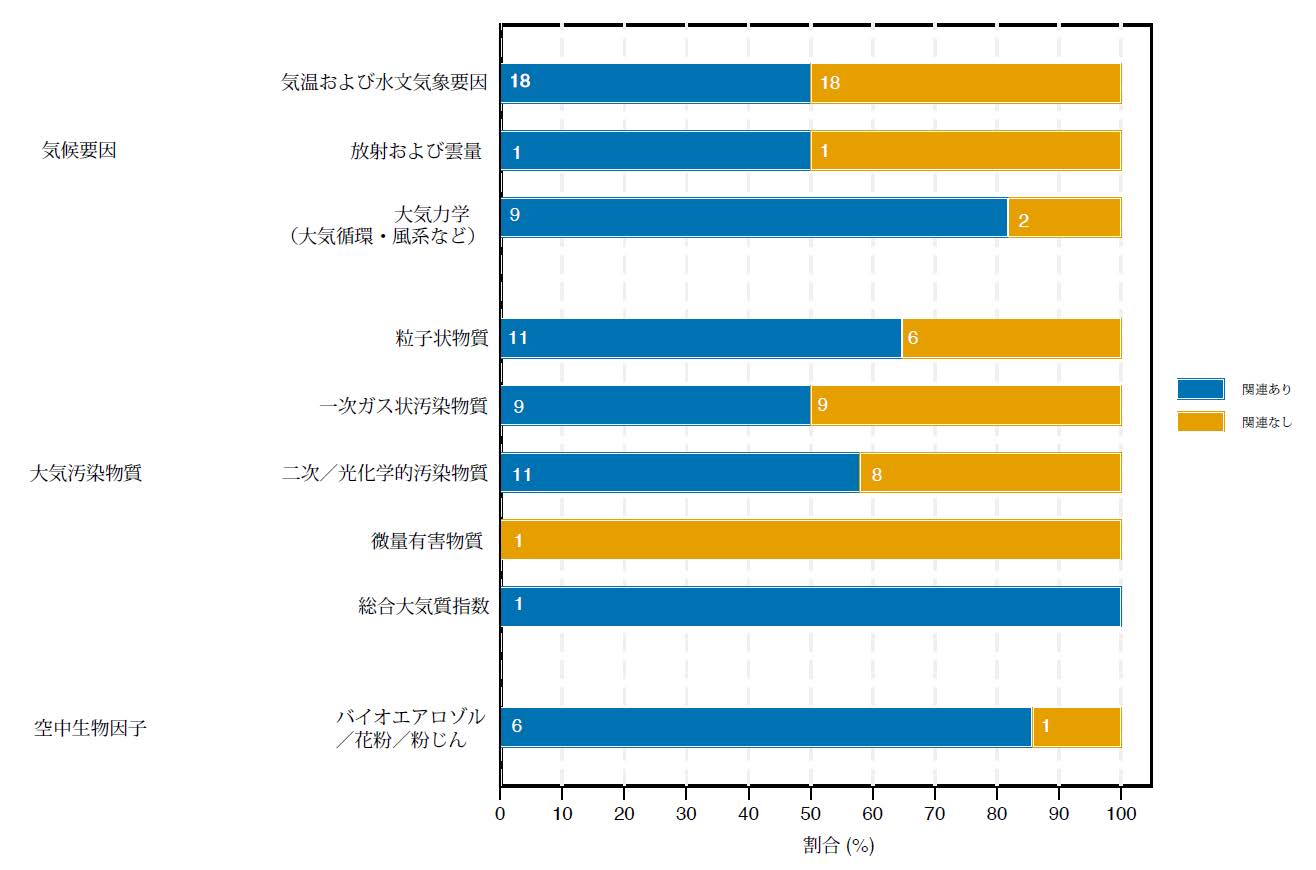
図1 川崎病と関連する環境ストレス要因のエビデンスマップ。棒グラフ内の数字は、各ばく露群で同定された研究数を示す。
<関連情報>
- https://www.nagasaki-u.ac.jp/ja/science/science446.html
- https://www.thelancet.com/journals/lanwpc/article/PIIS2666-6065(25)00330-X/fulltext
川崎病と屋外環境ストレス要因:概観レビュー Kawasaki disease and outdoor environmental stressors: a scoping review
Lina Madaniyazi ∙ Jefferson Alpizar ∙ Chau-Ren Jung ∙ Whanhee Lee ∙ Xerxes Seposo ∙ Ryusuke Ae ∙ et al.
The Lancet Regional Health – Western Pacific Published: January 7, 2026
DOI:https://doi.org/10.1016/j.lanwpc.2025.101791
Summary
Kawasaki Disease (KD) is an acute pediatric vasculitis with unclear etiology, though environmental triggers have been proposed. This scoping review synthesized epidemiological evidence on outdoor environmental exposures and KD incidence. A systematic search up to December 2024 identified 32 eligible studies. KD incidence is highest in East Asia, particularly Japan, South Korea, and Taiwan, where most research has been concentrated. Meteorological variables and air pollutants were most studied. Approximately half of the studies on meteorological variables found associations with KD, with some suggesting the role of temperatures or wind-driven transport of airborne agents. Air pollution studies showed inconsistent short-term effects, but more consistent links with long-term or prenatal particulate matter exposure. Studies on airborne biological agents, though fewer, showed consistent positive findings. These results suggest a multifactorial etiology. However, heterogeneity in methods limits comparability. Little is known about chemical substances in soil, water, or other outdoor sources, which may also affect immune pathways relevant to KD. Standardized, multinational research is needed to clarify environmental contributions and guide prevention in high-risk regions.