
2026-09-24 マサチューセッツ工科大学(MIT)
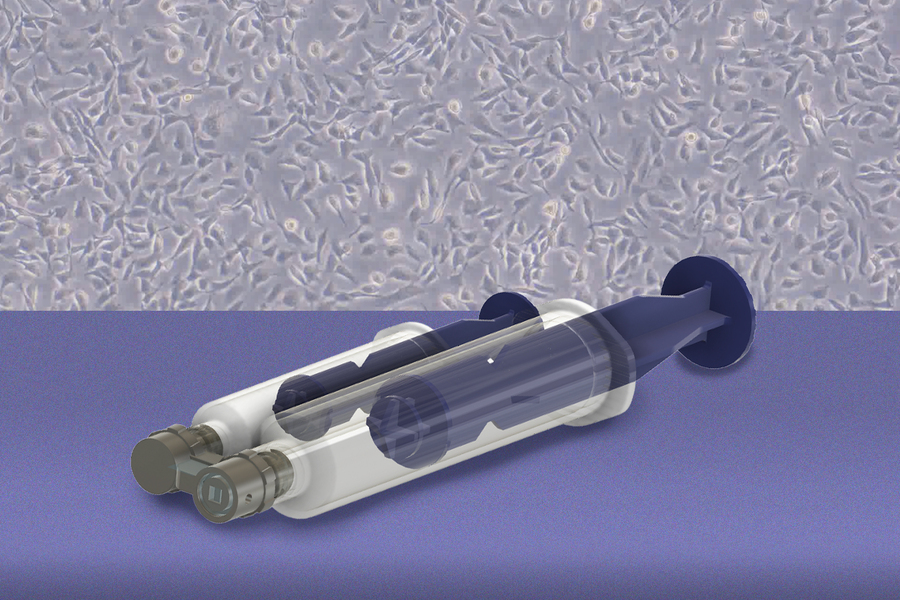
MIT researchers have developed a handheld device capable of gently collecting living cells from specific locations to test for ovarian and many other types of cancer. Credit: Courtesy of the Varanasi Lab, edited by MIT News
<関連情報>
- https://news.mit.edu/2026/new-cell-collection-device-could-improve-early-cancer-detection-0924
- https://www.cell.com/device/abstract/S2666-9986(26)00257-7
切除した卵管組織から生存細胞を最小限の侵襲で部位選択的に採取するための流体せん断装置 A fluidic-shear device for minimally disruptive, site-selective collection of viable cells from excised fallopian-tube tissue
Domitille Avalle ∙ Bert J.C. Vandereydt ∙ Sean M. Parks ∙ … ∙ Rebecca Stone ∙ Angela M. Belcher ∙ Kripa K. Varanasi
Device Published:September 24, 2026
DOI:https://doi.org/10.1016/j.device.2026.101305
Highlights
- Fluid shear enables spatially precise collection of viable cells at millimeter scale
- A handheld device recovers living cells without bulk excision or digestion
- Recovered cells remain viable and regrow across diverse tissue types
- Device-collected human fallopian-tube cells initiate organoid cultures
Summary
Access to viable, site-specific cells from intact tissue remains a barrier to precision diagnostics, early cancer detection, and patient-derived model development. This challenge is acute in the fallopian tube, where precursors of high-grade serous ovarian cancer arise in fragile epithelial regions. We present a fluidic-shear device for site-selective ex vivo cell collection from excised tissue. Localized wall shear stress, confined by a microfluidic channel, detaches cells from millimeter-scale regions without removing surrounding tissue. Modeling and microfluidic benchmarking establish shear stress as the governing parameter for tunable cell release. The device recovered viable, regrowing cells from human fallopian-tube tissue and six porcine tissue types. Device-collected human fallopian-tube epithelial cells were expanded and used to initiate 3D organoid cultures. By enabling cell recovery from defined tissue locations without bulk excision or digestion, this platform supports spatially resolved tissue sampling, patient-derived model generation, and studies of cell-tissue adhesion across diverse organs and applications.

