
2026-09-28 ノースカロライナ州立大学(NC State)
<関連情報>
- https://news.ncsu.edu/2026/09/neuroproteins-are-potential-diagnostic-tool-for-sick-foals/
- https://academic.oup.com/jvim/article/40/5/aalag228/8826559
新生児不適応症候群の子馬における脳損傷のバイオマーカー Biomarkers of brain injury in foals with neonatal maladjustment syndrome
Javier Perez Quesada, Kinnidy Coley, David Wong, Nimet Browne, Myriah Albrecht, Katarzyna Dembek
Journal of Veterinary Internal Medicine Published:22 September 2026
DOI:https://doi.org/10.1093/jvimsj/aalag228
Abstract
Background
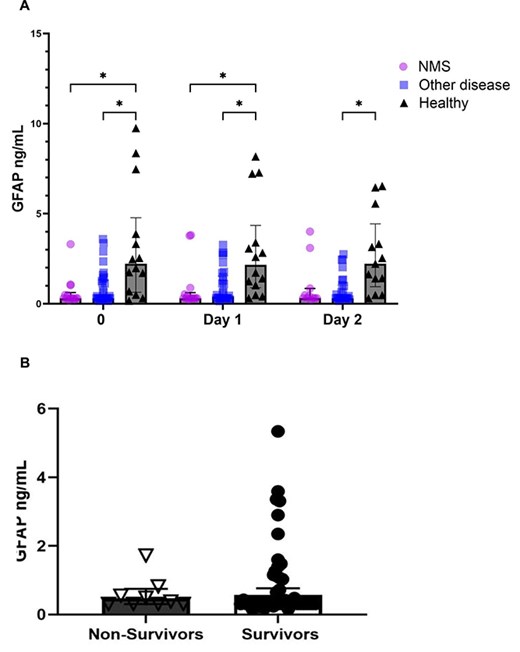
Plasma concentrations of brain-derived neurotrophic factor (BDNF), glial-fibrillary-acidic protein (GFAP), and astrocytic protein S100B, might be linked to the pathophysiology of Neonatal Maladjustment Syndrome (NMS).
Hypothesis/Objectives
To measure serum concentration of BDNF and S100B, plasma concentration of GFAP, and neurosteroids (progesterone and 17α-hydroxyprogesterone) in foals with NMS, foals presented for other diseases, including premature, and healthy foals, and determine their association with outcome.
Animals
Fourteen healthy foals, 19 NMS foals, 39 foals hospitalized for other diseases < 7 days of age.
Methods
In this prospective, longitudinal study, concentrations of biomarkers were determined in all foals on admission, at day 1 and 2 of hospitalization. Plasma or serum concentration of biomarkers was measured with ELISA and single-molecule-array technology.
Results
Forty-eight foals survived, 10 did not survive. Serum BDNF concentration was lower after 24 h of hospitalization in NMS foals (baseline: 3.0, 1.9-4.1 g/mL; day 1: 2.0, 1.2-2.8 pg/mL) (P = .02). Serum S100B was higher in septic foals with NMS (marginal means, 95% CI, 435.3, 290-580 ng/mL) compared to septic foals without NMS (238.9, 164.6-313.2 ng/mL) on admission (P = .01). Pregnane concentrations were higher in NMS foals compared to healthy and sick foals over the first 48 h of hospitalization (P < .05).
Conclusions and clinical importance
Higher BDNF, S100B, and pregnane concentrations were consistent with NMS, and might allow for neurological assessment.

