2025-06-24 ワシントン大学セントルイス校
<関連情報>
- https://source.washu.edu/2025/06/sleep-data-from-wearable-device-may-help-predict-preterm-birth/
- https://engineering.washu.edu/news/2025/Sleep-data-from-wearable-device-may-help-predict-preterm-birth.html
- https://www.nature.com/articles/s44294-025-00082-y
早産予測のための睡眠に基づくアクチグラフ機械学習モデルの検証 Validation of sleep-based actigraphy machine learning models for prediction of preterm birth
Benjamin C. Warner,Peinan Zhao,Erik D. Herzog,Antonina I. Frolova,Sarah K. England & Chenyang Lu
npj Women’s Health Published:20 June 2025
DOI:https://doi.org/10.1038/s44294-025-00082-y
Abstract
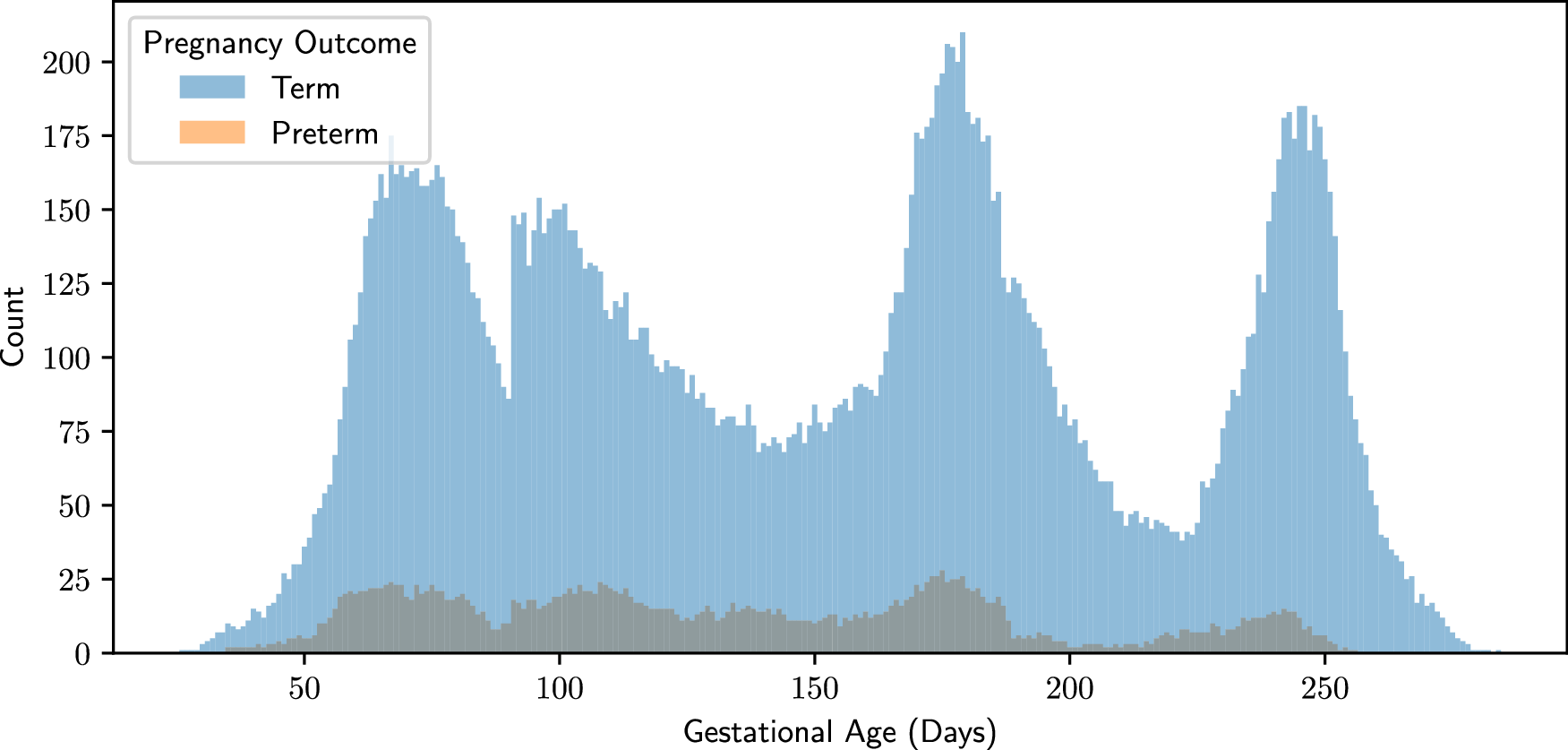
Disruptive sleep is a well-established predictor of preterm birth. However, the exact relationship between sleep behavior and preterm birth outcomes remains unknown, in part because prior work has relied on self-reported sleep data. With the advent of smartwatches, it is possible to obtain more reliable and accurate sleep data, which can be utilized to evaluate the impact of specific sleep behaviors in concert with machine learning. We evaluate motion actigraphy data collected from a cohort of participants undergoing pregnancy, and train several machine learning models based on aggregate features engineered from this data. We then evaluate the relative impact from each of these actigraphy features, as well as features derived from questionnaires collected from participants. Our findings suggest that actigraphy data can predict preterm birth outcomes with a degree of effectiveness, and that variability in sleep patterns is a relatively fair predictor of preterm birth.