2025-08-04 東京科学大学
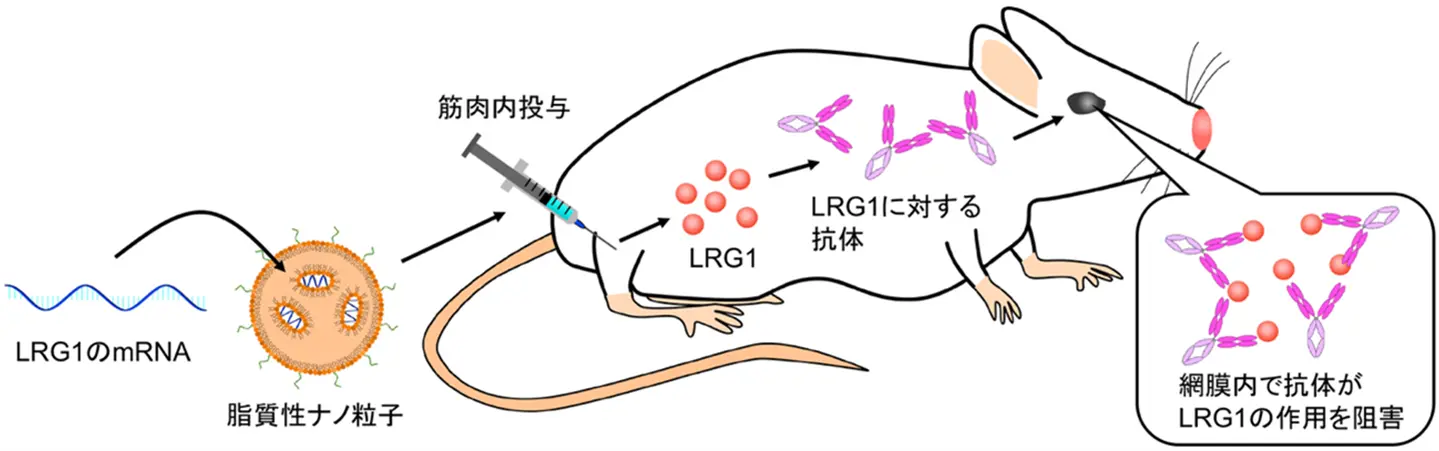
図1. 本研究の概要
<関連情報>
- https://www.isct.ac.jp/ja/news/au6l02eczgls
- https://www.sciencedirect.com/science/article/pii/S0264410X25007480
mRNAワクチンは動物モデルにおける病理学的網膜脈絡膜新生血管形成を軽減する mRNA vaccination mitigates pathological retinochoroidal neovascularization in animal models
Yasuo Yanagi, Hinako Ichikawa, Le Bui Thao Nguyen, Akimasa Hayashi, Naoko Abe, Hiroshi Abe, Satoshi Uchida
Vaccine Available online: 2 July 2025
DOI:https://doi.org/10.1016/j.vaccine.2025.127451
Abstract
Retinochoroidal neovascularization (NV), involved in macular degeneration, diabetic retinopathy, and other ocular diseases, causes vision impairment and blindness. Current treatments rely on repeated intraocular injections of anti-angiogenic drugs, which are burdensome for patients and clinicians, and some patients fail to respond to the treatments. This study investigates the potential of mRNA vaccination to mitigate NV and treat ocular pathologies. The vaccine targets leucine-rich alpha-2-glycoprotein 1 (LRG1), a protein specifically expressed in pathological neovascularization, inducing anti-LRG1 antibody responses in mice. In a laser-induced NV model, the LRG1 mRNA vaccine reduces NV area and leakage while inhibiting microglial cell infiltration. Histological analysis shows no adverse effects on retinal architecture or glial cell activation. Additionally, in Vldlr knockout mice, LRG1 mRNA administration suppresses ongoing neovascularization and downregulates key angiogenic mediators. These findings highlight the therapeutic potential of LRG1 mRNA as a novel strategy for CNV-associated diseases.