2025-07-28 中国科学院(CAS)
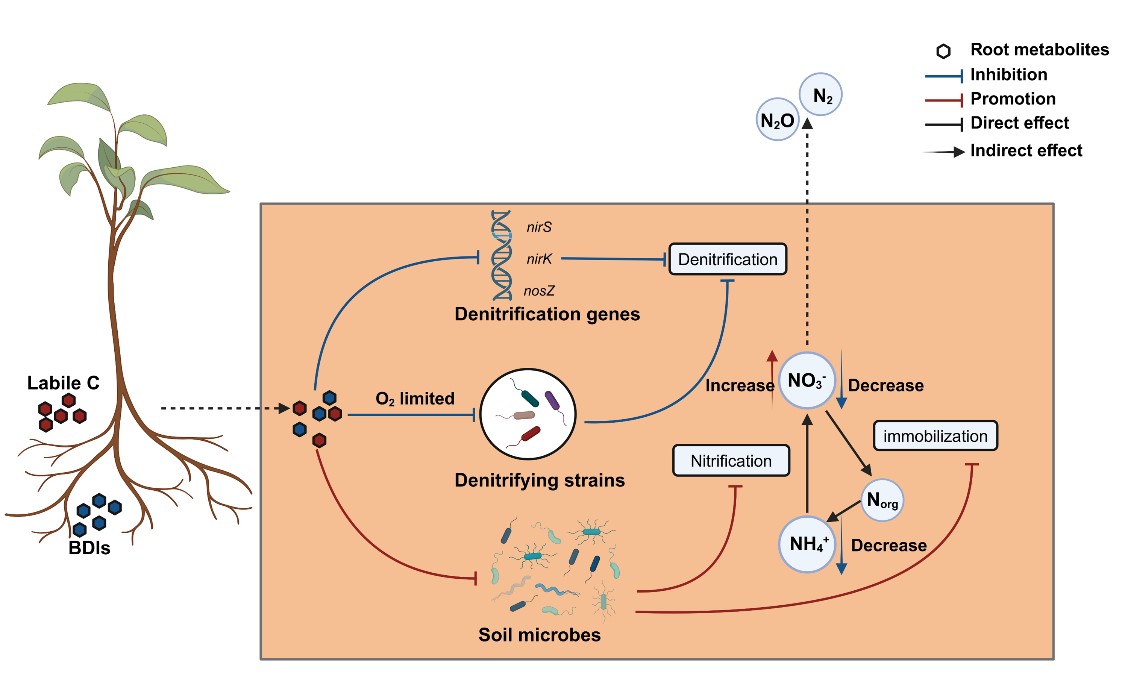
Proposed mechanism of BDI-active root metabolites suppressing soil denitrification. Metabolites such as flavonoids inhibit microbial gene expression (nirK, nirS, nosZ), reducing nitrate loss and N₂O emissions (Image by LI Jincheng)
<関連情報>
- https://english.cas.cn/newsroom/research_news/earth/202507/t20250729_1048657.shtml
- https://www.sciencedirect.com/science/article/abs/pii/S0038071725001920
搾取者ではなく:多様な植物から得られる根部代謝物が脱窒抑制を促進する Exploiter no more: root metabolites driving denitrification inhibition from diverse plants
Jincheng Li, Roland Bol, Davey L. Jones, David R. Chadwick, Xiaotang Ju, Chuihua Kong, Yunting Fang, Di Wu
Soil Biology and Biochemistry Available online: 1 July 2025
DOI:https://doi.org/10.1016/j.soilbio.2025.109898
Highlights
- 21 plants’ root metabolites inhibited soil denitrification among 100 plants screened.
- BDI metabolites reduced nirK, nirS, and nosZ gene abundance in rhizosphere.
- Closely related genetic species may a potential avenue to isolate BDI compounds.
Abstract
Soil denitrifiers can profoundly benefit from plant root activities by utilizing the released labile carbon (C) in root exudates, though the plants may not receive direct benefits in return. However, the role of root metabolites in promoting or suppressing denitrification remains poorly understood across a wide range of plant species. Additionally, the underlying mechanisms driving these effects are still elusive. We used an optimized hydroponic-based approach to collect root metabolites in hydroponic solution from 100 plant species. We then assessed their differential effects on soil denitrification potential, microbial activity and the abundance of denitrification genes. Out of the 100 plant species tested, the root metabolites of 21 exhibited biological denitrification inhibition (BDI), while 51 stimulated denitrification under conditions of sufficient C supply. Some of the collected BDI root solutions inhibited soil denitrifying activity within the heterotrophic community and reduced the abundance of key denitrification genes, including nirK, nirS and nosZ. Several potential BDI-related secondary metabolites, such as flavonoids, were identified using untargeted LC–MS metabolomics. Our findings suggest that the inhibition of denitrification through root metabolites may be a widespread strategy among plant species, offering new insights for developing effective strategies to mitigate plant-mediated N losses in the rhizosphere.