
2025-09-02 カリフォルニア大学ロサンゼルス校(UCLA)
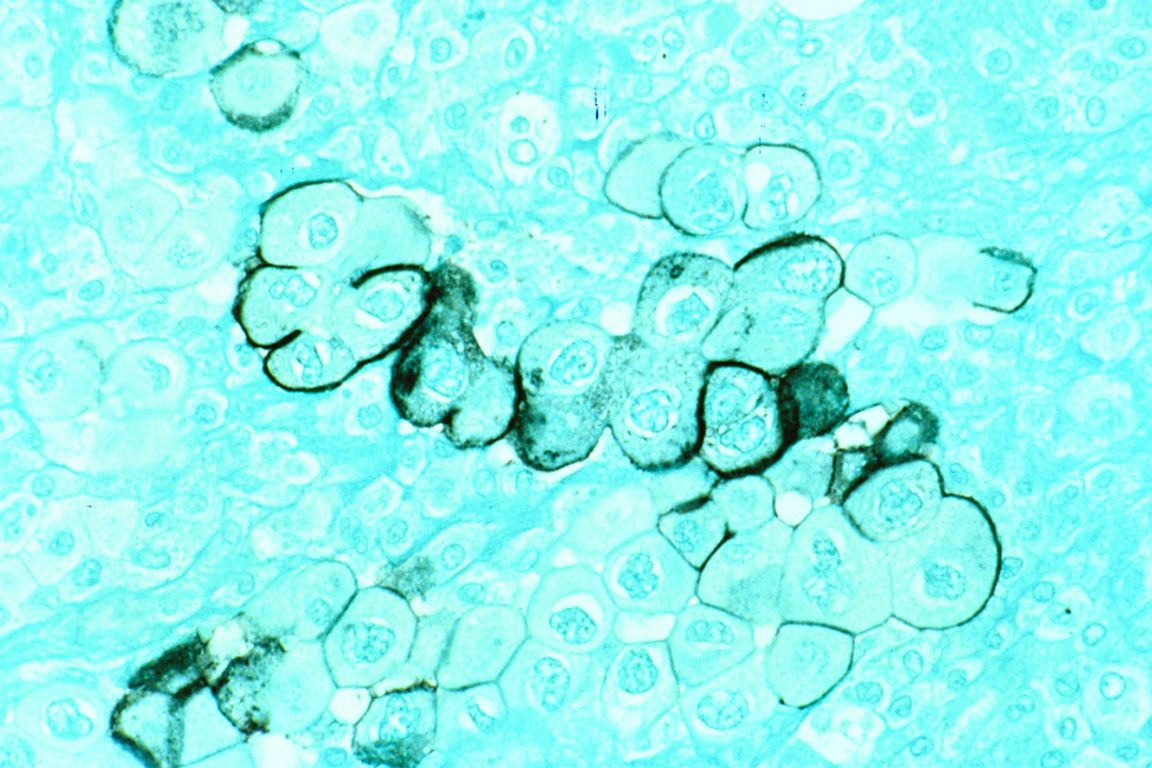
Dr. Lance Liotta Laboratory/National Cancer Institute
Human tumor cells from the pancreas stained with an immunocytochemical stain with methyl green in the background and magnified to 400x.
<関連情報>
- https://newsroom.ucla.edu/stories/cancer-vaccine-shows-promise-fighting-pancreatic-colorectal-cancer
- https://www.nature.com/articles/s41591-025-03876-4
膵臓癌および大腸癌におけるリンパ節標的型mKRAS特異的両親媒性ワクチン:第I相AMPLIFY-201試験の最終結果 Lymph node-targeted, mKRAS-specific amphiphile vaccine in pancreatic and colorectal cancer: phase 1 AMPLIFY-201 trial final results
Zev A. Wainberg,Colin D. Weekes,Muhammad Furqan,Pashtoon M. Kasi,Craig E. Devoe,Alexis D. Leal,Vincent Chung,James R. Perry,Thian Kheoh,Lisa K. McNeil,Esther Welkowsky,Peter C. DeMuth,Christopher M. Haqq,Shubham Pant & Eileen M. O’Reilly
Nature Medicine Published:11 August 2025
DOI:https://doi.org/10.1038/s41591-025-03876-4
Abstract
Cellular immunity, mediated by tumor antigen-specific CD4+ and CD8+ T cells, has a critical role in the success of cancer immunotherapy by targeting intracellular driver and passenger tumor mutations. We present the final results of the phase 1 AMPLIFY-201 trial, in which patients who completed standard locoregional treatment, with minimal residual mKRAS disease (n = 25, 20 pancreatic cancer and 5 colorectal cancer), received monotherapy vaccination with lymph node-targeting ELI-002 2P, including mutant KRAS (mKRAS) amphiphile-peptide antigens (G12D, G12R) and amphiphile-adjuvant CpG-7909. At a median follow-up of 19.7 months, efficacy correlated with mKRAS-specific T cell responses above or below a threshold 9.17-fold increase over baseline, with median radiographic relapse-free survival not reached, versus 3.02 months (hazard ratio (HR) = 0.12, P = 0.0002) and median overall survival not reached versus 15.98 months (HR = 0.23, P = 0.0099). Seventy-one percent of evaluable patients induced both CD4+ and CD8+ subsets, with sustained immunogenicity. Following ELI-002 2P treatment, antigen spreading was observed in 67% of patients, with increased T cells reactive to personalized, tumor antigens absent from the ELI-002 2P vaccine. Therefore, lymph node-targeting amphiphile vaccination induces persistent T cell responses targeting oncogenic driver KRAS mutations, alongside personalized, tumor antigen-specific T cells, which may correlate to clinical outcomes in pancreatic and colorectal cancer. ClinicalTrials.gov registration: NCT04853017.

