2025-10-22 東京科学大学
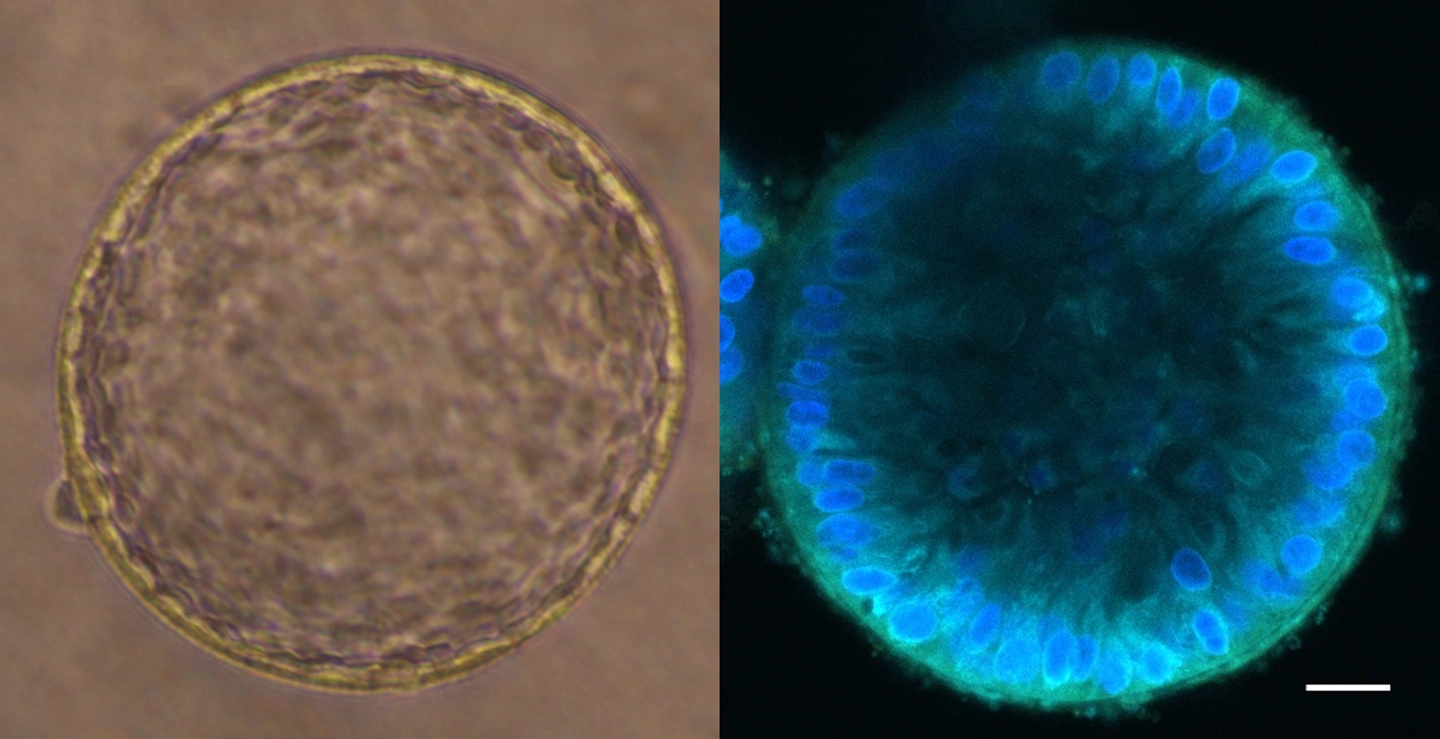
図1.患者摘出腎由来尿細管オルガノイドの顕微鏡写真
<関連情報>
- https://www.isct.ac.jp/ja/news/f00qtp46fe2n
- https://www.isct.ac.jp/plugins/cms/component_download_file.php?type=2&pageId=&contentsId=1&contentsDataId=2524&prevId=&key=daf37d4d8ed7e37bff70ab7c9f1e2762.pdf
- https://advanced.onlinelibrary.wiley.com/doi/10.1002/adhm.202501795
薬剤スクリーニングのためのシスプラチン誘発性細胞老化および線維化の反復を誘発するヒト腎臓管状モデル A Human Kidney Tubuloid Model of Repeated Cisplatin-Induced Cellular Senescence and Fibrosis for Drug Screening
Yuki Nakao, Makiko Mori, Yuta Sekiguchi, Iori Morita, Ryota Shindoh, Shintaro Mandai, Tamami Fujiki, Hiroaki Kikuchi, Fumiaki Ando, Koichiro Susa, Takayasu Mori, Ayumi Suzuki …
Advanced Healthcare Materials Published: 09 October 2025
DOI:https://doi.org/10.1002/adhm.202501795
Abstract
In advancing pathophysiological models to assess renal drug responses, kidney organoids derived from human pluripotent stem cells mark notable progress. However, replicating aging- and senescence-related pathologies remains a challenge. In this study, an alternative model is introduced using “tubuloids”—epithelial-like structures generated from primary human renal proximal tubular epithelial cells (hRPTECs) isolated from resected human kidneys. Bulk RNA-seq deconvolution confirmed that tubuloids are highly differentiated and predominantly composed of proximal tubule-like cells. Exposure to cisplatin increased γH2AX, Kidney Injury Molecule-1, and Cleaved Caspase-3, markers for DNA damage response, epithelial damage, and apoptosis, respectively. Repeated cisplatin administration resulted in the upregulation of senescence markers and secretion of inflammatory cytokines, consistent with a senescence-associated secretory phenotype (SASP). Supernatants from cisplatin-treated tubuloids triggered myofibroblast activation, suggesting early fibrotic changes. A hRPTEC-derived tubuloid model of cisplatin-induced kidney injury is successfully developed that mimics senescence, SASP, and fibrosis—hallmarks of chronic kidney disease. This model offers a promising human-relevant platform for studying renal epithelial responses and drug screening.