2025-10-23 カリフォルニア大学リバーサイド校(UCR)
<関連情報>
- https://news.ucr.edu/articles/2025/10/23/hidden-toxins-e-cigarette-fluids-may-harm-lung-cells
- https://www.frontiersin.org/journals/toxicology/articles/10.3389/ftox.2025.1624794/
アセトアルデヒドとメチルグリオキサール:ヒト気管支上皮モデルを用いた3Dおよび2D曝露システムにおける有毒電子タバコ分解生成物の比較分析
Acetaldehyde and methylglyoxal: comparative analysis of toxic electronic cigarette degradation products in 3D and 2D exposure systems using human bronchial epithelial models
Man Wong,Teresa Martinez,Nathan Hendricks,Prue Talbot
Frontiers in Toxicology Published:30 September 2025
DOI:https://doi.org/10.3389/ftox.2025.1624794
Background: Acetaldehyde and methylglyoxal are structurally related aldehydes produced by thermal degradation of the electronic cigarette (EC) solvents, propylene glycol and glycerin. Despite their presence in EC aerosols, the biological effects of these aldehydes when inhaled during vaping are largely unknown.
Methods: Three-dimensional (3D) human bronchial epithelial tissues (EpiAirway™) were exposed at the air liquid interface (ALI) to aerosols containing acetaldehyde or methylglyoxal at concentrations relevant to human vaping. PBS-exposed tissues served as controls. Comparative proteomic analyses were performed to assess global alterations in protein expression. Based on proteomics data, concentration-response experiments were conducted using BEAS-2B bronchial epithelial cells to evaluate reactive oxygen species, mitochondrial function, and cytoskeletal integrity.
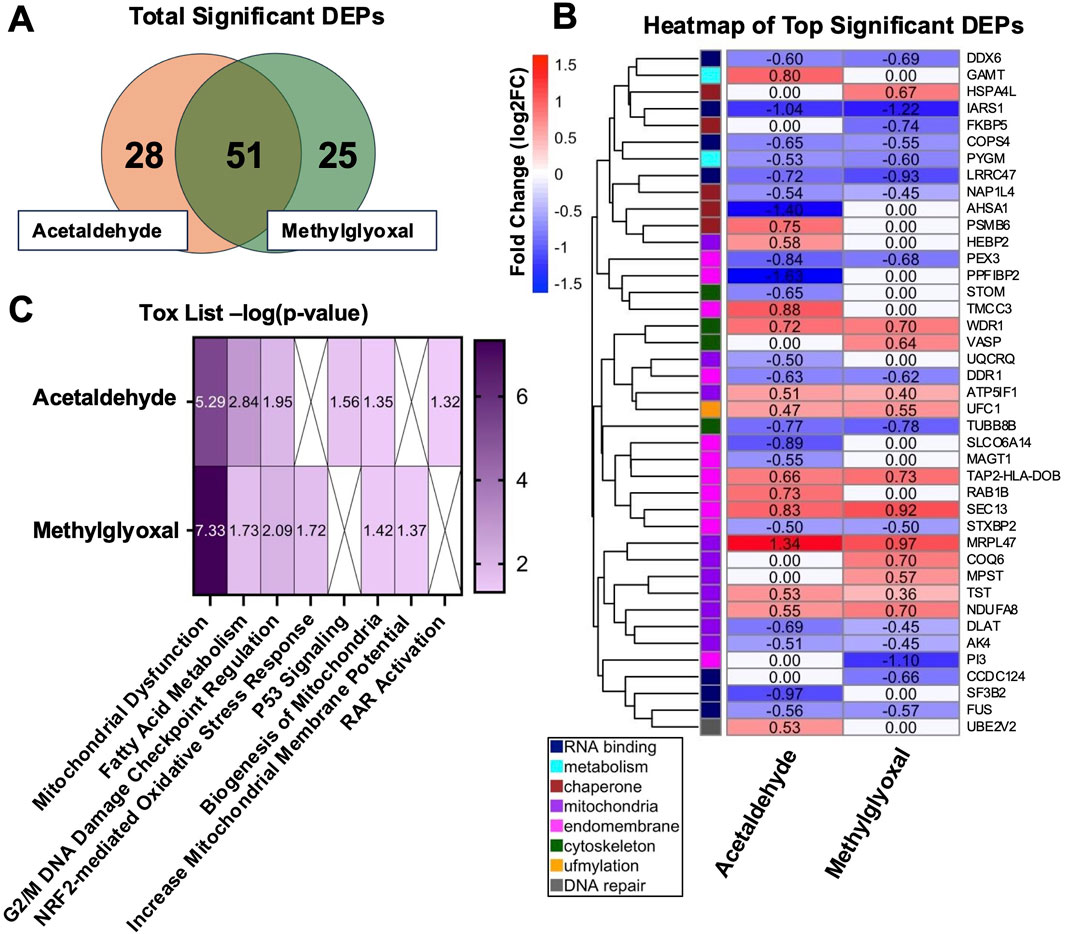
Results: ALI exposure to acetaldehyde or methylglyoxal resulted in 79 and 76 differentially expressed proteins (DEPs), respectively, with 51 overlapping proteins exhibiting similar fold change directionality. Ingenuity Pathway Analysis (IPA) Toxicity Lists identified key affected pathways, including mitochondrial dysfunction, fatty acid metabolism, G2/M DNA damage checkpoint regulation, and mitochondrial biogenesis. Gene Ontology (GO) ontology analysis revealed substantial overlap in affected biological processes and cellular components. Findings were further supported and expanded in BEAS-2B cell concentration-response assays, which confirmed mitochondrial impairment, elevated ROS levels, and disrupted cytoskeletal organization. Notably, TRPM8 inhibition attenuated methylglyoxal-induced mitochondrial dysfunction (MTT assay), while both TRPM8 and TRPA1 inhibition partially rescued actin depolymerization.
Conclusion: Brief ALI exposure of EpiAirway™ tissues to vaping-relevant concentrations of acetaldehyde or methylglyoxal altered the bronchial epithelial proteome. Complementary concentration-response experiments with submerged BEAS-2B cells confirmed and extended the proteomics data. While both aldehydes exhibited similar proteomic and functional impacts, methylglyoxal was effective at substantially lower concentrations in all assays with some effects partially mediated via TRPA1 and TRPM8 channels.