2024-02-13 カリフォルニア大学バークレー校(UCB)
<関連情報>
- https://news.berkeley.edu/2024/02/13/are-stressed-out-brain-cells-the-root-cause-of-neurodegenerative-disease
- https://www.nature.com/articles/s41586-023-06985-7
神経変性で変異したE3リガーゼがストレス応答を抑制することを発見 Stress response silencing by an E3 ligase mutated in neurodegeneration
Diane L. Haakonsen,Michael Heider,Andrew J. Ingersoll,Kayla Vodehnal,Samuel R. Witus,Takeshi Uenaka,Marius Wernig & Michael Rapé
Nature Published:31 January 2024
DOI:https://doi.org/10.1038/s41586-023-06985-7
Abstract
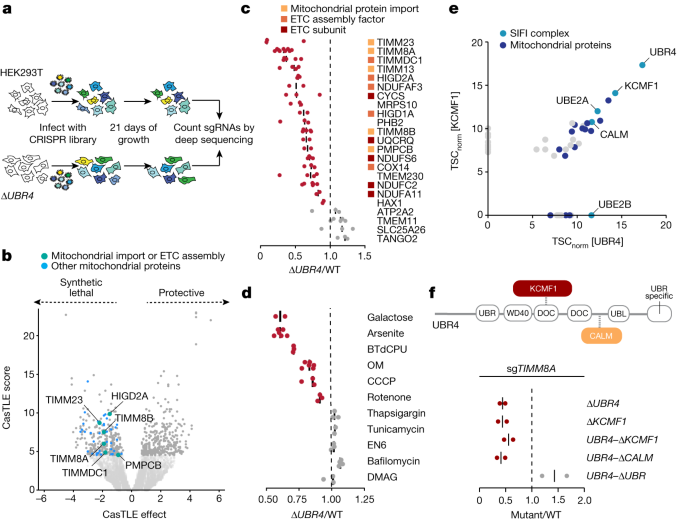
Stress response pathways detect and alleviate adverse conditions to safeguard cell and tissue homeostasis, yet their prolonged activation induces apoptosis and disrupts organismal health1,2,3. How stress responses are turned off at the right time and place remains poorly understood. Here we report a ubiquitin-dependent mechanism that silences the cellular response to mitochondrial protein import stress. Crucial to this process is the silencing factor of the integrated stress response (SIFI), a large E3 ligase complex mutated in ataxia and in early-onset dementia that degrades both unimported mitochondrial precursors and stress response components. By recognizing bifunctional substrate motifs that equally encode protein localization and stability, the SIFI complex turns off a general stress response after a specific stress event has been resolved. Pharmacological stress response silencing sustains cell survival even if stress resolution failed, which underscores the importance of signal termination and provides a roadmap for treating neurodegenerative diseases caused by mitochondrial import defects.