2025-12-02 カロリンスカ研究所(KI)
<関連情報>
- https://news.ki.se/how-the-nervous-system-activates-repair-after-spinal-cord-injury
- https://www.nature.com/articles/s41593-025-02131-w
損傷応答性エンハンサーの調節コードは中枢神経系における精密な細胞状態の標的化を可能にする The regulatory code of injury-responsive enhancers enables precision cell-state targeting in the CNS
Margherita Zamboni,Adrián Martínez-Martín,Gabriel Rydholm,Timm Häneke,Laura Pintado Almeida,Deniz Seçilmiş,Christoph Ziegenhain & Enric Llorens-Bobadilla
Nature Neuroscience Published:02 December 2025
DOI:https://doi.org/10.1038/s41593-025-02131-w
Abstract
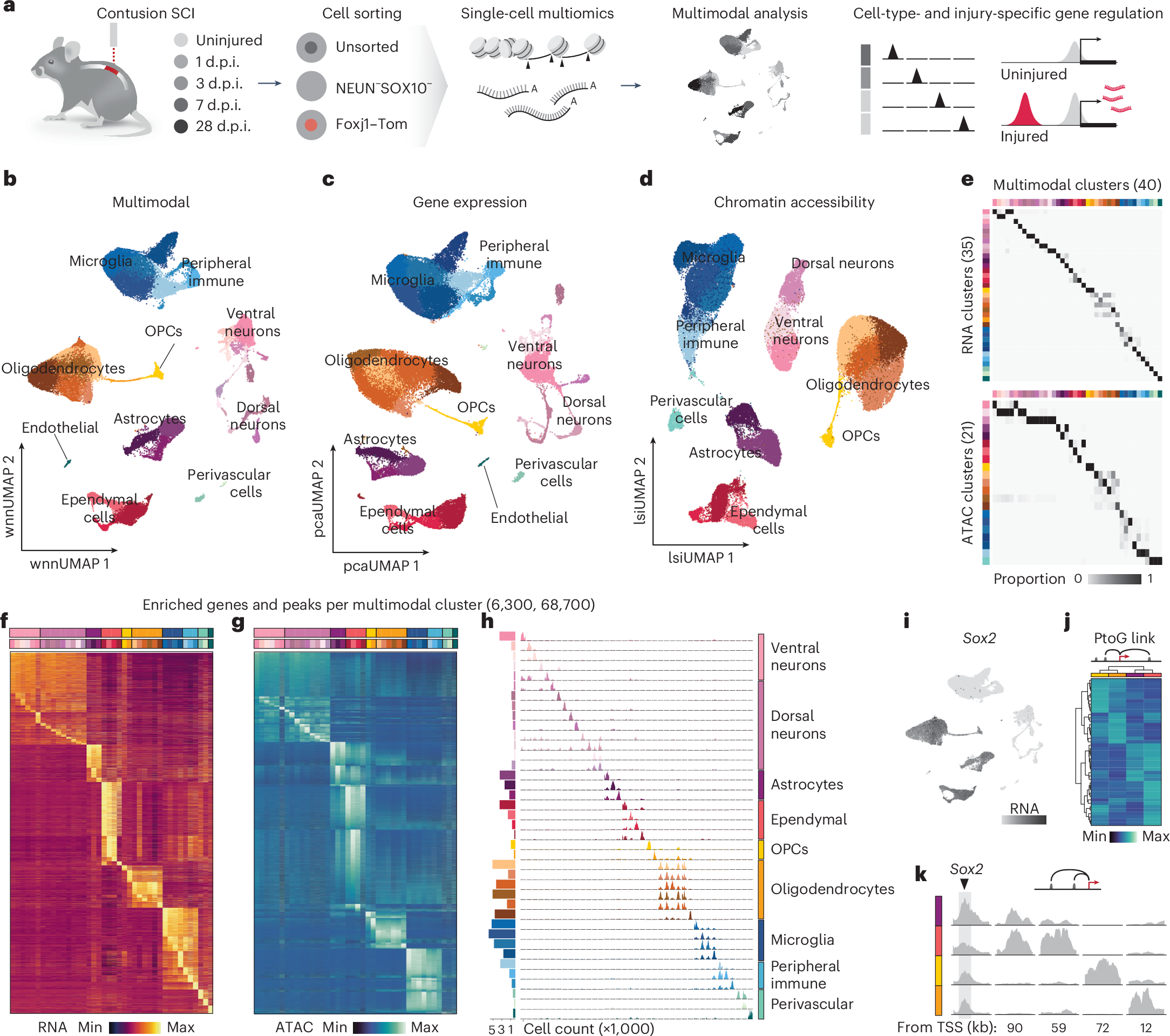
Enhancer elements direct cell-type-specific gene expression programs. After injury, cells change their transcriptional state to adapt to stress and initiate repair. Here we investigate how injury-induced transcriptional programs are encoded within enhancers in the mammalian CNS. Leveraging single-nucleus transcriptomics and chromatin accessibility profiling, we identify thousands of injury-induced, cell-type-specific enhancers in the mouse spinal cord after a contusion injury. These are abundant in glial cells and retain cell-type specificity, even when regulating shared wound response genes. By modeling glial injury-responsive enhancers using deep learning, we reveal that their architecture encodes cell-type specificity by integrating generic stimulus response elements with cell identity programs. Finally, through in vivo enhancer screening, we demonstrate that injury-responsive enhancers can selectively target reactive astrocytes across the CNS using therapeutically relevant gene delivery vectors. Our decoding of the principles of injury-responsive enhancers enables the design of sequences that can be programmed to target disease-associated cell states.