2025-12-12 愛媛大学
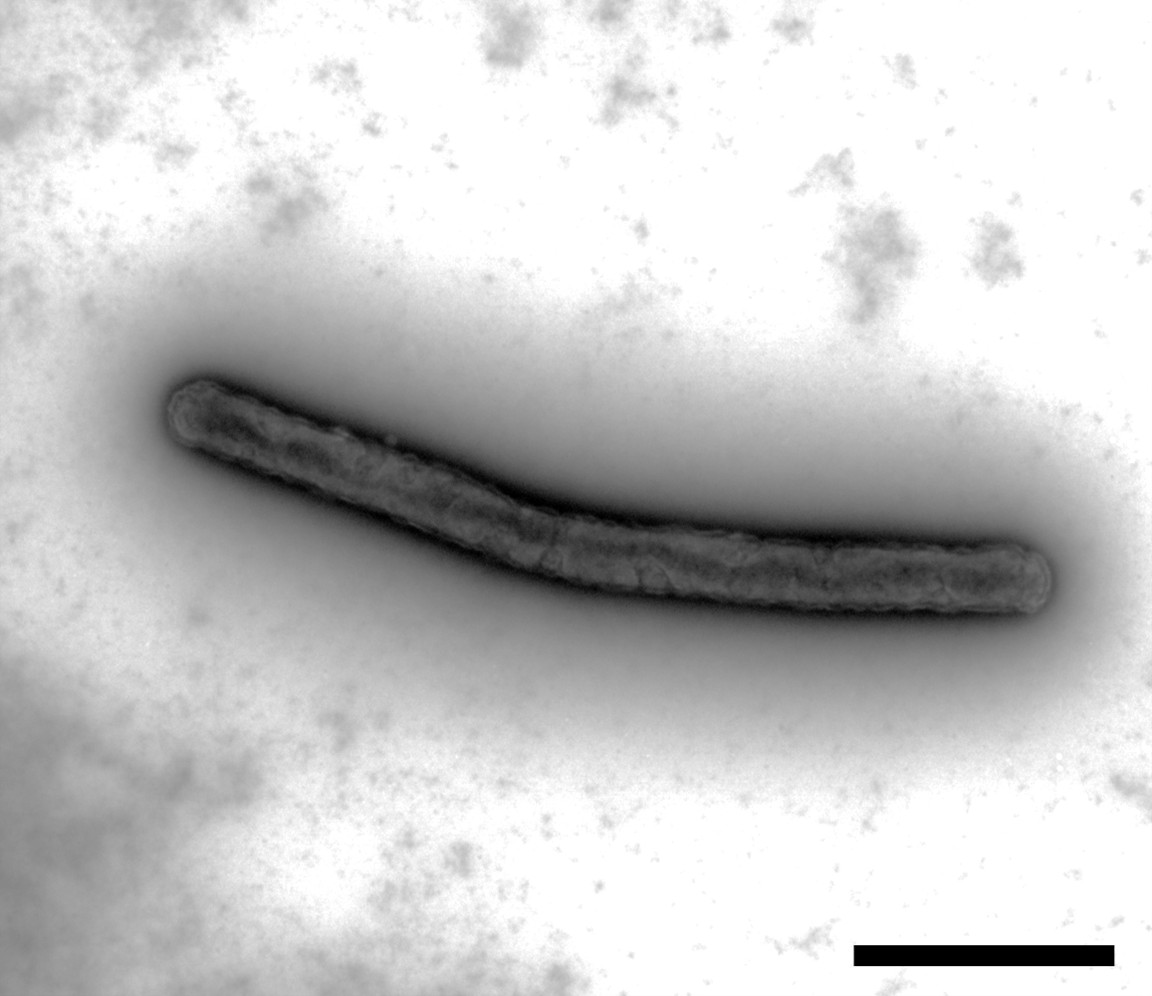
純粋分離に成功した鉄酸化細菌の電子顕微鏡写真(スケールバー:1 μm)
<関連情報>
- https://www.ehime-u.ac.jp/data_relese/pr_20251212_agr/
- https://www.ehime-u.ac.jp/wp-content/uploads/2025/12/pr_20251212_eng.pdf
- https://enviromicro-journals.onlinelibrary.wiley.com/doi/10.1111/1462-2920.70212
銅耐性鉄酸化細菌により引き起こされる中性鉱山排水の高レベル銅濃縮 Percent-Level Copper Mineralisation Promoted by Copper-Tolerant Iron-Oxidising Bacteria in Circumneutral Mine Drainage
Kazuya Tanimoto, Shingo Kato, Kohei Tokunaga, Natsuko Hamamura, Moriya Ohkuma, Satoshi Mitsunobu
Environmental Microbiology Published: 30 November 2025
DOI:https://doi.org/10.1111/1462-2920.70212
ABSTRACT
Geomicrobiology of copper (Cu) and iron (Fe) in circumneutral-pH drainage from a Japanese Cu mine was investigated, with a focus on Fe(II)-oxidising microorganisms. Cu in the drainage was rapidly removed through Fe(II) oxidation and subsequent Fe(III) biomineralisation. The resulting Fe(III) biomineral-rich sediment contained up to ~2 wt% Cu, a percent-level high content. XAFS and XRD analyses directly demonstrated that Cu was predominantly associated with poorly crystalline Fe(III) oxyhydroxides. The microbial community in the drainage was dominated by chemolithotrophic Fe(II)-oxidising bacteria of family Gallionellaceae (33.8%), suggesting their key role in Cu and Fe biomineralisation. Using a custom-made medium, Gallionellaceae bacteria were enriched and a representative strain TK5 was isolated. 16S rRNA gene analysis revealed that TK5 was almost identical to the most abundant taxon at the site and likely represents a novel species of genus Sideroxyarcus. Physiological and genomic analyses confirmed its Fe(II) oxidation ability and a relatively high Cu(II) tolerance (up to 50 μM), which is about 20-fold higher than on-site Cu concentration. Strain TK5 is the first known Cu-tolerant Fe(II)-oxidising Gallionellaceae isolate. Batch experiments demonstrated that TK5 effectively promoted Cu deposition via Fe(III) biomineralisation. This study highlights the potential of Fe(II)-oxidising bacteria for Cu bioremediation and biomineralisation under circumneutral-pH conditions.