2026-02-13 京都大学iPS細胞研究所
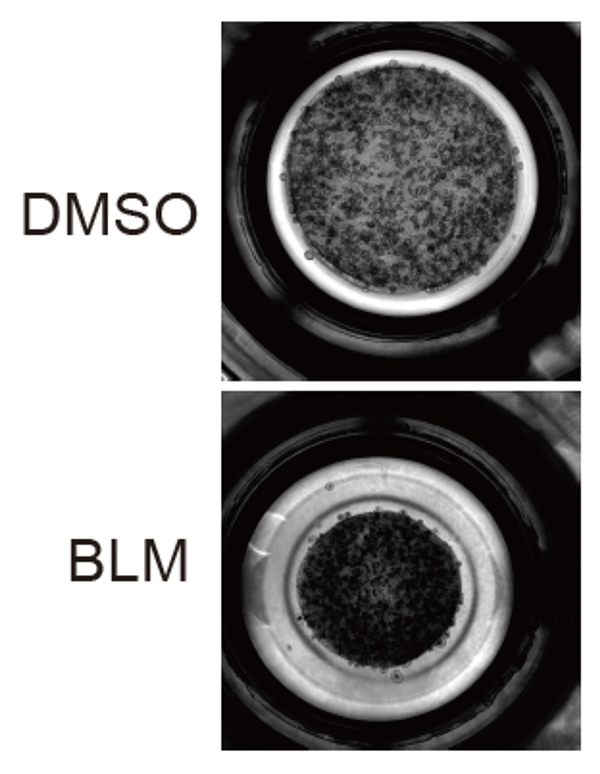
Fig.1 BLM処理により肺胞オルガノイドが収縮し、肺線維症の病態を再現している。
<関連情報>
- https://www.cira.kyoto-u.ac.jp/j/pressrelease/news/260213-000000.html
- https://www.nature.com/articles/s41467-026-68909-z
ヒトiPSCを用いた肺線維症モデルにより、p300/CBP阻害が肺胞移行細胞状態を抑制することが明らかに Human iPSC-based Modeling of Pulmonary Fibrosis Reveals p300/CBP Inhibition Suppresses Alveolar Transitional Cell State
Yusuke Tsutsui,Atsushi Masui,Satoshi Konishi,Taro Tsujimura,Mio Iwasaki,Takuya Yamamoto & Shimpei Gotoh
Nature Communications Published:12 February 2026
DOI:https://doi.org/10.1038/s41467-026-68909-z
Abstract
Idiopathic pulmonary fibrosis (IPF) is characterized by progressive scarring of lung tissue with an urgent need for effective treatments. Studies have shown that the alveolar transitional cell state (ATCS) emerges in fibrotic regions of the IPF lung. However, whether ATCS is the cause or consequence of fibrosis is controversial, and no therapeutic agents targeting the alveolar epithelial differentiation are used to treat IPF. In this study, we performed a drug screening with an in vitro pulmonary fibrosis model using fibroblast-dependent alveolar organoids derived from human induced pluripotent stem cells (iPSCs) and identified p300/CBP inhibitors as candidate therapeutic agents. Multi-omics technology revealed that ATCS induced from human iPSCs-derived alveolar organoids had a compatible profile with that reported in IPF and p300/CBP inhibitors suppressed the emergence of ATCS. Overall, these results elucidate the biological mechanisms of pulmonary fibrosis and provide a potential therapeutic target.