
2026-02-19 オックスフォード大学
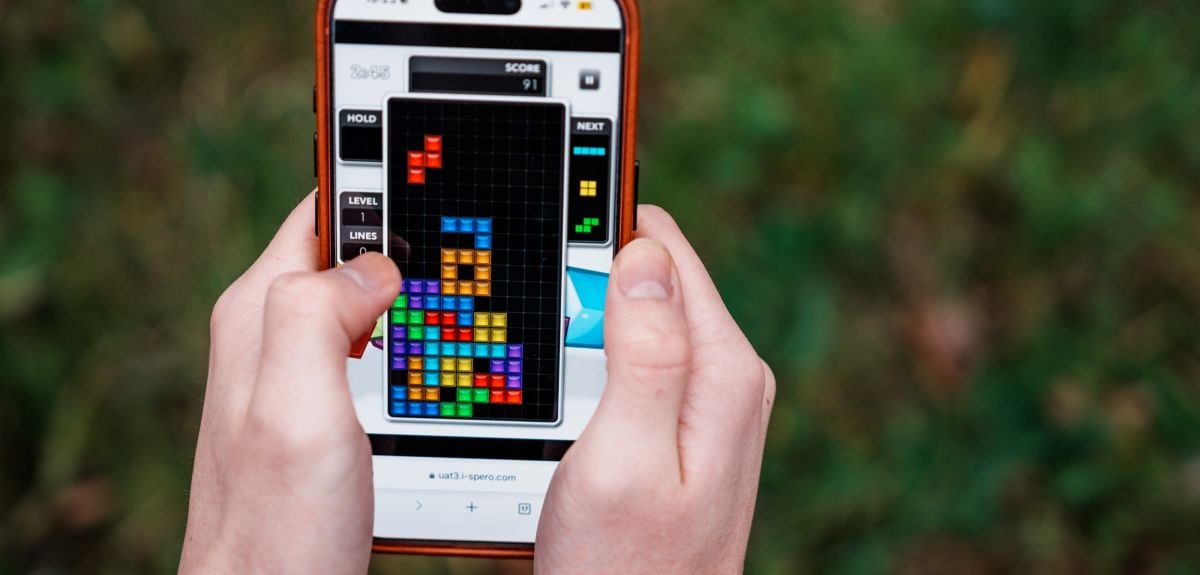
A digital treatment based on the video game Tetris has been shown to dramatically reduce intrusive memories of trauma. Image credit: Wellcome.
<関連情報>
- https://www.ox.ac.uk/news/2026-02-19-study-shows-digital-treatment-tetris-gameplay-can-dramatically-reduce-trauma
- https://www.thelancet.com/journals/lanpsy/article/PIIS2215-0366(25)00397-9/fulltext
英国におけるCOVID-19パンデミック中のトラウマにさらされた医療従事者における侵入記憶を停止するためのデジタルイメージ競合課題介入:ベイズ適応型ランダム化臨床試験 A digital imagery-competing task intervention for stopping intrusive memories in trauma-exposed health-care staff during the COVID-19 pandemic in the UK: a Bayesian adaptive randomised clinical trial
Amy C Beckenstrom, DPhi ∙ Prof Michael B Bonsall, PhD ∙ Alfred Markham, MSc ∙ Owen Slade, Mres ∙ Varsha Ramineni, MSc ∙ Lalitha Iyadurai, DClinPsy PhD ∙ et al.
The Lancet Psychiatry Published: March 2026
DOI:https://doi.org/10.1016/S2215-0366(25)00397-9
Summary
Background
Psychological trauma, such as witnessing an untimely or gruesome death, commonly provokes intrusive memories that might persist for days to years with adverse effects on individual mental and physical health and functioning. Despite the global prevalence of trauma, scalable evidence-based interventions are absent. Reducing the impact of intrusive memories is crucial for people frequently exposed to trauma, such as health-care workers. This study aimed to determine whether a brief digital imagery-competing task intervention (ICTI) reduced intrusive memory frequency after 4 weeks. Harms were also assessed.
Methods
The GAINS-02 decentralised digital, parallel-group Bayesian adaptive randomised controlled trial tested a brief ICTI against an active control and treatment as usual to determine the effect on reducing intrusive memory frequency. Health-care workers in facilities that admitted patients with COVID-19 during the pandemic, who had experienced one or more traumatic events and reported at least three intrusive memories in the week before screening were randomised 2:2:1 (ICTI to active control to treatment as usual) via block randomisation (web-based). ICTI and active control participants were masked to treatment allocation, and both had one guided session then optional self-use. ICTI involved image-based memory retrieval then Tetris computer gameplay with mental rotation. The active control involved a music-listening task. Study statisticians were masked to ICTI and active control group. The primary outcome was the number of intrusive memories in week 4 (controlling for baseline), which was evaluated on an intention-to-treat basis. Treatment effects for the intervention group versus the comparator groups were assessed using Bayes regression analyses. Harms were assessed through adverse event reporting and interim analyses on primary outcome. People with lived experience were involved from study conception and throughout the research and writing process. The trial was pre-registered at clinicaltrials.gov (NCT05616676) and is completed.
Findings
Between Dec 8, 2022, and Sept 15, 2023, 176 participants were screened and 99 included (ICTI n=40, active control n=39, treatment as usual n=20) with mean age 41·2 years (SD 10·2; range 21–62). Of these 99 participants, 85 (86%) self-identified as women and 89 (90%) as White. Bayesian analyses gave robust evidence that ICTI reduced intrusive memories at week 4: ICTI participants reported fewer intrusive memories (median 0·5 [IQR 0·0–5·0]) compared with the active control (active control 5·0 [3·0–11·5]; Bayes factor [BF]active control>ICTI vs active control=ICTI 114·1; βactive control>ICTI 1·29 [95% CrI 0·64–2·00]) and treatment as usual (median 5·0 [IQR 2·5–8·0]; BFtreatment as usual>ICTI vs treatment as usual=ICTI=15·8; βtreatment as usual>ICTI 1·21 [95% CrI 0·49–1·98]) groups. No harms were detected for ICTI relative to the active control and treatment as usual. The most reported adverse event (n=7) was COVID-19. Two adverse events involved burden of diary recording. Serious adverse events were hospitalisations unrelated to study procedures (n=6).
Interpretation
This study shows that ICTI reduces intrusive memory frequency and post-traumatic stress disorder symptoms among health-care workers exposed to trauma. As a brief, scalable digital intervention, ICTI shows promise for mitigating consequences of trauma on mental health, an important and unmet need for health-care personnel and systems worldwide.
Funding
Wellcome Trust, Swedish Research Council, UK Medical Research Council, and National Institute for Health and Care Research.

