2026-06-02 東京科学大学
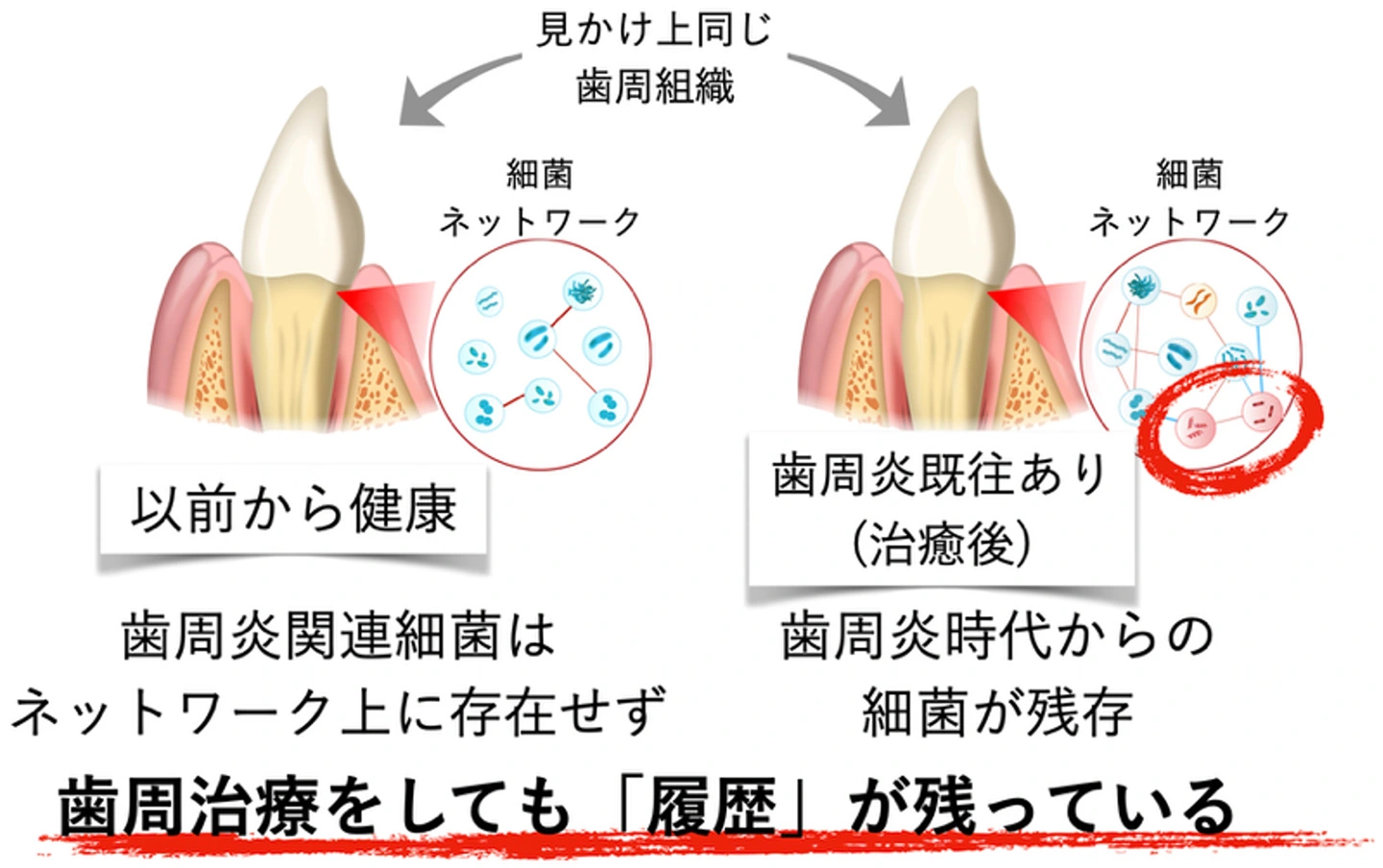
図1. 歯周炎治療後の細菌ネットワークの概要
<関連情報>
- https://www.isct.ac.jp/ja/news/8gblwunu57vd#top
- https://academic.oup.com/ismecommun/advance-article/doi/10.1093/ismeco/ycag092/8651599
非外科的歯周治療における治癒結果の根底にある微生物ネットワーク調節と病原体ダイナミクスに関するメタトランスクリプトーム解析 Metatranscriptomic Insights into Microbial Network Modulation and Pathogen Dynamics Underlying Healing Outcomes in Non-Surgical Periodontal Treatment
Ryota Kobayashi,Takahiko Shiba,Takahiko Nagai,Keiji Komatsu,Shunsuke Matsumura,Takayasu Watanabe,Takashi Nemoto,Koki Takada,Yasuo Takeuchi,Takanori Iwata
ISME Communications Published:11 April 2026
DOI:https://doi.org/10.1093/ismeco/ycag092
ABSTRACT
Gingivitis and periodontitis are caused by oral microbiome dysbiosis. Post-treatment alterations in bacterial community structure are uncharacterized in situ, including how these alterations may differ between resolved and unresolved disease states. Understanding these treatment‑induced microbial shifts and identifying prognostic markers in situ associated with favorable or unfavorable outcomes are crucial for developing diagnostic kits and refining therapeutic strategies. Therefore, we performed metatranscriptomic analysis on subgingival plaque samples from the anterior teeth of individuals, including healthy, gingivitis, and periodontitis sites, before and after non‑surgical treatment in 28 patients. We revealed a new bacteriological characteristic of periodontitis, where periodontal pathogens emerge within the bacterial network alongside excessive and skewed associations among bacterial taxa, such as those in the Streptococcus and Actinomyces genera. Furthermore, these imbalances were found improvable through non-surgical treatment. However, even in clinically resolved gingivitis or periodontitis, the bacterial networks did not fully revert to the state observed in healthy sites. This was due to the persistence of periodontal pathogens, absent in the networks at healthy sites. By comparing groups in which periodontitis resolved and those in which it did not, specific bacterial taxa, such as Neisseria elongata and Rothia aeria, were suggested to play a role in the periodontitis healing process, while increases in genes related to glycine degradation and bacterial adhesion, including glycine dehydrogenase β-subunit and cleaved adhesin domain were implicated in inhibiting the healing process. These findings provide insights for the development of treatment strategies targeting specific bacteria and functional genes involved in the resolution of periodontitis.