2026-08-06 オックスフォード大学
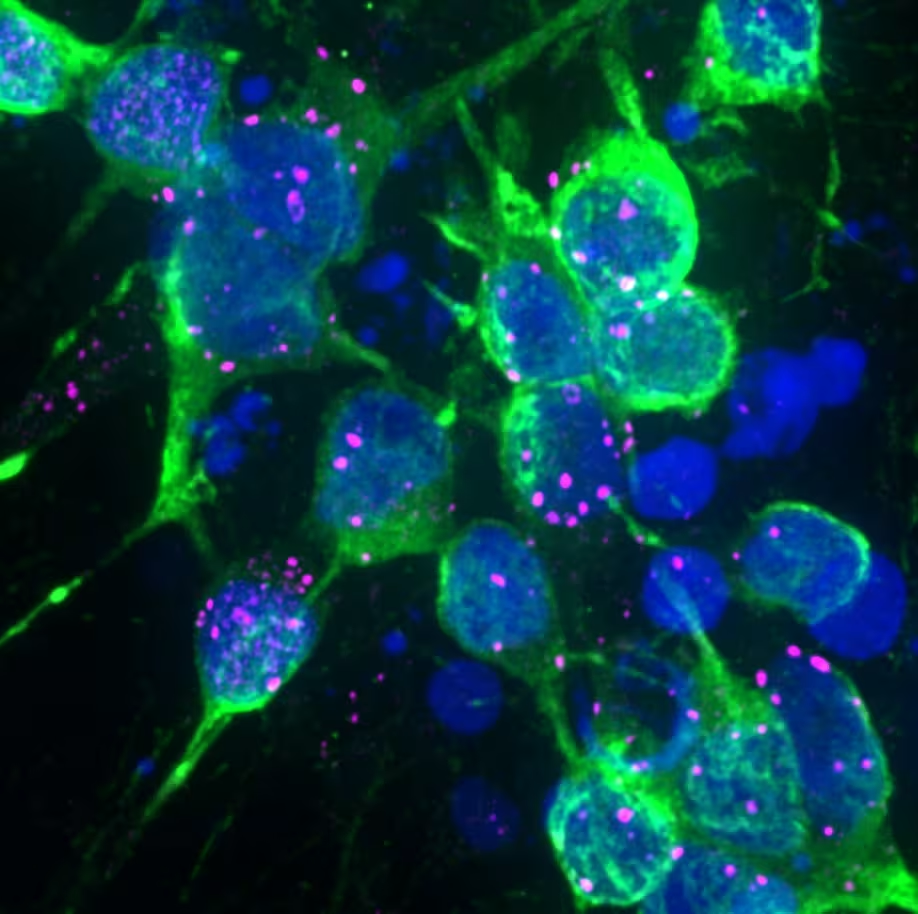
Dopaminergic neurons with tiny aggregates. Image credit: Tofaris Group
<関連情報>
- https://www.ox.ac.uk/news/2026-08-06-oxford-researchers-uncover-how-parkinsons-disease-protein-damages-brain-cells
- https://www.nature.com/articles/s41467-026-76173-4
α-シヌクレインはパーキンソン病の初期段階で小胞体における共翻訳タンパク質転座を阻害する α-Synuclein blocks endoplasmic reticulum co-translational protein translocation early in Parkinson’s disease
Chor Lai Lam,Nicholas J. F. Gatford,Ana Aragón-González,Benedict Tanudjojo,Anis Sahoo,Andrew R. Castle,Devika Agarwal,Ashwin Jainarayanan,Svenja S. Hester,Navoneel Sen,Justin L. P. Benesch,Roman Fischer,David Sims & George K. Tofaris
Nature Communications Published:06 August 2026
DOI:https://doi.org/10.1038/s41467-026-76173-4
Abstract
The primary mechanism and subcellular localisation of α-synuclein toxicity in Parkinson’s disease pathogenesis remain unknown. We spatially and temporally resolved proteomic and transcriptomic changes in human iPSC-derived dopaminergic neurons with increasing burden of pathological α-synuclein. We found that misfolded α-synuclein proteoforms, signified by the formation of nanoscale intraneuronal puncta, are associated with impaired translocon function at the endoplasmic reticulum (ER). We show that α-synuclein interacts with Sec61A in iPSC-derived dopaminergic neurons and in post-mortem brain tissue from patients with Parkinson’s disease. This interaction interferes with the co-translational translocation of ER-processed proteins including the vacuolar-type ATPase V0a1 subunit, glucocerebrosidase, and Cathepsin B, causing defective organelle function such as reduced lysosomal acidification, leading to increased extracellular vesicle release of α-synuclein. Defective ER-translocation was associated with increased ribosomal UFMylation and proteasomal recruitment but not activation of the unfolded protein response. Reduction of pathological α-synuclein by either CRISPRi to decrease α-synuclein expression or pharmacological activation of proteasomal degradation with repurposed drugs mitigates the ER defect. Our study offers a unifying mechanistic link between α-synuclein pathology and dysregulation of diverse organelle-associated proteins that are both Sec61A translocon substrates and genetic modifiers of Parkinson’s disease risk. Our data also provide a therapeutic rationale for proteasomal activation in early Parkinson’s disease.