2026-08-06 カロリンスカ研究所(KI)
<関連情報>
- https://news.ki.se/new-method-distinguishes-between-healthy-and-diseased-immune-cells-in-blood-samples
- https://www.nature.com/articles/s41565-026-02236-8
ナノセンサーを用いたスペクトル生物物理学的サイトメトリーにより、動脈硬化における免疫細胞のリモデリングが明らかになった Spectral biophysical cytometry with nanosensors reveals remodelling of immune cells in atherosclerosis
Cenk O. Gurdap,Dunya Aydos,Luca A. Andronico,Gábor Tóth,Tugce Ceker,John Cowgill,Irem Muge Akbulut Koyuncu,Neslihan Basak,Jaromir Mikes,Andrey S. Klymchenko,Federico Pietrocola,Petter Brodin,Ingela Lanekoff,Verda Ceylan Bitirim & Erdinc Sezgin
Nature Nanotechnology Published:06 August 2026
DOI:https://doi.org/10.1038/s41565-026-02236-8
Abstract
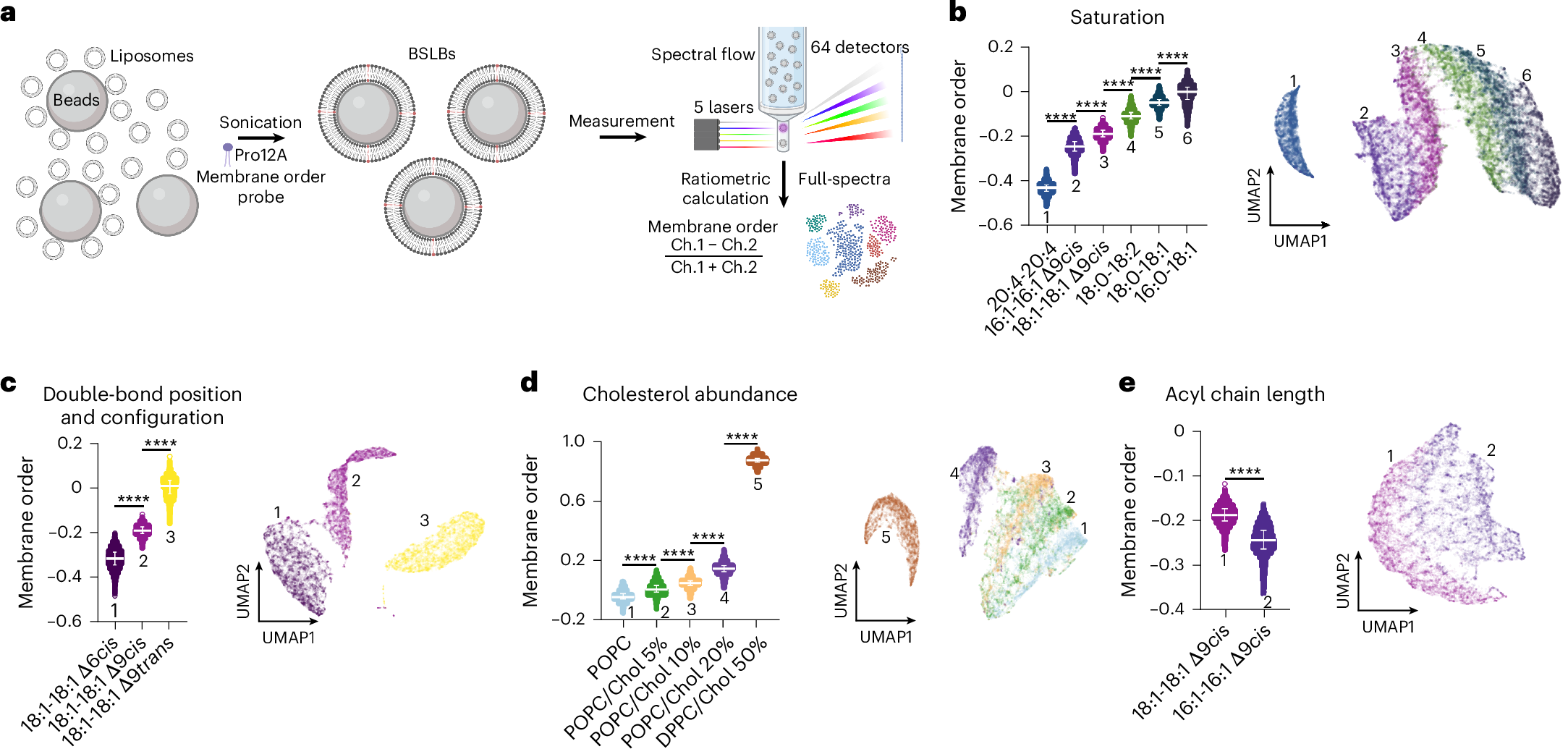
The biophysical properties of cells determine cellular physiology. Leveraging these properties for biomedical applications demands the ability to measure multiple parameters simultaneously across millions of cells and diverse cell types. However, current technologies are limited by throughput and low dimensionality. Here we introduce spectral biophysical cytometry (SBC), a high-throughput platform that integrates environment-sensitive nanosensors with spectral flow cytometry to resolve multiparametric biophysical properties of immune cells at single-cell resolution. By using fluorescent nanosensors that report membrane order, mitochondrial potential and membrane potential, SBC enables simultaneous quantification of key cellular physical states across diverse immune cell populations. When applied to peripheral blood mononuclear cells, SBC reveals cell-type-specific biophysical heterogeneity and identifies distinct remodelling signatures associated with atherosclerosis. In particular, T-cell subsets exhibit substantial alterations in membrane order and mitochondrial depolarization, reflecting coordinated changes in lipid composition and metabolic pathways. Integration with lipidomics and transcriptomics demonstrates that the nanosensors can detect biophysical shifts that correlate with dysregulated lipid metabolism and mitochondrial function, providing mechanistic insight into immune dysfunction in disease. Importantly, SBC achieves rapid, label-efficient profiling using commercially available instrumentation, enabling scalable biomarker discovery directly from blood samples and establishing a powerful strategy for linking biophysical phenotypes to immune cell function.