2026-07-30 ロックフェラー大学
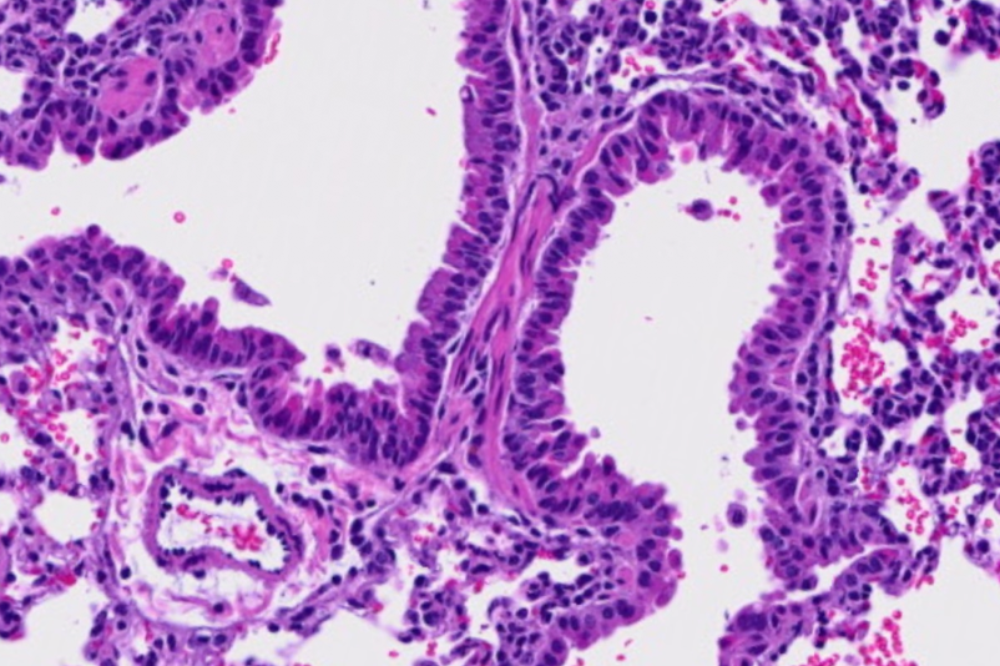
Histological image of lung tissue from a SARS-CoV-2–infected mouse fed an arginine-restricted diet. (Courtesy of Tavazoie lab)
<関連情報>
- https://www.rockefeller.edu/news/40196-amino-acid-arginine-diet-tumor-virus-infection/
- https://www.cell.com/cell/abstract/S0092-8674(26)00818-4
食事性アルギニンはコドン依存的なMHCクラスI翻訳を促進し、結腸腫瘍形成および呼吸器ウイルス感染における免疫を改善する Dietary arginine drives codon-dependent MHC class I translation and improves immunity in colon tumorigenesis and respiratory viral infection
Qiushuang Wu ∙ Lara M. Seydlitz ∙ Vladislav Iakimov ∙ … ∙ Philip B. Paty ∙ Charles M. Rice ∙ Sohail F. Tavazoie
Cell Published:July 30, 2026
DOI:https://doi.org/10.1016/j.cell.2026.07.020
Highlights
- Arginine restriction depletes arginyl tRNAs, repressing codon-dependent translation
- Ribosomes stall at specific arginine codons on MHC class I transcripts
- High dietary arginine boosts MHC class I translation and suppresses colorectal tumorigenesis
- High dietary arginine enhances immunity to influenza and SARS-CoV-2
Summary
Amino acid levels fluctuate across diverse pathological conditions. Whether such amino acid modulations directly shape pathophysiology by regulating host gene expression remains unknown. We found that extracellular arginine restriction, observed in cancer and infection, represses specific arginine tRNAs—directly suppressing translation of major histocompatibility complex I (MHC class I) and antigen presentation. Arginine regulation of MHC class I was codon-usage dependent, as synonymous codon mutations prevented MHC class I modulation. Dietary arginine restriction impaired anti-viral immunity against influenza and SARS-CoV-2 and increased colon tumorigenesis. Conversely, increasing arginine availability via dietary supplementation or myeloid-specific arginase 1 deletion enhanced MHC class I protein levels, suppressed colon tumorigenesis, and improved viral infection outcomes. These disease-modulating effects were abolished in β2-microglobulin (B2m)-deficient mice. Thus, dietary modulation of a single amino acid critically influences codon-biased translation and MHC class I-mediated immunity to respiratory viral infections and cancer, revealing an unexpected mechanism and disease hazard for arginine deficiency and highlighting potential for amino acid-based translation modulation therapy.