2025-06-23 中国科学院(CAS)
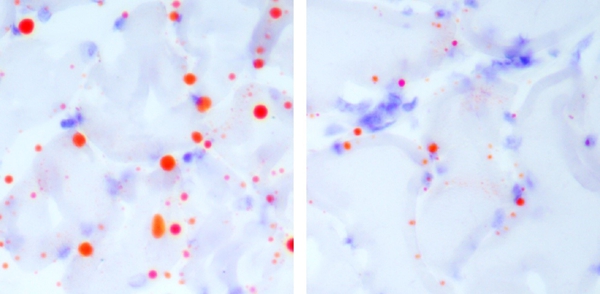
SRC Reverses Lipid Buildup in Aged Monkeys’ Skeletal Muscle: Control Group (Left); SRC-Treated Group (Right). (Image by LIU Guanghui’s lab)
<関連情報>
- https://english.cas.cn/newsroom/research_news/life/202506/t20250620_1045926.shtml
- https://www.cell.com/cell/abstract/S0092-8674(25)00571-9
霊長類の老化に対抗する老化抵抗性ヒト間葉系前駆細胞 Senescence-resistant human mesenchymal progenitor cells counter aging in primates
Jinghui Lei, ∙ Zijuan Xin,,, ∙ Ning Liu ∙ … ∙ Jing Qu ∙ Si Wang, ∙ Guang-Hui Liu
Cell Published:June 13, 2025
DOI:https://doi.org/10.1016/j.cell.2025.05.021
Highlights
- Genetically enhanced senescence-resistant cells exhibit anti-aging effects
- These SRCs counteract systemic aging in primates
- SRCs boost cognitive and reproductive rejuvenation
- SRCs deliver geroprotection through exosomal cargoes
Summary
Aging is characterized by a deterioration of stem cell function, but the feasibility of replenishing these cells to counteract aging remains poorly defined. Our study addresses this gap by developing senescence (seno)-resistant human mesenchymal progenitor cells (SRCs), genetically fortified to enhance cellular resilience. In a 44-week trial, we intravenously delivered SRCs to aged macaques, noting a systemic reduction in aging indicators, such as cellular senescence, chronic inflammation, and tissue degeneration, without any detected adverse effects. Notably, SRC treatment enhanced brain architecture and cognitive function and alleviated the reproductive system decline. The restorative effects of SRCs are partly attributed to their exosomes, which combat cellular senescence. This study provides initial evidence that genetically modified human mesenchymal progenitors can slow primate aging, highlighting the therapeutic potential of regenerative approaches in combating age-related health decline.