2025-07-16 バージニア工科大学
<関連情報>
- https://news.vt.edu/articles/2025/05/cals-spotted-lanternfly-dog-study.html
- https://peerj.com/articles/19656/
- https://www.sciencedirect.com/science/article/abs/pii/S1558787824001035
参加型科学犬チームの有効性の評価による、死滅したホシハナアブ( Lycorma delicatula)の卵塊の検出 Evaluating the effectiveness of participatory science dog teams to detect devitalized Spotted Lanternfly (Lycorma delicatula) egg masses
Sally Dickinson, Mizuho Nita, Edgar O. Aviles-Rosa, Nathan Hall, Erica N. Feuerbacher
PeerJ Published:July 16, 2025
DOI:https://doi.org/10.7717/peerj.19656
Abstract
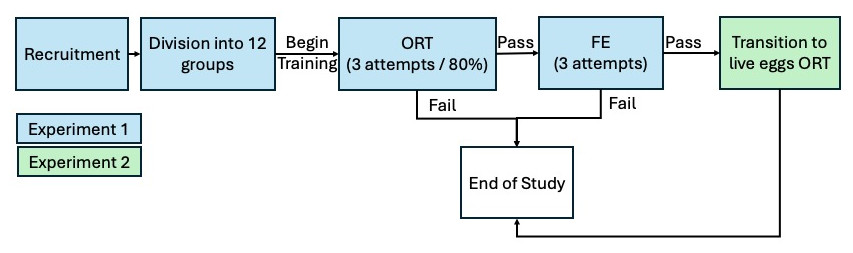
The spotted lanternfly (Lycorma delicatula, SLF) is an invasive planthopper first detected in the United States in 2014, with initial sightings in Pennsylvania. SLF poses a serious threat to agriculture, particularly targeting grapevines, hops, and ornamental plants, resulting in substantial annual economic losses. Due to its life cycle, the early detection and removal of egg masses are the most effective strategies for preventing long-distance dispersal. However, visual detection by humans is time-consuming and inefficient. Detection dogs have demonstrated high accuracy in locating SLF egg masses and differentiating them from environmental distractors. Despite their effectiveness, the number of dogs available through governmental channels is insufficient to meet demand. This study evaluated whether community scientist dog-handler teams could meet standardized detection criteria using SLF egg masses. Teams from across the U.S. were recruited and trained using devitalized egg masses, with oversight provided by local trainers. Following a 3- to 6-month independent training period, team performance was assessed through an odor recognition test and a field trial. Dogs demonstrated a sensitivity of 82% in controlled testing and 58% in field conditions. These results provide proof of concept; community scientist dog teams could play a significant role in protecting their local environments and agriculture from invasive species.
犬はブドウ(Vitis vinifera)の葉のうどんこ病(Erysiphe necator)を検出できる Dogs can detect powdery mildew (Erysiphe necator) in grapevine (Vitis vinifera) leaves
Edgar O. Aviles-Rosa, Emily Webberson, Mizuho Nita, Sally Dickinson, Erica Feuerbacher, Nathaniel J. Hall
Journal of Veterinary Behavior Available online: 7 December 2024
DOI:https://doi.org/10.1016/j.jveb.2024.12.001
Highlights
- Erysiphe necator (PM) is a fungal pathogen in vineyards, but there is no fast, field-diagnostic tool for it.
- Detection dogs are used to detect a variety of agricultural threats; Thus, herein we tested dogs’ ability to detect PM.
- Dogs were able to detect PM and discriminate it from other fungi with sensitivity and specificity greater than 90%.
- Despite their efficiency, they failed to discriminate PM from another fungus of the same genus.
- Altogether our results suggest that detection dogs could be an effective and novel tool to identify PM infected plants in vineyards.
Abstract
Powdery mildew (Erysiphe necator, PM) is a fungus that affects grapes (Vitis spp.) worldwide. Despite its negative impact on vineyard production and economics, there is no fast and economic way to detect it at scale. The aim of this study was to evaluate dogs’ capability to detect grape leaves infected with PM. Three pet dogs were trained to perform a detection task using a three-alternative automated olfactometer. In Experiment 1, dogs were trained to alert to the headspace of a vial containing a PM positive leaf (with visible signs of infection in more than 50% of leaf surface area) and discriminate it between control leaves (e.g., healthy) and leaves inoculated with other fungi. Dogs learned the discrimination task and reached sensitivity and specificity values of 0.96 ± 0.01 (SE). In Experiment 2, we tested dogs’ response rate to the filtered (10µm) headspace, a gauze exposed to the headspace of a PM positive leaf for 24 h, and to a control leaf after 1 and 24 h post PM inoculation. Response rate to the filtered headspace and to the inoculated gauze were not statistically different from the response rate to the PM positive leaf (0.96 ± 0.04 SE). The average response rate to leaves right after inoculation and 24 h post inoculation was 0.58 ± 0.10 (SE). Although when averaged across dogs this was above chance, it indicates that longer than 24 h post inoculation is needed for proficient detection. Experiment 2 results also suggest dogs were detecting PM specific VOCs that were captured by the gauze and passed through the 10 µm filter, and not to the presence of airborne spores. In Experiment 3, we tested dogs’ ability to discriminate between PM (Erysiphe necator) and a fungus of the same genus (Erysiphe lagerstroemiae). Our results show that dogs did not spontaneously discriminate between these two fungi, even though they were tested on different hosts. This suggests that these two fungi are perceptually similar to dogs. Our results show that dogs are proficient in detecting and discriminating leaves with PM. Future studies are needed to evaluate their use as PM biosensors in vineyards.