2025-07-30 バース大学
<関連情報>
- https://www.bath.ac.uk/announcements/too-many-male-animals-in-zoos-could-hamper-conservation-of-endangered-species-warn-scientists/
- https://www.nature.com/articles/s41598-025-05039-4
動物園における哺乳類と鳥類の出生性比の偏り Biased birth sex ratios of mammals and birds in zoos
Oscar G. Miranda,Fernando Colchero,José O. Valdebenito,Diego Cortez,Dalia A. Conde,Ivett Pipoly,András Liker,Balázs Vági,Mads F. Bertelsen,Albus Kilili,Araxi O. Urrutia & Tamás Székely
Scientific Reports Published:01 July 2025
DOI:https://doi.org/10.1038/s41598-025-05039-4
Abstract
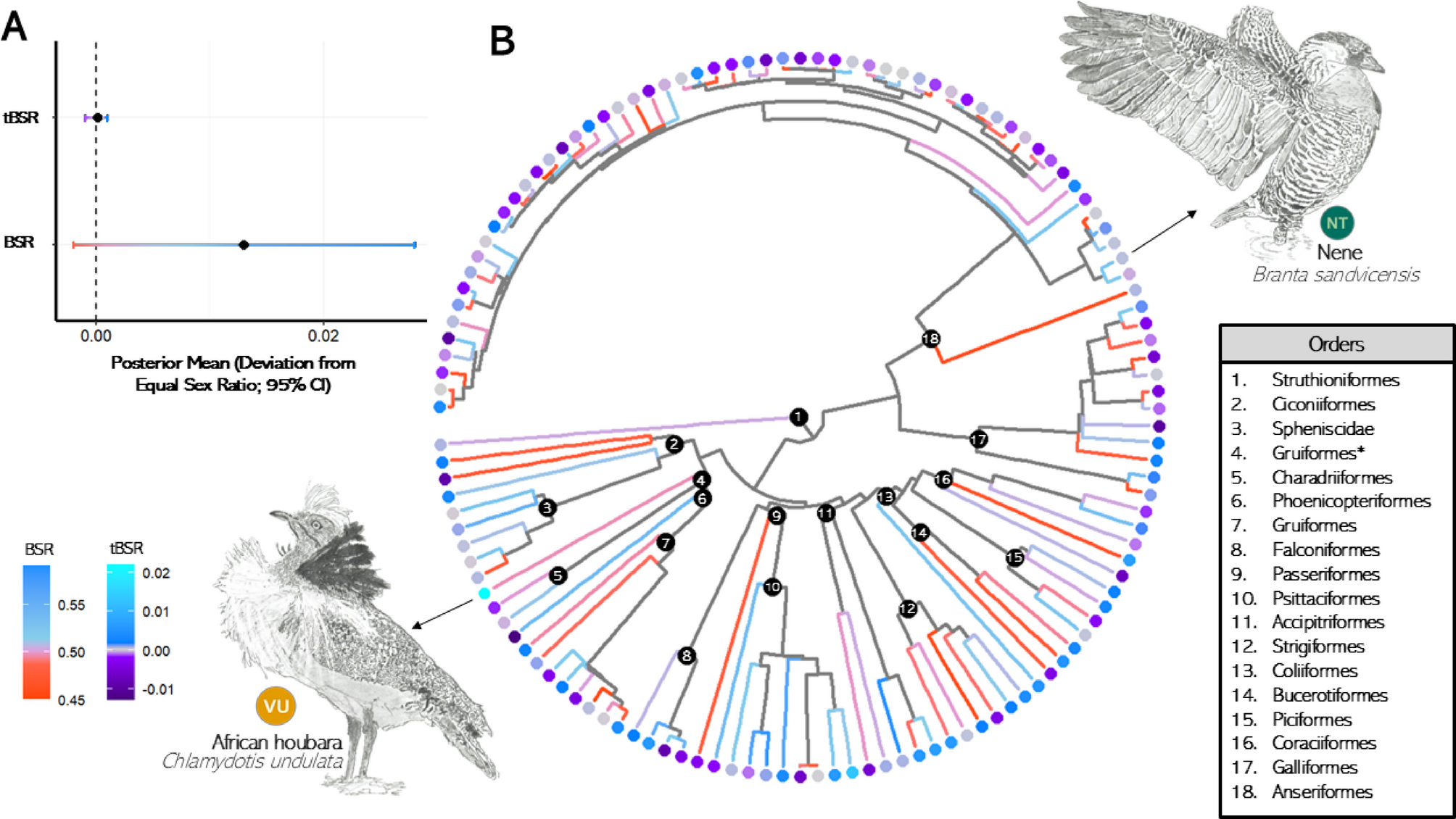
Birth sex ratio biases can amplify extinction risks, especially in small, zoo-maintained populations which is of particular concern in species under threat of extinction. Thus, understanding the drivers of such biases is critical for conservation outcomes. We analysed birth records from 129 avian and 324 mammalian species in zoos worldwide between 1980 and 2021. Using Bayesian phylogenetic models, we found a phylogenetic signal in birth sex ratios (BSR), with substantial variation across clades. Penguins, falcons, and parrots showed slightly male-biased BSRs; ungulates showed female-biased BSR, and primates male-biased BSR. Across birds, variation in BSRs was predicted by sexual size dimorphism and clutch size, whereas in mammals, mating system was the main predictor of BSR. We identified 30 conservation flagship species with significantly biased BSRs, raising concern for the demographic sustainability of their captive populations. These results highlight the role of both evolutionary history and life-history traits in shaping sex ratio variation across taxa. Our findings underscore the importance of integrating phylogenetic and biological predictors into conservation planning and breeding program design. They also call for further research into the biological and management processes—that include sexual selection, parental investment, housing, and sexing practices—that may contribute to sex ratio variation in zoo populations.