2025-09-17 ジョンズ・ホプキンス大学 (JHU)
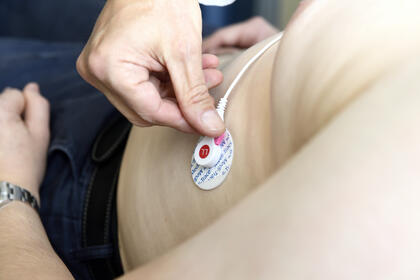
Stevens’ team used artificial intelligence to extract previously undetected signals in these routine heart tests that strongly predict which patients will suffer potentially deadly complications after surgery. Image credit: Will Kirk / Johns Hopkins University
<関連情報>
- https://hub.jhu.edu/2025/09/17/artificial-intelligence-predicts-post-surgery-complications/
- https://www.sciencedirect.com/science/article/abs/pii/S000709122500546X
12 誘導心電図を用いた非心臓手術における主要な心血管イベントの手術前リスク予測:説明可能な深層学習アプローチ Preoperative risk prediction of major cardiovascular events in noncardiac surgery using the 12-lead electrocardiogram: an explainable deep learning approach
Carl Harris, Anway Pimpalkar, Ataes Aggarwal, Jiyuan Yang, Xiaojian Chen, Samuel Schmidgall, Sampath Rapuri, Joseph L. Greenstein, Casey O. Taylor, Robert D. Stevens
British Journal of Anaesthesia Available online 17 September 2025
DOI:https://doi.org/10.1016/j.bja.2025.07.085
Abstract
Background
The Revised Cardiac Risk Index (RCRI) only modestly predicts major adverse cardiovascular events after noncardiac surgery. We investigated whether preoperative 12-lead ECGs analysed with deep learning could improve risk prediction.
Methods
In a retrospective cohort of 37 081 adults undergoing major noncardiac surgery (2008–2019, MIMIC-IV database), convolutional neural networks were trained to predict in-hospital myocardial infarction, in-hospital mortality, and a composite of in-hospital myocardial infarction, in-hospital stroke, and 30-day mortality. Models using ECG waveforms alone were compared with fusion models that combined ECGs with 34 routinely collected clinical variables. The primary outcome was discrimination, assessed by the area under the receiver-operating characteristic curve (AUROC) with 10-fold cross-validation and permutation tests vs the RCRI. A generative counterfactual framework provided waveform-level explanations.
Results
The fusion model yielded an AUROC=0.858 (95% confidence interval [95% CI], 0.845–0.872) for myocardial infarction, AUROC=0.899 (95% CI, 0.889–0.908) for in-hospital mortality, and AUROC=0.835 (95% CI, 0.827–0.843) for the composite outcome. Fusion model AUROC values exceeded those of ECG-only models (P≤0.002) and the RCRI (myocardial infarction: P=0.001; composite: P<0.001). Counterfactual analysis highlighted prolonged QRS duration, low-voltage complexes, and ST-segment depression as electrophysiologic patterns that consistently correlated with higher predicted risk.
Conclusions
A multimodal deep-learning model that integrates preoperative ECG waveforms with routinely collected clinical data improves prediction of major adverse cardiovascular events, compared with the Revised Cardiac Risk Index. This fully automated approach provides explainable, patient-specific insights, and may improve perioperative risk stratification.