2026-05-31 中国科学院(CAS)
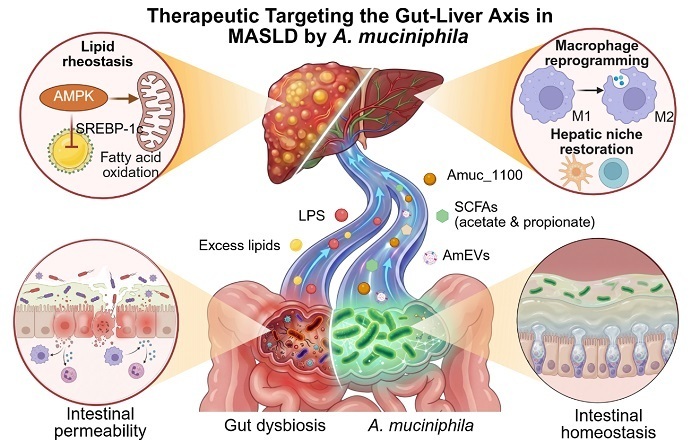
Figure 1: AKK reshapes hepatic immune and metabolic traits. (Image by LIU Yong)
<関連情報>
- https://english.cas.cn/newsroom/research-news/202606/t20260601_1160292.shtml
- https://www.cell.com/cell-press-blue/fulltext/S3051-3839(26)00029-0
MASLDにおける腸肝連関の微生物による再プログラミング:Akkermansia muciniphilaからの教訓 Microbial reprogramming of the gut-liver nexus in MASLD: Lessons from Akkermansia muciniphila
Yong Liu ∙ Giovanni Targher ∙ Christopher D. Byrne ∙ … ∙ Yulong Yin ∙ Ming-Hua Zheng ∙ Chuanshe Zhou
Cell Press Blue Published:May 27, 2026
DOI:https://doi.org/10.1016/j.cpblue.2026.100031
Summary
The gut-liver nexus is a critical regulator of metabolic homeostasis, and its disruption drives the progression of metabolic dysfunction-associated steatotic liver disease (MASLD). Among gut microbes, Akkermansia muciniphila has emerged as a key modulator of host-microbiome interactions at the intestinal barrier. Here, we synthesize current mechanistic and clinical evidence linking A. muciniphila to the regulation of the gut-liver nexus. We highlight how defined microbial effectors, including both the outer membrane protein Amuc_1100 and extracellular vesicles, orchestrate a multidimensional defense encompassing epithelial integrity, hepatic lipid metabolism, and immune responses. While preclinical studies provide strong mechanistic support, emerging clinical trials indicate that therapeutic responses are context dependent and influenced by baseline microbiome composition. We discuss current challenges in translating A. muciniphila into clinical interventions and outline strategies for next-generation microbiome therapeutics, including postbiotic and precision approaches. This framework provides a strategic blueprint for leveraging A. muciniphila as a cornerstone of next-generation hepatology, transforming this functional microbe into a definitive therapeutic pillar across the MASLD-to-carcinoma spectrum.