2026-05-29 コロンビア大学
<関連情報>
- https://www.cuimc.columbia.edu/news/new-study-finds-clues-alzheimers-beginnings
- https://www.nature.com/articles/s41593-026-02297-x
ニューロプロテアソームは、 APOE遺伝子型および年齢依存的に内因性タウ対らせんフィラメントの形成を調節する Neuroproteasomes regulate endogenous tau paired helical filament formation in an APOE genotype- and age-dependent manner
Victoria Paradise,Kalin D. Konrad-Vicario,Chi Nguyen,Nyle A. Sharif,Xiao Wang,Rijuta D. Mukim,Malavika Sabu,Bianca T. Corjuc,Joanna Bafia,Jack Fu,Gabriella C. Maldonado,Michael Strickland,Sarah L. Grauman,Helen Figueroa,Bradley T. Hyman,David M. Holtzman,Tal Nuriel & Kapil V. Ramachandran
Nature Neuroscience Published:29 May 2026
DOI:https://doi.org/10.1038/s41593-026-02297-x
Abstract
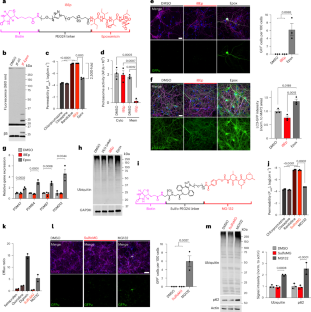
In Alzheimer’s disease (AD), endogenous tau undergoes a pathogenic transition to form paired helical filaments (PHFs), but the cellular mechanisms driving this process have been elusive. Here, we identify the neuron-specific plasma membrane proteasome (‘neuroproteasome’) as a critical determinant of tau proteostasis. Selective inhibition of neuroproteasome function rapidly triggers the de novo formation of endogenous, sarkosyl-insoluble tau PHFs in primary neurons and mouse brain, which share key biochemical and ultrastructural features with PHFs from human AD brains. The APOE gene has three isoforms (E2, E3 and E4), with APOE4 being the largest genetic risk factor for AD. Neuroproteasome abundance at the plasma membrane is differentially modulated by ApoE isoforms (E2 > E3 > E4) and declines with age. ApoE4 neurons accumulate tau aggregates following modest neuroproteasome disruption, whereas ApoE2 neurons remain resistant. Our findings delineate a neuron-specific mechanism linking genetic and age-related risk factors to the formation of AD-relevant tau pathology, and position neuroproteasome function as a potential target to preserve proteostasis.