2026-08-01 東海大学
<関連情報>
サイトカインストーム症候群の治療法としてのsPLA2反応性細胞外小胞(SPLEV) sPLA2-reacted extracellular vesicles (SPLEVs) as a therapeutic modality for cytokine storm syndromes
Shunya Nakayama, Akane Kanamori, Takeshi Kamakura, Kosuke Kamiya, […] , and Ai Kotani
Science Advances Published:31 Jul 2026
DOI:https://doi.org/10.1126/sciadv.adr9135
Abstract
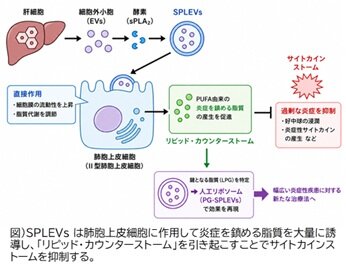
Because cytokine storm syndromes such as sepsis, acute respiratory distress syndrome (ARDS), and coagulopathy, including those seen in COVID-19, are fatal, development of highly effective therapeutics is urgently needed. Recent evidence suggests that the hydrolysis of phospholipids in extracellular vesicles (EVs) by secreted phospholipase A2 (sPLA2) can augment the ability of EVs to modulate inflammation, allergy, and cancer. We aimed to apply this phenomenon technically using “sPLA2-reacted EVs (SPLEVs),” which showed high therapeutic efficacies against ARDS and other diseases. Mechanistically, SPLEVs bind to type II alveolar epithelial cells, increase membrane fluidity by reorganizing phospholipid building blocks with more polyunsaturated fatty acids through the sterol regulatory element–binding protein 1 pathway, and elicit “lipid counterstorm” by increasing tissue-protective lipid mediators. The potent therapeutic effects of SPLEVs depend partly on sPLA2-driven generation of lysophosphatidylglycerol. Thus, SPLEVs are expected to be an effective therapeutic tool for treatment of broad ranges of inflammatory diseases including COVID-19 and other new pandemic diseases.