2026-07-31 東京大学
ワクチンに関する誤情報と接種意向の複雑な関連を大規模データで解析
<関連情報>
- https://www.u-tokyo.ac.jp/focus/ja/press/z0406_00012.html
- https://www.frontiersin.org/journals/public-health/articles/10.3389/fpubh.2026.1805589/full
日本におけるワクチン関連の誤情報と新型コロナウイルスワクチン接種に対する意識 Vaccine-related misinformation and attitude toward COVID-19 vaccination in Japan
Yuki Furuse,Takahiro Tabuchi
Frontiers in Public Health Published:31 July 2026
DOI:https://doi.org/10.3389/fpubh.2026.1805589
Abstract
Background:
Misinformation about vaccines has been linked to vaccine hesitancy, but vaccination can still be accepted even when such distrustful narratives are endorsed. Evidence on how often this occurs and which factors shape vaccine acceptance among individuals who endorsed misinformation remains limited.
Methods:
We analyzed data from the Japan COVID-19 and Society Internet Survey conducted in September–October 2021 among 31,000 panel participants aged ≥15 years. Participants were asked about their COVID-19 vaccination status or attitudes, and about their agreement with seven vaccine-related misinformation statements. We used inverse probability weighting to calculate prevalence and proportions of answers, adjusting for population stratification in Japan. We also estimated odds ratios for factors associated with vaccination intention, stratified by misinformation endorsement status.
Results:
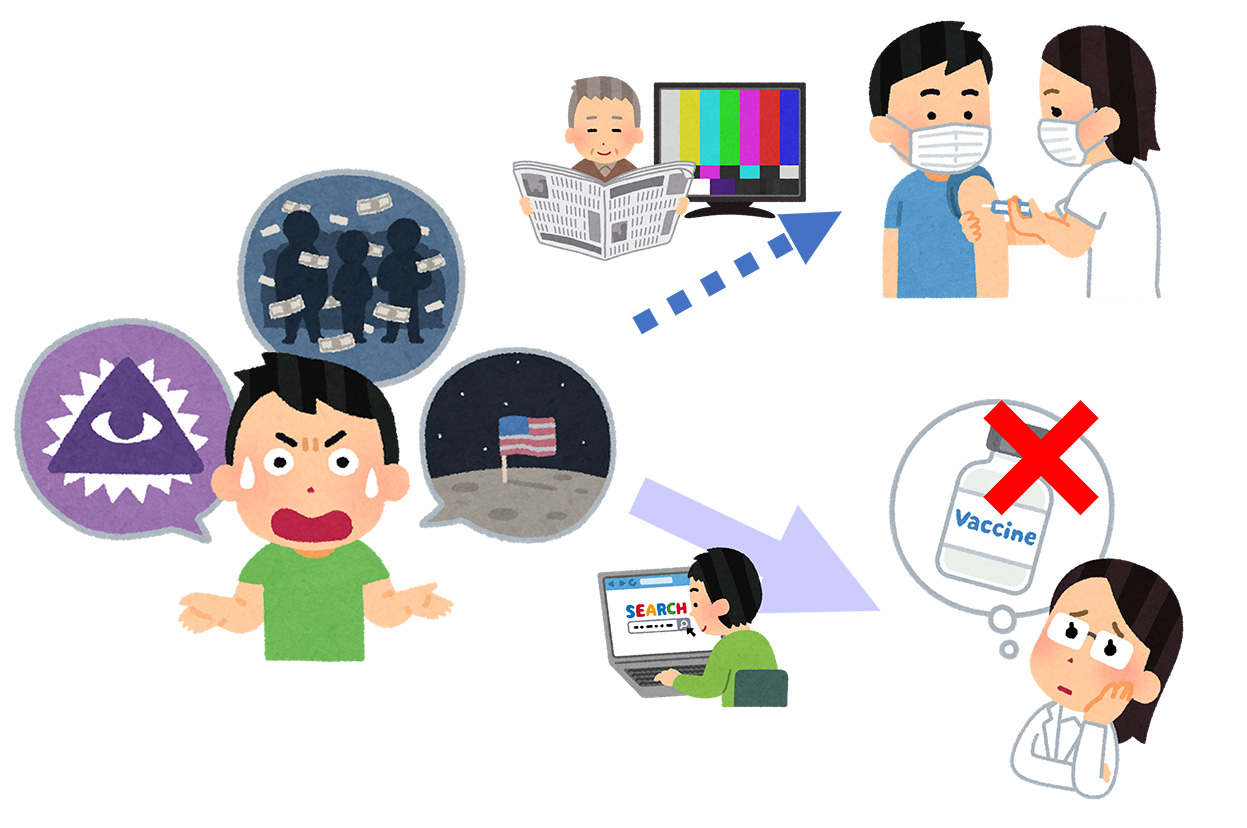
Among respondents who had been vaccinated, 8.1% endorsed at least one misinformation statement, whereas 36.6% of vaccine-hesitant individuals did so. Among individuals who endorsed at least one misinformation statement, 63.6% still accepted vaccination. In stratified multivariable models, older age was strongly associated with vaccine acceptance among individuals who did not endorse misinformation statements, whereas among individuals who endorsed misinformation, younger adults showed higher acceptance. The effect of information from governments on vaccine acceptance was significant only among individuals who did not endorse misinformation. The positive association of television/newspaper and the negative effect of internet/social media on vaccine acceptance were stronger among misinformation endorsers than non-endorsers.
Conclusion:
Endorsement of vaccine-related misinformation statements was associated with lower vaccine acceptance, yet a majority of misinformation endorsers still accepted vaccination. Determinants of vaccine acceptance differed by endorsement status, particularly by age and information sources, underscoring the need for nuanced communication approaches that address both misinformation narratives and broader trust dynamics.