2026-07-07 韓国基礎科学研究院(IBS)
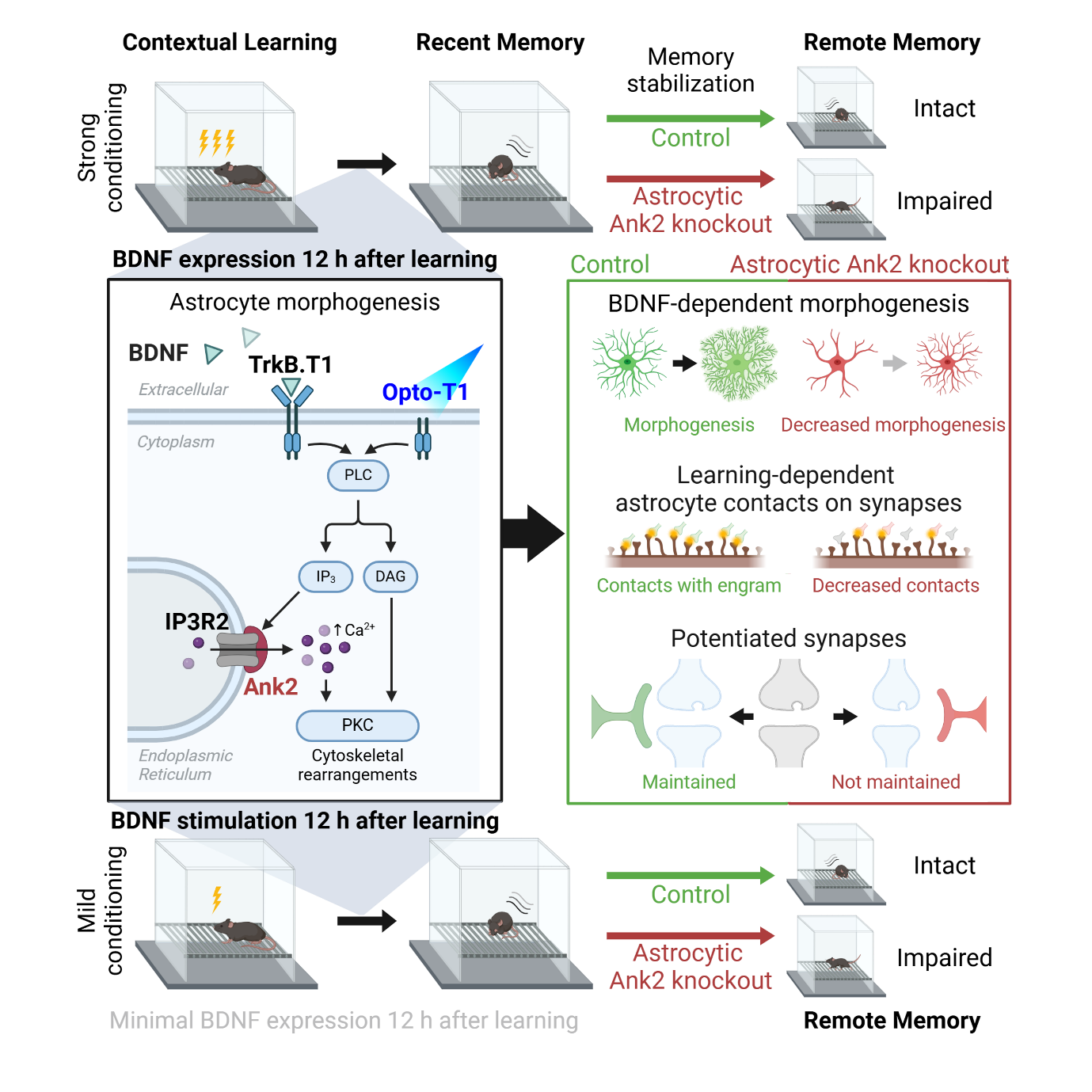
Figure 1. Hippocampal astrocytes regulate memory persistence through Ankyrin-2 (Ank2)-dependent signaling pathways
Strong learning triggers an increase in brain-derived neurotrophic factor (BDNF) signaling several hours after learning.
<関連情報>
- https://www.ibs.re.kr/cop/bbs/BBSMSTR_000000000738/selectBoardArticle.do?nttId=26855&pageIndex=1&searchCnd=&searchWrd=
- https://www.nature.com/articles/s41467-026-75009-5
アストロサイトのアンキリン-2はマウス海馬における記憶の持続を可能にする Astrocytic ankyrin-2 enables memory persistence in the mouse hippocampus
Hayoung Kim (김하영),Jiwoon Lim (임지운),Jooyoung Kim (김주영),Erva Ozkan (Erva Özkan),Gyu Hyun Kim (김규현),HyoJin Park (박효진),Mingu Gordon Park (박민구),Bitna Joo (주빛나),Sangkyu Lee (이상규),Kea Joo Lee (이계주),Bong-Kiun Kaang (강봉균),C. Justin Lee (이창준) & Wuhyun Koh (고우현)
Nature Communications Published:07 July 2026
DOI:https://doi.org/10.1038/s41467-026-75009-5
Abstract
Memory persistence, the ability to retain information over time, is a fundamental feature of long-term memory. Although astrocytes contribute to synaptic plasticity, the molecular mechanisms by which they support memory persistence remain unclear. Here we show that astrocytic ankyrin-2 (Ank2) is required for memory persistence in adult mice. Astrocyte-specific deletion of Ank2 impaired remote memory without affecting recent memory and disrupted the maintenance of long-term potentiation. Loss of Ank2 reduced astrocyte contacts with engram neurons and impaired astrocyte morphogenesis driven by brain-derived neurotrophic factor (BDNF) signaling through the truncated tropomyosin receptor kinase B receptor (TrkB.T1) and inositol 1,4,5-trisphosphate receptor type 2 (IP3R2). Consistent with this mechanism, astrocytic Ank2 was required for the enhancement of memory persistence by hippocampal BDNF infusion. Furthermore, selective optogenetic activation of astrocytic TrkB.T1 signaling enhanced remote memory, demonstrating that astrocytic BDNF signaling is sufficient to promote memory persistence. These findings identify astrocytic Ank2 as a key regulator of long-term memory persistence.