2026-08-13 ワシントン大学セントルイス校
<関連情報>
- https://source.washu.edu/2026/08/breast-cancers-recruit-bone-cells-to-increase-tumor-growth/
- https://www.nature.com/articles/s41467-026-73980-7
骨由来のオステリックス陽性骨系統細胞は、乳がんにおける腫瘍促進性筋線維芽細胞性癌関連線維芽細胞の供給源である Bone-derived Osterix+ osteolineage cells are a source of tumor-promoting myofibroblastic cancer-associated fibroblasts in breast cancer
Giulia Furesi,Carisa Zeng,Emily M. Eul,Jennifer Zarrer,Deborah J. Veis,Jiayu Ye,Vasilios A. Morikis,Taylor Malachowski,Darya Khantakova,Alina Ulezko Antonova,Anupama Melam,Marco Colonna,Eric Hesse,Hanna Taipaleenmäki,Gregory D. Longmore,Sheila A. Stewart,Maxim N. Artyomov & Roberta Faccio
Nature Communications Published:11 June 2026
DOI:https://doi.org/10.1038/s41467-026-73980-7
Abstract
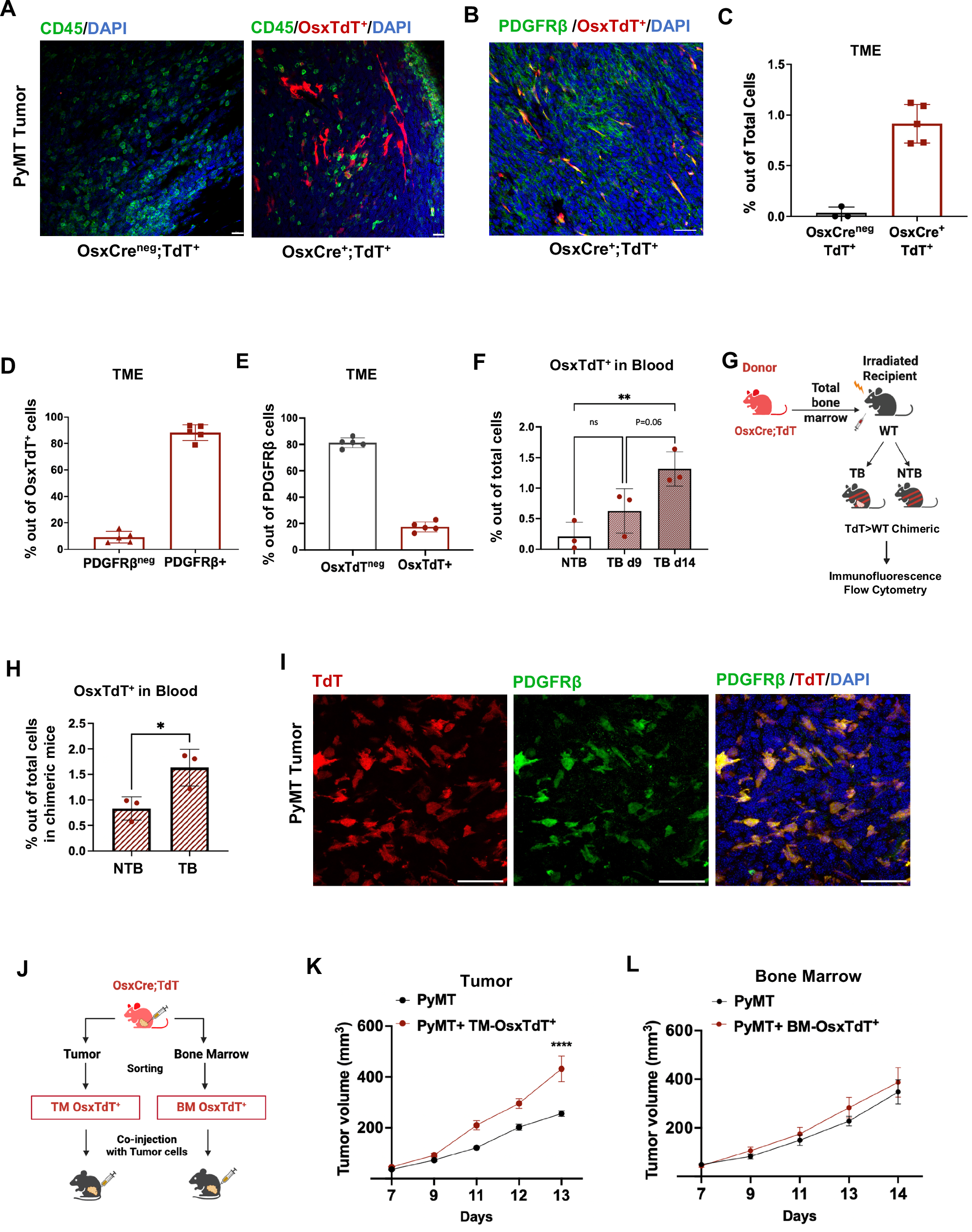
Cancer-associated fibroblasts (CAFs) are major regulators of breast cancer (BC) progression and therapeutic resistance, yet the extent to which CAF heterogeneity is dictated by distinct cellular origins remains unresolved. Here, we identify bone-derived Osterix+ (Osx) osteolineage cells as a source of CAFs in BC. Using BC models in female mice and biopsies from women with BC, we show that bone-resident Osx+ cells are recruited to primary tumors. These cells preferentially differentiate into a myofibroblastic CAF subset with unique osteolineage identity (OsteoLin-myCAFs). OsteoLin-myCAFs are transcriptionally and functionally distinct from other subsets, exhibit enhanced extracellular matrix remodeling and pronounced pro-tumorigenic activity. Mechanistically, Osx drives expression of matrix-remodeling programs, including MMP13, which supports tumor growth. Cross-species analyses show a conserved 54-gene osteolineage signature in myCAFs from human BC samples, strongly associated with poor survival. Together, these findings identify a distinct bone-derived osteolineage cell that gives rise to OsteoLin-myCAFs and is linked to adverse clinical outcomes.