
2025-09-03 パシフィック・ノースウェスト国立研究所(PNNL)
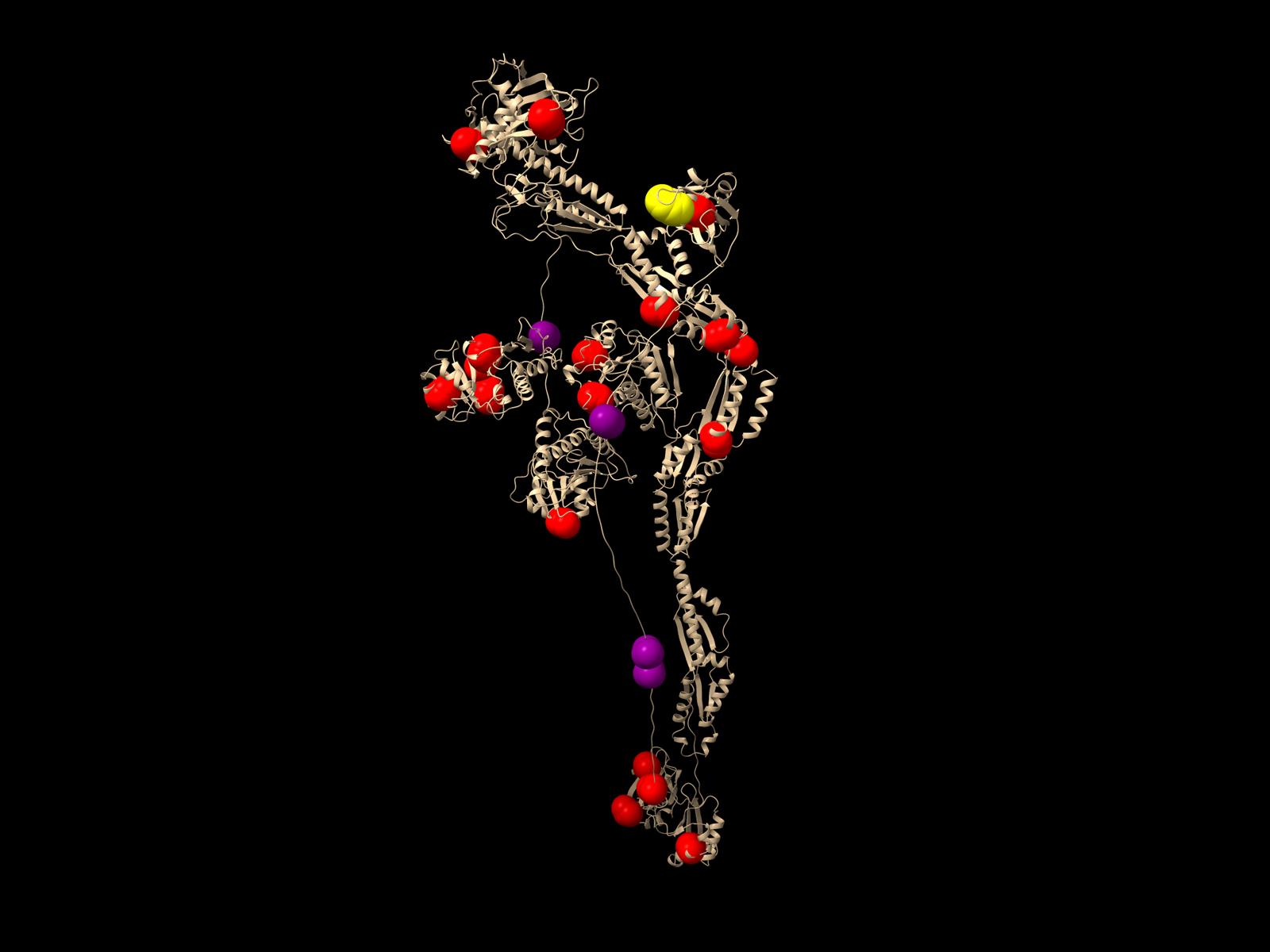
This image demonstrates how a single protein can have multiple post-translational modifications or PTMs simultaneously. Here, the red particles illustrate sites of cysteine oxidation; the purple—serine, threonine or tyrosine phosphorylation; and the yellow, lysine acetylation. (Illustration by Doo Nam Kim | Pacific Northwest National Laboratory)
<関連情報>
- https://www.pnnl.gov/news-media/scientists-probe-powerful-molecular-messaging-system-goes-beyond-dna
- https://biotechnologyforbiofuels.biomedcentral.com/articles/10.1186/s13068-025-02657-y
- https://medibio.tiisys.com/158227/
窒素制限は、Rhodotorula toruloidesにおける炭素フラックスと脂質体リモデリングに関与するタンパク質の酸化還元状態とリン酸化に劇的な変化を引き起こす Nitrogen limitation causes a seismic shift in redox state and phosphorylation of proteins implicated in carbon flux and lipidome remodeling in Rhodotorula toruloides
Austin Gluth,Jeffrey J. Czajka,Xiaolu Li,Kent J. Bloodsworth,Josie G. Eder,Jennifer E. Kyle,Rosalie K. Chu,Bin Yang,Wei-Jun Qian,Pavlo Bohutskyi & Tong Zhang
Biotechnology for Biofuels and Bioproducts Published:21 July 2025
DOI:https://doi.org/10.1186/s13068-025-02657-y
Abstract
Background
Oleaginous yeast are prodigious producers of oleochemicals, offering alternative and secure sources for applications in foodstuff, skincare, biofuels, and bioplastics. Nitrogen starvation is the primary strategy used to induce oil accumulation in oleaginous yeast as part of a global stress response. While research has demonstrated that post-translational modifications (PTMs), including phosphorylation and protein cysteine thiol oxidation (redox PTMs), are involved in signaling pathways that regulate stress responses in metazoa and algae, their role in oleaginous yeast remain understudied and unexplored.
Results
Towards linking the yeast oleaginous phenotype to protein function, we integrated lipidomics, redox proteomics, and phosphoproteomics to investigate Rhodotorula toruloides under nitrogen-rich and starved conditions over time. Our lipidomics results unearthed interactions involving sphingolipids and cardiolipins with ER stress and mitophagy. Our redox and phosphoproteomics data highlighted the roles of the AMPK, TOR, and calcium signaling pathways in regulation of lipogenesis, autophagy, and oxidative stress response. As a first, we also demonstrated that lipogenic enzymes including fatty acid synthase are modified as a consequence of shifts in cellular redox states due to nutrient availability.
Conclusions
We conclude that lipid accumulation is largely a consequence of carbon rerouting and autophagy governed by changes to PTMs, and not increases in the abundance of enzymes involved in central carbon metabolism and fatty acid biosynthesis. Our systems-level approach sets the stage for acquiring multidimensional data sets for protein structural modeling and predicting the functional relevance of PTMs using Artificial Intelligence/Machine Learning (AI/ML). Coupled to those bioinformatics approaches, the putative PTM switches that we delineate will enable advanced metabolic engineering strategies to decouple lipid accumulation from nitrogen limitation.

