2025-12-18 京都大学
<関連情報>
- https://www.kyoto-u.ac.jp/ja/research-news/2025-12-18-2
- https://www.kyoto-u.ac.jp/sites/default/files/2025-12/web_2512_Okuno-286f6be675b7fa715eb25373a54b305d.pdf
- https://www.nature.com/articles/s41440-025-02444-0
機械学習を⽤いた家庭⾎圧測定における測定継続性の予測 Predicting measurement continuity in home blood pressure monitoring using machine learning
Asami Matsumoto,Yohei Mineharu,Hirohiko Kohjitani,Hiroshi Koshimizu & Yasushi Okuno
Hypertension Research Published:07 November 2025
DOI:https://doi.org/10.1038/s41440-025-02444-0
Abstract
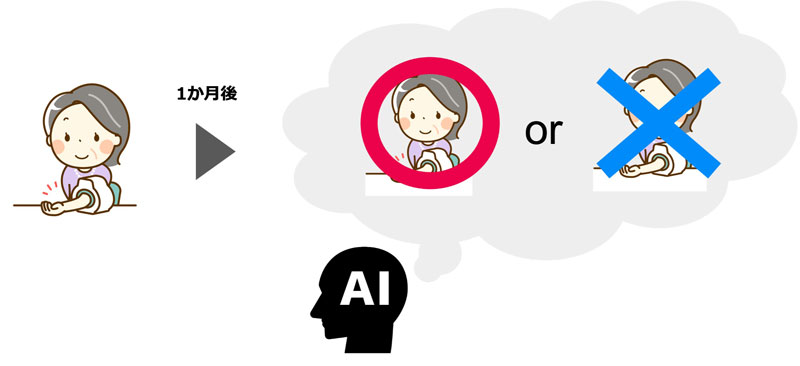
Hypertension is a leading risk factor for cardiovascular diseases, thereby necessitating effective management through regular blood pressure monitoring. Although home monitoring is beneficial for managing hypertension, maintaining consistent measurement frequency remains challenging. This study aimed to develop a model to predict measurement inactivity and to identify clinically relevant risk factors for declining adherence using machine learning, thereby allowing for targeted interventions. Using a large-scale dataset (>199 million measurement records) from 295,758 health app users, we employed a LightGBM (Light Gradient Boosting Machine) model to predict future inactivity according to 2-week measurement patterns and users’ demographics. The model demonstrated high predictive accuracy, with areas under the receiver operating characteristic curve of 0.930 and 0.851 for 28- and 56-day predictions, respectively. SHAP (SHapley Additive exPlanations) analysis revealed elevated dropout risks among both younger and older participants, women, and users who did not report sex information. The maximum systolic blood pressure (SBP) recorded during the 2-week period was also identified as a significant predictor of dropout, showing a U-shaped association wherein both low and high extremes increased the risk. This maximum SBP value, which is rarely used in routine clinical assessments, offered unique insights into dropout behavior, further supported by descriptive statistics. Additionally, a reduction in weekday measurement frequency showed to be a major predictor of future discontinuation. Therefore, our model can identify dropout factors that are difficult to detect by conventional methods, and through accurate prediction, it supports early clinical interventions to improve monitoring adherence and blood pressure control.