2026-02-24 スイス連邦工科大学ローザンヌ校(EPFL)
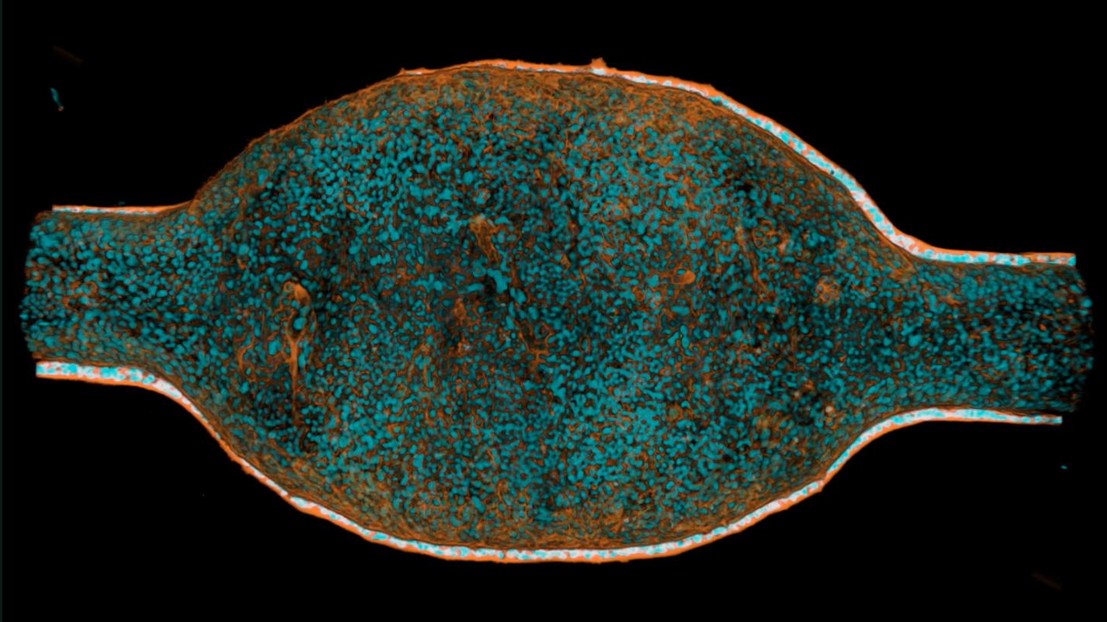
Animated Z-stack showing a volume of a differentiated mini-bladder stained with phalloidin (orange) and DAPI (cyan). Credit: Paduthol et al 2026.
<関連情報>
- https://actu.epfl.ch/news/a-human-mini-bladder-shows-the-culprit-of-recurren/
- https://www.nature.com/articles/s41467-026-68573-3
微小生理学的ヒトミニ膀胱は、尿路感染症における組織弾力性とUPEC再発における尿路上皮細胞の相互作用を明らかにする A microphysiological human mini-bladder reveals urine-urothelium interplay in tissue resilience and UPEC recurrence in urinary tract infections
Gauri Paduthol,Mikhail Nikolaev,Kunal Sharma,Jérôme Blanc,Kathrin Tomasek,Léa Ivana Esméralda Schlunke,Valentin Borgeat,Giovanna Ambrosini,Irina Kolotuev,Stéphanie Clerc-Rosset,Nikolche Gjorevski,Graham W. Knott,Matthias P. Lütolf,Vivek V. Thacker & John D. McKinney
Nature Communications Published:03 February 2026
DOI:https://doi.org/10.1038/s41467-026-68573-3 An unedited version of this manuscript
Abstract
Urine is a dynamic and highly variable biofluid. Urine-urothelium interactions are a critical yet underexplored factor in bladder homoeostasis and urinary tract infections (UTIs). Here, we report on a human ‘mini-bladder’ model that exposes a stratified urothelium to urine of defined composition, and incorporates micturition. Prolonged exposure to high-solute concentration urine weakens tight junctions, dysregulates immune responses, and reduces bladder tissue resilience. This increases susceptibility to colonisation of the bladder by uropathogenic Escherichia coli (UPEC) which reduces efficacy of antibiotic therapy. In high-solute concentration urine, Fosfomycin monotherapy – prescribed for uncomplicated UTIs, induces the formation of cell wall-deficient (CWD) UPEC in the urine (as observed in patients with recurrent UTIs) but also within deeper urothelial layers. Tissue-associated CWD UPEC directly contributes to recurrence. Our findings expand the conceptual role for CWD UPEC in UTIs, and demonstrate the power of the mini-bladder platform to capture urine-urothelial microenvironment dynamics that actively shape UTI pathogenesis and antibiotic tolerance.