
2026-03-19 カリフォルニア大学リバーサイド校(UCR)
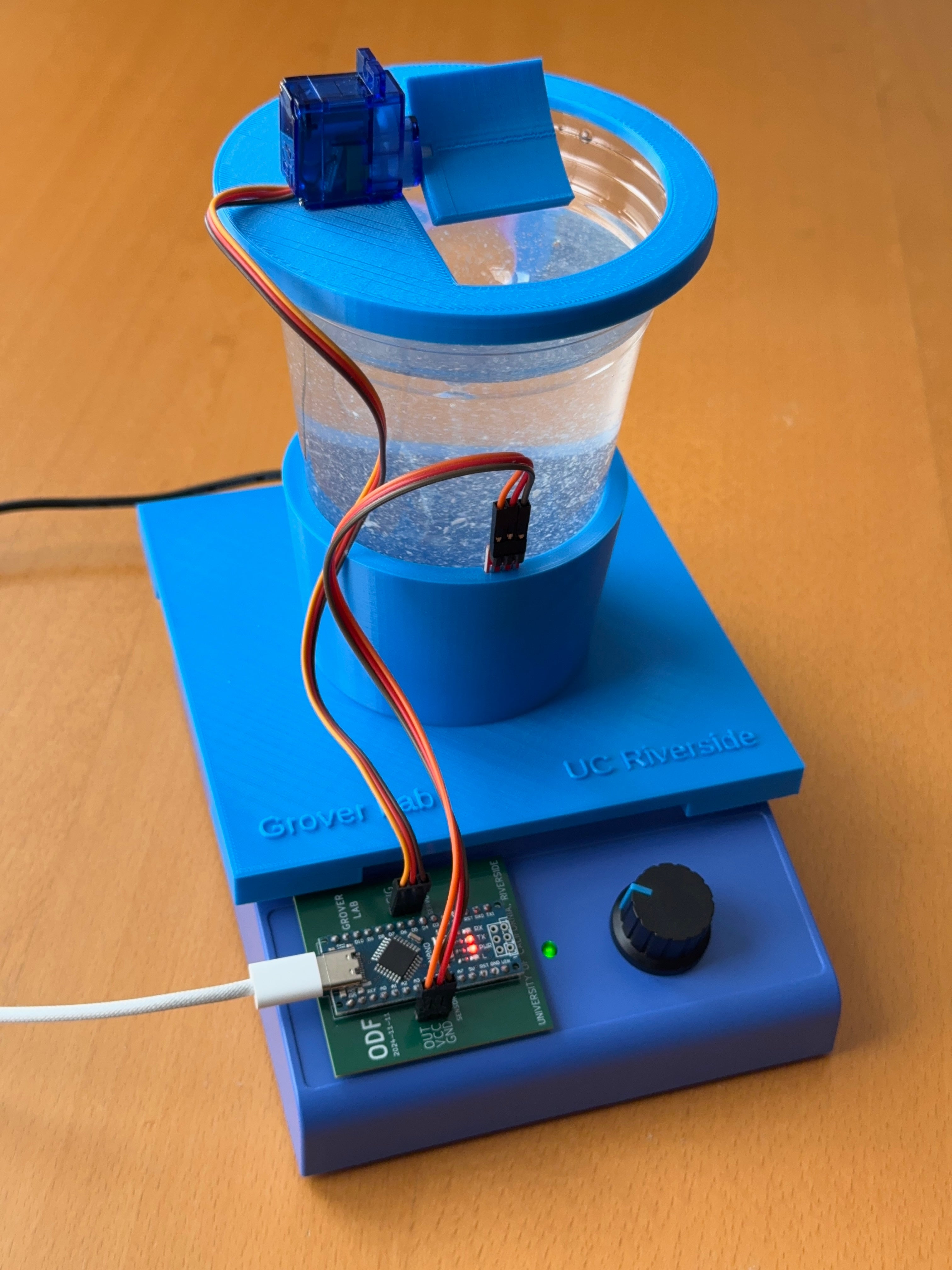
By counting the particles formed when a pill dissolves in a water-filled cup, the team’s device can identify fake medications. (William Grover/UCR)
<関連情報>
- https://news.ucr.edu/articles/2026/03/19/new-test-dissolves-threat-fake-drugs
- https://pubs.acs.org/doi/10.1021/acs.analchem.5c05418
崩壊フィンガープリンティング:低品質および偽造固形製剤を識別するための低コストで使いやすいツール Disintegration Fingerprinting: A Low-Cost and User-Friendly Tool for Identifying Substandard and Falsified Solid-Dosage Medicines
Ishmam Fatima,Oscar Fajardo,Canhui Liu,Harshith Sadhu,and William H. Grover
Analytical Chemistry Published: March 19, 2026
DOI:https://doi.org/10.1021/acs.analchem.5c05418
Abstract
Substandard and falsified medicines cause thousands of deaths and waste billions of dollars worldwide every year. There is an urgent need for low-cost and simple-to-use tools for identifying these “fake drugs.” In this work we demonstrate “Disintegration Fingerprinting” (DF), a technique that identifies pills, tablets, caplets, and other solid-dosage drugs based on how the drug disintegrates and dissolves in liquid. The DF hardware consists of a water-filled transparent plastic cup atop a conventional magnetic stirrer. An inexpensive sensor mounted on the outside of the cup shines infrared light into the cup and measures the amount of light that is reflected back to the sensor. When a pill is added to the stirred water, the pill begins to disintegrate into particles that swirl around inside the cup. Whenever one of these particles passes near the infrared sensor, the particle reflects additional light back to the sensor and creates a millisecond-duration peak in a plot of sensor output versus time. The number of particles in the water changes over time as the particles continue to disintegrate and (for some samples) eventually dissolve away. By plotting the number of particles detected versus time, we create a Disintegration Fingerprint that can be used to identify the drug product. In a proof-of-concept study, we used DF to analyze pills from 32 different drug products (including antibiotics, opioid and non-opioid analgesics, antidepressants, anti-inflammatories, antiemetics, antihistamines, decongestants, muscle relaxants, expectorants, sleep aids, cold medicines, antacids, hormonal birth control, and dietary supplements, as well as a simulated falsified drug product). We found that DF correctly identified 90% of these pills, and the technique can even distinguish name-brand and generic versions of the same drug. Even when testing pills from 33 different manufacturing lots of two similar drug products, purchased in eight different states or provinces in two countries, with manufacturing dates that span almost three years, some of which were intentionally subjected to extreme temperatures (50 °C or −20 °C for 35 days), our technique still correctly identified 100% of the pills. By providing a fast (60 min), inexpensive ($33 USD), and easy-to-use tool for identifying substandard and falsified medicines, Disintegration Fingerprinting can play an important role in the fight against fake drugs.
00014-3/asset/7c28d956-1671-464a-91be-d2306431fafe/main.assets/gr1_lrg.jpg "糖尿病薬オゼンピックが精神健康改善と関連(Diabetes drug Ozempic linked to better mental health)")