2026-06-02 スイス連邦工科大学ローザンヌ校(EPFL)
© 2026 EPFL
<関連情報>
- https://actu.epfl.ch/news/ai-brings-object-level-vision-prosthetics-closer-t/
- https://arxiv.org/abs/2510.03684
モデル誘導型微小刺激による霊長類の視覚行動の制御 Model-Guided Microstimulation Steers Primate Visual Behavior
Johannes Mehrer, Ben Lonnqvist, Anna Mitola, Abdulkadir Gokce, Paolo Papale, Martin Schrimpf
arXiv Submitted on 4 Oct 2025
DOI:https://doi.org/10.48550/arXiv.2510.03684
Abstract
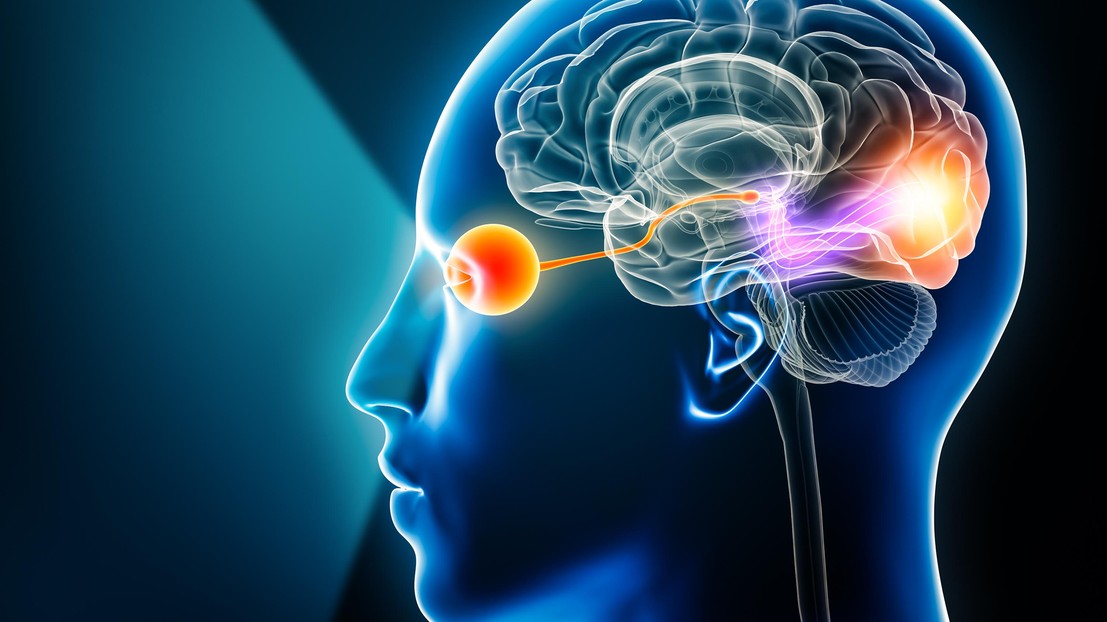
Brain stimulation is a powerful tool for understanding cortical function and holds promise for therapeutic interventions in neuropsychiatric disorders. Initial visual prosthetics apply electric microstimulation to early visual cortex which can evoke percepts of simple symbols such as letters. However, these approaches are fundamentally limited by hardware constraints and the low-level representational properties of this cortical region. In contrast, higher-level visual areas encode more complex object representations and therefore constitute a promising target for stimulation – but determining representational targets that reliably evoke object-level percepts constitutes a major challenge. We here introduce a computational framework to causally model and guide stimulation of high-level cortex, comprising three key components: (1) a perturbation module that translates microstimulation parameters into spatial changes to neural activity, (2) topographic models that capture the spatial organization of cortical neurons and thus enable prototyping of stimulation experiments, and (3) a mapping procedure that links model-optimized stimulation sites back to primate cortex. Applying this framework in two macaque monkeys performing a visual recognition task, model-predicted stimulation experiments produced significant in-vivo changes in perceptual choices. Per-site model predictions and monkey behavior were strongly correlated, underscoring the promise of model-guided stimulation. Image generation further revealed a qualitative similarity between in-silico stimulation of face-selective sites and a patient’s report of facephenes. This proof-of-principle establishes a foundation for model-guided microstimulation and points toward next-generation visual prosthetics capable of inducing more complex visual experiences.