2026-05-28 マサチューセッツ工科大学(MIT)
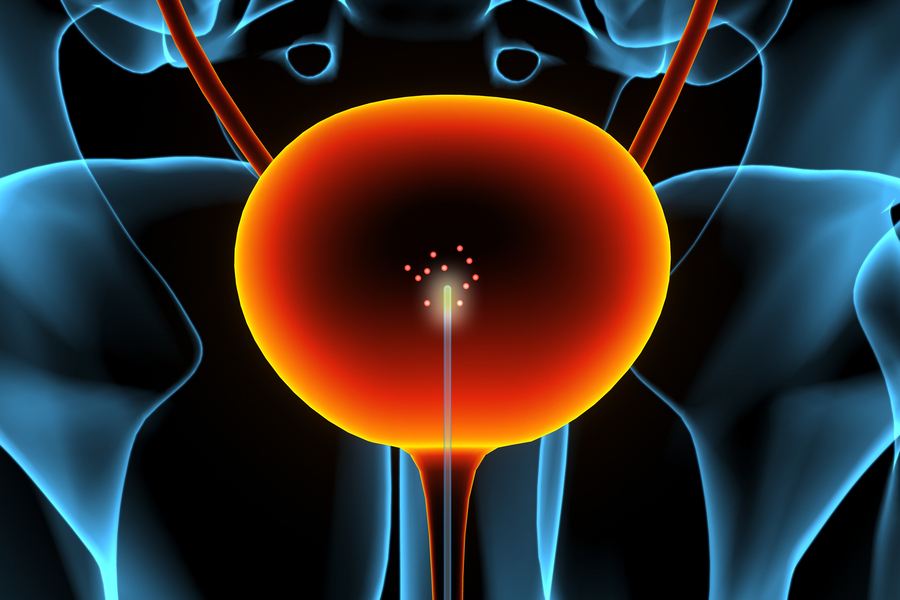
MIT researchers have developed a new approach for monitoring bladder cancer patients that could allow recurring tumors to be detected much earlier. Using a catheter coated with specialized nanosensors, the team was able to detect extremely low levels of a protein produced by bladder cancer cells and pinpoint their location within tissue. Credit: Christine Daniloff, MIT; iStock
<関連情報>
- https://news.mit.edu/2026/new-sensor-could-enable-earlier-detection-bladder-cancer-0528
- https://www.nature.com/articles/s41565-026-02172-7
環状ナノセンサーアレイを用いた膀胱癌のin situ検出のための化学物質排出イメージング Chemical efflux imaging using an annular nanosensor array for in situ bladder cancer detection
Wonjun Yim,Hohyung Kang,Byung Ha Kang,Maeve E. McGinnis,Marco Machado,Xun Gong,Volodymyr Koman,Gabriel Sánchez-Velázquez,Xiaojia Jin,Zitang Wei,Mark A. Preston,Daniel A. Wollin & Michael S. Strano
Nature Nanotechnology Published:27 May 2026
DOI:https://doi.org/10.1038/s41565-026-02172-7
Abstract
Detection of analytes in extracted biofluids, such as urine for bladder cancer biomarkers, is challenging owing to sample dilution and instability outside the human body. Here we demonstrate an annular nanosensor array grafted onto a standard biomedical catheter, which enables three-dimensional chemical efflux imaging from within a tissue compartment or luminal space. This platform integrates near-infrared fluorescent single-walled carbon nanotubes with the catheter, leveraging a ball-lens scanning optical device for chemical signal mapping. We develop nanosensors based on a phospholipid copolymer that selectively detect nuclear matrix protein (NMP-22), a biomarker for bladder cancer. The results show differential sensor responses between apoptosis in six bladder cancer cell lines and healthy fibroblast cells. Nanosensor-functionalized catheters track gemcitabine-stimulated cell death and monitor protein efflux in vitro. We demonstrate spatial imaging of incident chemical flux using this platform, achieving localization of biomarker sources in complex tissues and organs with 182-fold signal enhancement compared with extracted biofluid sampling. As an application, the catheter equipped with a rotating ball lens chemically images porcine bladders, detecting biomarker efflux up to 2 cm away, highlighting its potential as a point-of-care diagnostic tool.