2026-07-10 インペリアル・カレッジ・ロンドン(ICL)
<関連情報>
- https://www.imperial.ac.uk/news/articles/2026/world-first-study-confirms-innovative-procedure-is-safe-and-has-the-potential-to-treat-serious-twin-pregnancy-condition/
- https://www.ajog.org/article/S0002-9378(26)00258-9/fulltext#page-body-id
超音波ガイド下高強度集束超音波は、早期発症型双胎間輸血症候群における胎盤血管閉塞に技術的に実行可能かつ安全である Ultrasound-guided high-intensity focused ultrasound is technically feasible and safe for occluding placental vessels in early-onset twin-twin transfusion syndrome
Caroline J. Shaw, PhD, MRCOG ∙ Ian Rivens, PhD ∙ Richard Symonds-Tayler, MSc ∙ … ∙ Dino A. Giussani, MA, PhD, ScD, FRCOG ∙ Gail ter Haar, MA, MSc, PhD, DSc ∙ Christoph C. Lees, MD, FRCOG
American Journal of Obstetrics and Gynecology Published:May 20, 2026
DOI:https://doi.org/10.1016/j.ajog.2026.05.006
Abstract
Background
Twin-twin transfusion syndrome is a complication unique to monochorionic pregnancy, where shared placental vascular connections can lead to a circulatory imbalance, resulting in preterm delivery and attendant in utero or neonatal mortality. The only disease-modifying treatment is fetoscopic laser ablation of blood vessels, which has attendant risks of invasive intrauterine therapy.
Objective
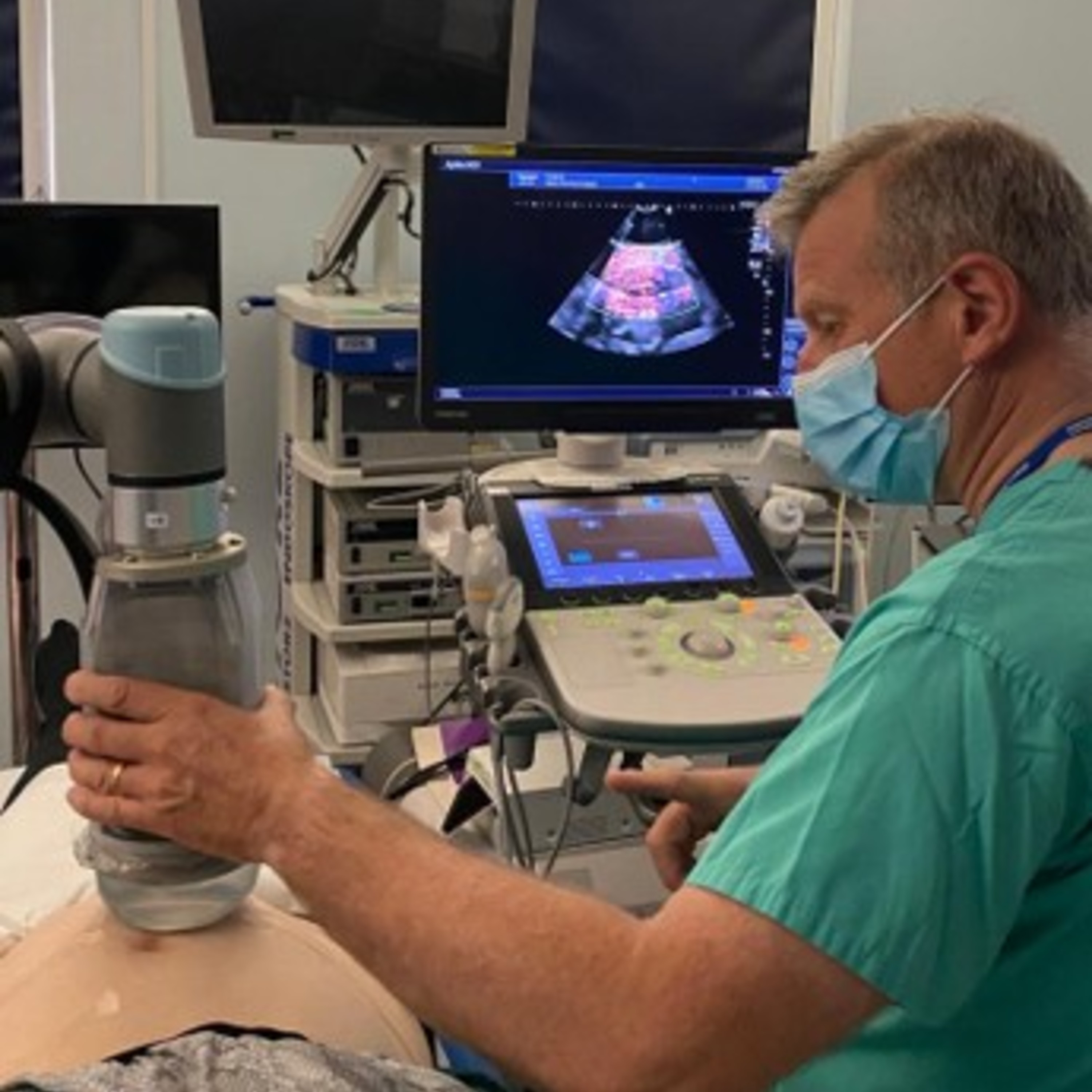
In this first-in-human technical feasibility and safety study, we investigated noninvasive, ultrasound-guided high-intensity focused ultrasound to occlude placental vascular targets as identified by color Doppler. The 2 outcomes were (1) safety: number/rate of patients experiencing significant iatrogenic harm, for first 14 days after high-intensity focused ultrasound and (2) efficacy: number/rate of targeted placental vessels which appear occluded at the end of a high-intensity focused ultrasound treatment cycle, assessed using comparison of color Doppler imaging of target anastomoses prehigh-intensity focused ultrasound and posthigh-intensity focused ultrasound exposure.
Study Design
Participants with anterior placenta and early-onset twin-twin transfusion syndrome were recruited to a Phase 1a clinical trial with co-primary endpoints of safety and efficacy of vessel occlusion at 12 to 17+6 weeks of gestational age.
Results
Ten participants underwent targeted ultrasound-guided high-intensity focused ultrasound occlusion of placental blood vessels that connected the 2 circulations, verified by color Doppler imaging, in whom 27 of 30 (90%) targeted placental vessels were successfully occluded by ultrasound-guided high-intensity focused ultrasound. No treatment-related significant maternal or fetal adverse events were recorded, and 18 of 20 fetuses were alive 14 days post-treatment. Participants expressed positive attitudes toward ultrasound-guided high-intensity focused ultrasound, valuing clear and consistent communication and sufficient time to consider participation in the study.
Conclusion
In this Phase 1 study, ultrasound-guided high-intensity focused ultrasound showed a high rate of successful occlusion of placental vascular targets and no adverse side effects were observed within 14 days of treatment in women with early-onset twin-twin transfusion. While clinical efficacy of the technique could not be formally evaluated, 5 participants required fetoscopic laser and of the pregnancies treated, 12 of 20 neonates were alive at discharge.
00237-9/asset/e2648600-fcfc-4a6b-895d-4c0fcc231c01/main.assets/gr1_lrg.jpg "東アフリカでアルテミシニン耐性が拡大し抗マラリア薬の効果低下が懸念(Artemisinin resistance rising in East Africa – leaving anti-malarials at risk of failure)")