2026-07-13 東北大学
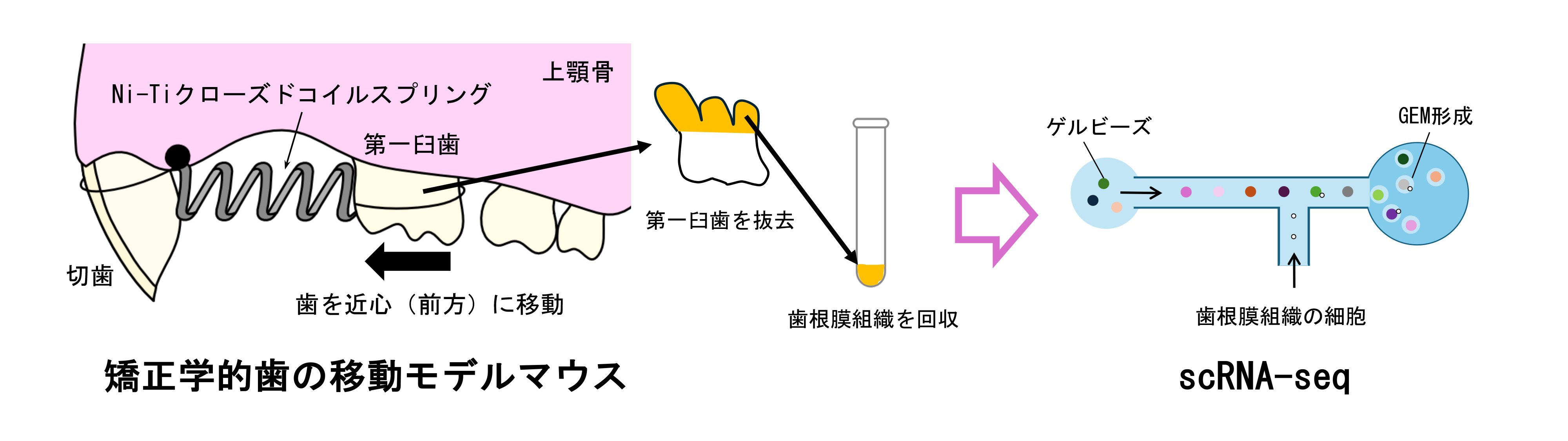
図1. 矯正学的歯の移動モデルマウスを用いたscRNA-seqの流れ
<関連情報>
- https://www.tohoku.ac.jp/japanese/2026/07/press20260713-03-neutrophil.html
- https://journals.sagepub.com/doi/10.1177/00220345261459909
好中球は歯列矯正における歯の移動において破骨細胞形成を制御する Neutrophils Orchestrate Osteoclastogenesis in Orthodontic Tooth Movement
F. Ohori, H. Kitaura, […], and H. Kanetaka
Journal of Dental Research Published:July 9, 2026
DOI:https://doi.org/10.1177/00220345261459909
Abstract
Precise control of orthodontic tooth movement (OTM) requires a deep understanding of the biological mechanisms underlying alveolar bone remodeling. Although the immune system is known to influence osteoclastogenesis, the functional significance of neutrophils in the noninfectious, sterile inflammatory environment of OTM remains largely unexplored. Here, we aimed to elucidate the mechanisms by which neutrophils contribute to bone resorption during OTM. OTM was induced in mice using a 10-g mesial force. Single-cell RNA sequencing (scRNA-seq) was performed on periodontal ligament tissues to characterize cellular heterogeneity and intercellular communication. In addition, neutrophil subpopulations and developmental trajectories were analyzed using pseudotime analysis. Finally, the functional role of neutrophils was validated in vivo by systemic depletion using an anti-Ly6G antibody. scRNA-seq identified 11 cell clusters, revealing that neutrophils are a primary source of proinflammatory cytokines, including tumor necrosis factor (TNF), interleukin (IL)–1β, and Oncostatin M (OSM). Immunofluorescence analysis confirmed that neutrophils preferentially accumulated on the compression side. CellChat analysis and transcriptomic profiling identified a TNF-TNF receptor 2 (TNFR2) signaling axis directed from neutrophils to macrophages. Subclustering revealed an “Inflammatory-Neu” subset that expands during OTM and expresses CC ligand chemokine family members to recruit macrophages. In vivo, neutrophil depletion significantly attenuated macrophage accumulation on the compression side, resulting in diminished tooth movement distance and reduced osteoclastogenesis. Our findings demonstrate that neutrophils are indispensable upstream regulators of OTM. By maturing into a proinflammatory phenotype, neutrophils coordinate macrophage recruitment and activation via the TNF-TNFR2 axis, thereby driving osteoclastogenesis. This study provides a novel biological framework for understanding the osteoimmunological microenvironment during orthodontic loading, and it also identifies potential targets for controlling tooth movement.