2026-08-19 コロンビア大学
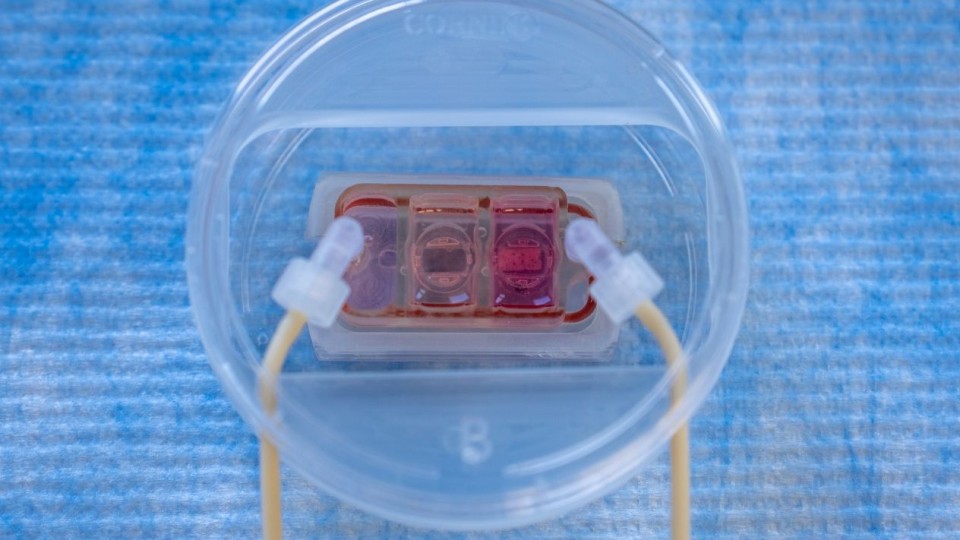
The Organs-on-chip platform with engineered human bone and lung linked by vascular flow that was used to study the spreading of human breast cancer. Image credit: Steve Zill/Columbia Engineering
<関連情報>
- https://www.engineering.columbia.edu/about/news/new-chip-mimics-how-cancer-spreads
- https://www.science.org/doi/10.1126/scitranslmed.adv6871
ヒト組織転移モデルにおける臓器特異的なコロニー形成とニッチリモデリング Organ-specific colonization and niche remodeling in a human tissue model of metastasis
Alan G. Chramiec, Ilaria Baldassarri, Ece Öztürk, Daniel Naveed Tavakol, […] , and Gordana Vunjak-Novakovic
Science Translational Medicine Published:19 Aug 2026
DOI:https://doi.org/10.1126/scitranslmed.adv6871
Abstract
For metastatic colonization to occur, disseminated tumor cells must survive, adapt to, and remodel distant microenvironments in an organ-specific manner. We established a human multitissue model of cancer spread, with engineered bone and lung linked by vascular flow containing circulating cancer cells. Parental MDA-MB-231 cells extravasated toward both tissues, remodeled their niches, and acquired transcriptional programs reflecting adaptation to the local microenvironment, particularly upon homing to bone. Tissue-specific colonization by the bone- and lung-tropic MDA-MB-231 derivatives was quantified in independently perfused bone or lung platforms. Consistent with in vivo behavior, bone-tropic cells showed stronger bone colonization than lung-tropic cells and induced more pronounced osteolysis. In contrast, lung-tropic cells caused greater epithelial disruption in lung tissue and only modest colonization of bone. Distinct patterns of tissue colonization and secreted factors demonstrate that this device recapitulates key features of organ-specific metastasis observed in vivo for this family of cell lines.