2026-10-13 マサチューセッツ工科大学(MIT)
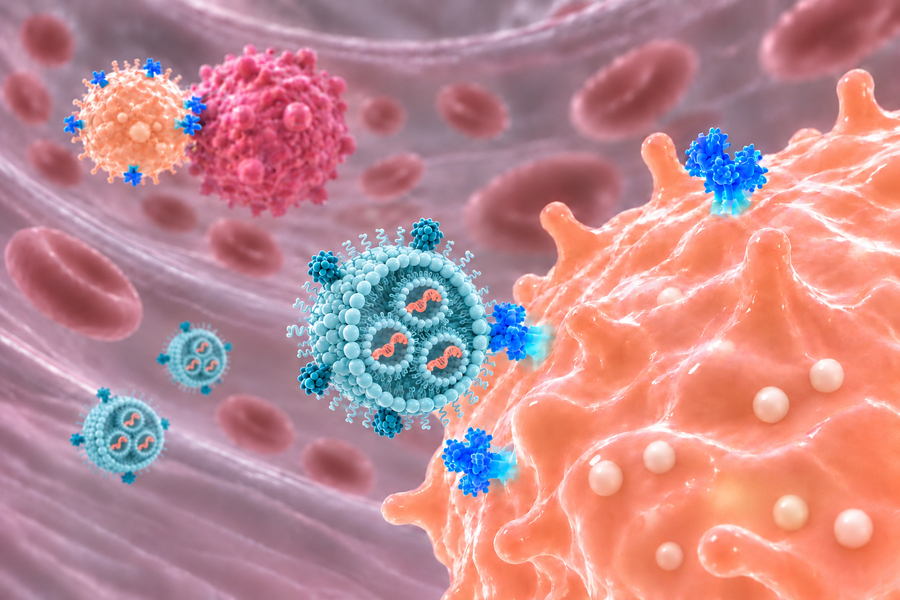
Targeted lipid nanoparticles (teal) deliver mRNA (coral) to NK cells (orange) to enable tumor targeting; blue structures depict surface proteins, the pink cell represents a tumor cell, and red discs are red blood cells. Credits:Courtesy of the researchers
<関連情報>
- https://news.mit.edu/2026/reprogrammed-nk-immune-cells-target-cancer-and-autoimmune-disorders-1013
- https://www.nature.com/articles/s41587-026-03310-1
リガンド指向性脂質ナノ粒子を用いた免疫療法のためのCARナチュラルキラー細胞の生体内エンジニアリング In vivo engineering of CAR natural killer cells for immunotherapy using ligand-directed lipid nanoparticles
Yuang Chen, Julia Monkovic, Haseeb Mughal, Binlong Chen, Elina Thadhani, Patrick McMullen, Ava Self, Yuxuan Chen, Yizong Hu, Samuel Detmer, Min Chen, Anna Lapteva, Ria Kamat, Ashley Vernon, Robert Langer & Daniel G. Anderson
Nature Biotechnology Published:13 October 2026
DOI:https://doi.org/10.1038/s41587-026-03310-1
Abstract
Targeted lipid nanoparticles (LNPs) offer a nonviral approach for in vivo cell engineering but efficient programming of natural killer (NK) cells remains underexplored. Here we develop NK cell-targeted LNPs (NtLNPs) using engineered biparatopic NK cell ligands to drive receptor-specific uptake and mRNA delivery. Lead NtLNPs achieve up to ~80% NK cell transfection with minimal off-target effects in mice. Systemic delivery of chimeric antigen receptor (CAR) mRNA using NtLNPs generates CAR NK cells in vivo. CD19-targeted CAR NKs completely deplete circulating B cells in healthy mice and CD3-targeted CAR NKs eliminate nearly all autoreactive T cells in an autoimmune hepatitis model, highlighting a potential advantage over CAR T therapies for T cell-driven disease. In solid tumors, NtLNPs targeting the inhibitory checkpoint NKG2A enhance antitumor efficacy by relieving Qa-1b-mediated immunosuppression. Lastly, we optimized NtLNPs for in vivo engineering of human CAR NK cells, enabling regression of two humanized hematologic malignancy models and establishing NtLNPs as a modular immunotherapy system.