2026-09-01 東京大学
<関連情報>
- https://www.a.u-tokyo.ac.jp/topics/topics_20260901-1.html
- https://www.nature.com/articles/s41598-026-64955-1
犬の筋層浸潤性尿路上皮癌におけるバイオマーカーで定義された生存率向上効果を伴うソラフェニブ/ピロキシカム療法 Sorafenib/piroxicam therapy with biomarker-defined survival benefit in canine muscle-invasive urothelial carcinoma
Shingo Maeda,Shohei Yokota,Mao Komori,Yuko Goto-Koshino,James K. Chambers,Kazuyuki Uchida,Tomohiro Yonezawa & Yasuyuki Momoi
Scientific Reports Published:01 September 2026
DOI:https://doi.org/10.1038/s41598-026-64955-1
Abstract
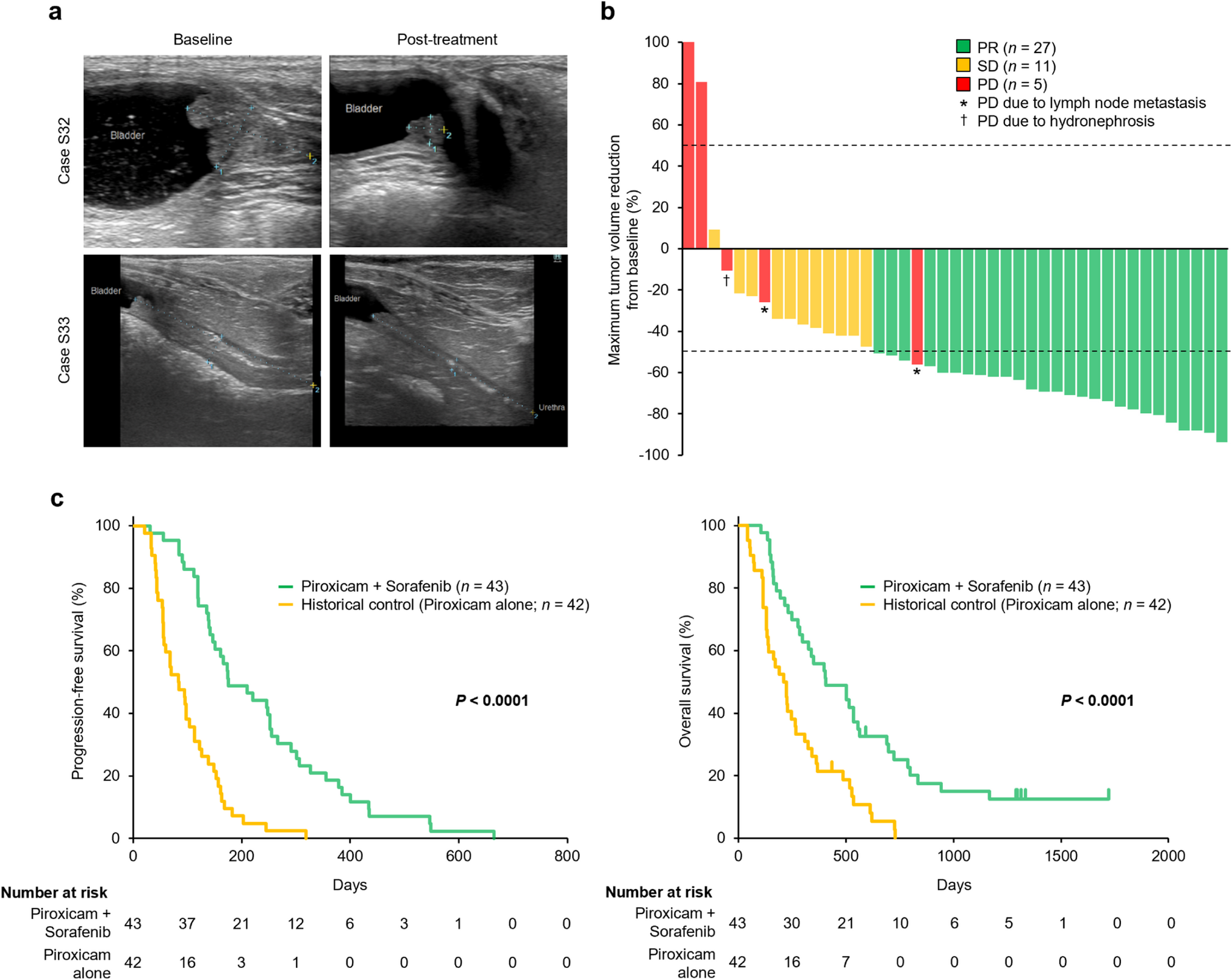
Molecular-targeted therapies require biomarker-driven evaluation to optimize precision oncology strategies; however, translational models integrating clinical outcomes with mechanistic biomarkers are limited. Canine urothelial carcinoma shares molecular features with human muscle-invasive bladder cancer, including activation of VEGFR signaling, providing a valuable comparative oncology platform. Sorafenib is a multi-kinase inhibitor targeting VEGFRs, PDGFRβ, BRAF, and related pathways, but its therapeutic mechanisms and clinical benefit in urothelial carcinoma remain incompletely understood. In this study, 43 dogs with naturally occurring urothelial carcinoma received first-line sorafenib and piroxicam therapy. The overall response rate was 62.8%, with median progression-free and overall survival of 175 (range, 31–665) and 407 (range, 103–1,723) days, respectively. The results exceeded outcomes in historical controls treated with piroxicam alone. Treatment was generally well tolerated, with only three grade 3 adverse events and no grade 4–5 toxicities. Biomarker analyses revealed that treatment-induced hypertension and high tumor CX3CL1 mRNA expression were independently associated with improved overall survival, suggesting that effective VEGFR pathway inhibition and modulation of the tumor immune microenvironment contribute to clinical benefit. These findings support sorafenib-based therapy as a promising strategy for canine urothelial carcinoma and highlight the translational potential of biomarker-driven VEGFR-targeted approaches in precision oncology.