2025-07-21 韓国基礎科学研究院(IBS)
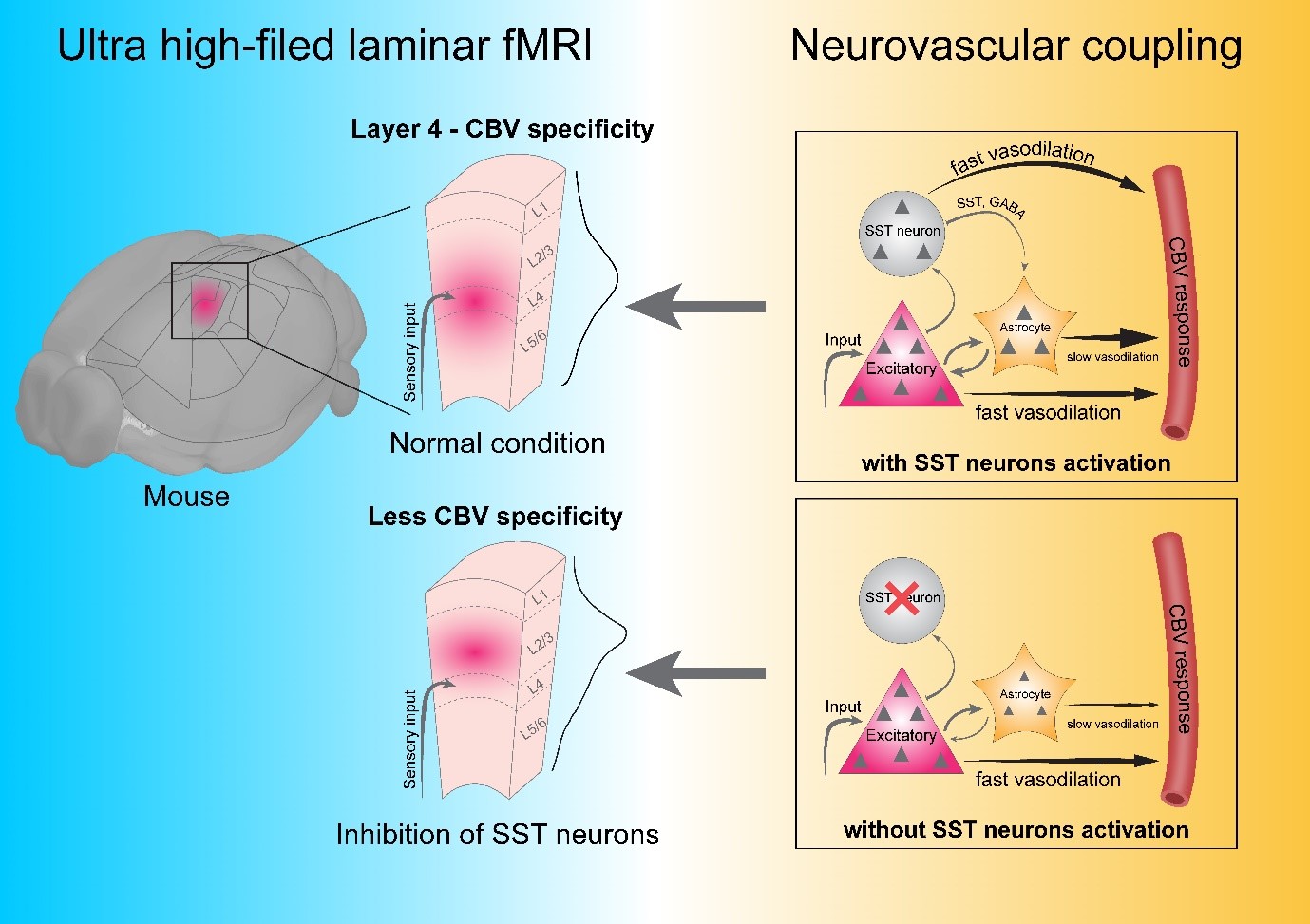
Figure 1. Somatostatin neurons regulate astrocytes surrounding cerebral blood vessels, enabling more precise delivery of blood volume to specific brain regions, thereby enhancing the spatial accuracy of neurovascular responses.
<関連情報>
- https://www.ibs.re.kr/cop/bbs/BBSMSTR_000000000738/selectBoardArticle.do?nttId=26007&pageIndex=1&searchCnd=&searchWrd=#
- https://www.nature.com/articles/s41467-025-61771-5
ソマトスタチンを発現する介在ニューロンは、NOを介した初期血管拡張と特異的なアストロサイト介在の後期血管拡張を誘導する Somatostatin-expressing interneurons induce early NO-driven and late specific astrocyte-mediated vasodilation
Thanh Tan Vo,Won Beom Jung,Tong Jin,Geun Ho Im,Soohyun Lee & Seong-Gi Kim
Nature Communications Published:18 July 2025
DOI:https://doi.org/10.1038/s41467-025-61771-5
Abstract
Somatostatin-expressing (SST) interneurons modulate hemodynamic responses both directly and indirectly, but their precise role remains unclear. Here, we investigated the influence of SST interneurons on hemodynamic control in response to optogenetic stimulation of SST neurons and somatosensory stimulation in both awake and anesthetized mice. Prolonged optogenetic stimulation of SST neurons induces fast vasodilation through nitric oxide synthase-expressing neurons that co-express SST, and slow vasodilation mediated by astrocytes. Similar neurovascular coupling mechanisms are observed during prolonged sensory stimulation, which also induces both fast and delayed vasodilation. The delayed vasodilation, mediated by the SST neuron-astrocyte pathway, enhances the specificity of cerebral blood volume (CBV)-weighted fMRI signals to cortical layer 4, as confirmed by chemogenetic inhibition of SST neurons. Our findings indicate that the SST neuron-astrocyte-vascular pathway shapes hemodynamic responses to prolonged stimulation and is critical for achieving high-specificity, laminar-resolution fMRI, which is increasingly pursued in human cognitive studies.